
Imagine going for a routine health check-up and discovering that your spine is not as straight as it should be. Perhaps one shoulder appears higher than the other, your waist looks uneven, or your back seems slightly tilted. These changes maybe subtle, but they could indicate a condition called escoliosis.
For many patients, a scoliosis diagnosis raises several questions. Will the spinal curve get worse? Can it be corrected without surgery? When is an operation necessary, and what does recovery involve?
Scoliosis is a three-dimensional spinal deformity in which the spine curves sideways and may also rotate. While some curves remain mild and require only monitoring, others can progress and affect posture, mobility, and, in severe cases, breathing.
The good news is that several treatment options are available, depending on the patient's age, curve severity, and overall health. For international patients exploring scoliosis correction in India, understanding these options is an important first step.
This guide explains the types, diagnosis, non-surgical treatments, surgical techniques, recovery expectations, and factors influencing treatment costs in India. If you already have an X-ray or MRI report, HOSPIDIO can help you explore an expert medical opinion and understand the treatment options available.
¿Qué es la escoliosis?
Scoliosis is a three-dimensional spinal deformity in which the spine curves sideways and rotates, forming an 'S' or 'C' shape. It can affect children, adolescents, and adults, causing uneven shoulders, tilted hips, or a prominent rib cage. Depending on the severity, it may require monitoring, non-surgical treatment, or scoliosis correction surgery.
Tipos de Escoliosis
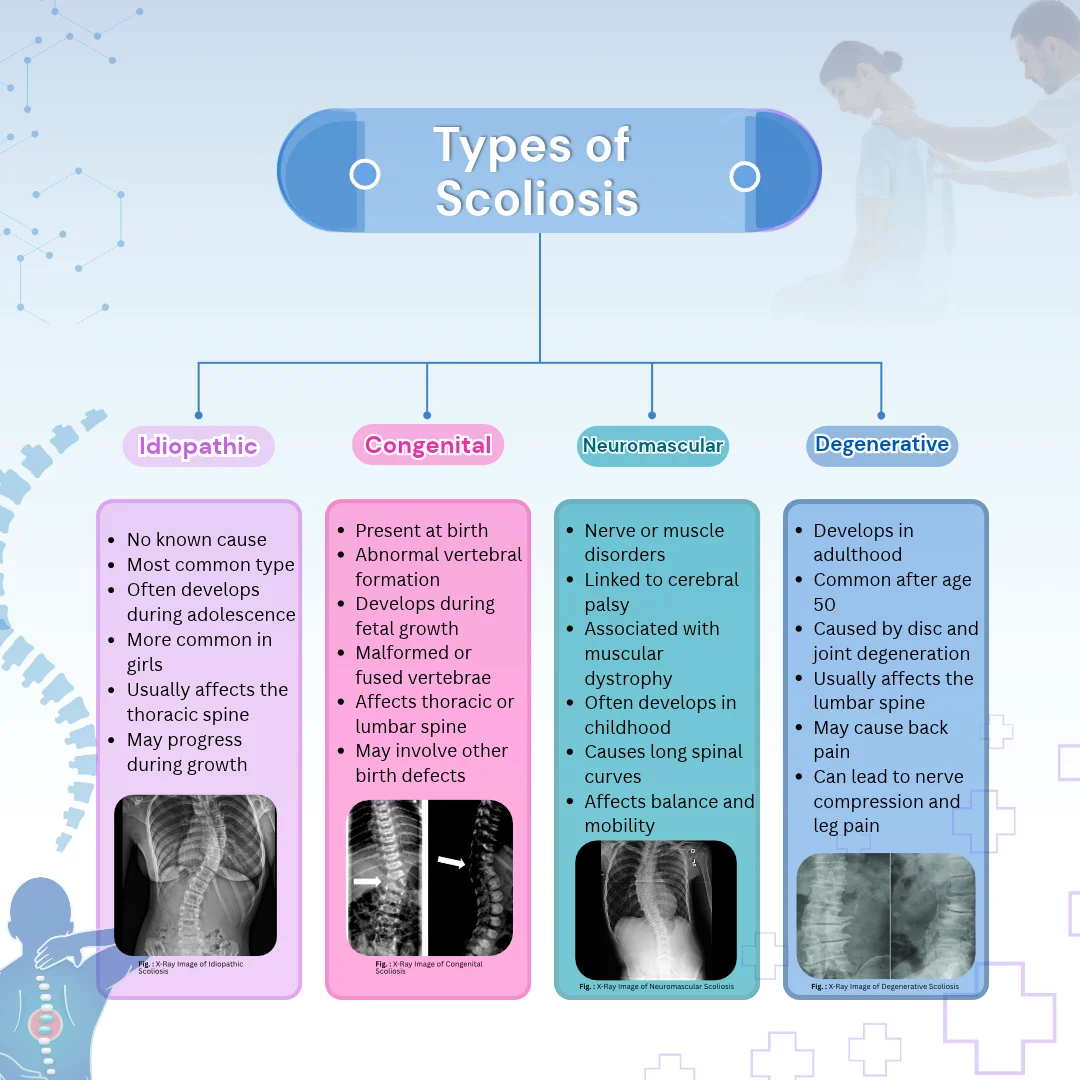
Not all cases of scoliosis develop for the same reason. Some are associated with abnormal spinal development, while others may occur due to underlying muscle or nerve conditions or age-related changes in the spine. Based on their causes and characteristics, scoliosis is classified into the following types:
1. Idiopática
2. Congénito
3. Neuromascular
4. Degenerative
Causas y factores de riesgo
Why does scoliosis develop? In most cases, the exact cause is unknown, particularly in children and adolescents. However, certain medical conditions, spinal abnormalities, and genetic factors may contribute to the development of this condition.
Some recognised causes and risk factors include:
- Factores genéticos: Scoliosis can run in families, although not every case has a hereditary cause.
- Anomalías congénitas: Improper formation of the vertebrae during fetal development can lead to scoliosis from birth.
- Afecciones neuromusculares: Disorders such as cerebral palsy and muscular dystrophy can affect the muscles and nerves supporting the spine.
- Spinal cord conditions: Certain abnormalities affecting the spinal cord may contribute to spinal curvature.
- Edad y género: Scoliosis is commonly diagnosed during adolescence. Although mild curves occur in both sexes, girls have a higher likelihood of developing progressive curves that require treatment.
In some adults, scoliosis may also develop due to age-related changes in spinal discs and joints, weakening of the bones, or degeneration of the spine.
If you or your child has been diagnosed with scoliosis and you are unsure about its possible cause, an online consultation with a spine specialist can help clarify your concerns and guide you towards the next steps.{cta-custom-green HOSPIDIO can help you connect with experienced specialists in India.}
Diagnóstico
How do doctors determine the severity of scoliosis and whether treatment is necessary? Diagnosis generally involves a physical examination followed by appropriate imaging investigations.
Examen físico
The specialist examines the patient's posture, shoulder alignment, waist symmetry, and hip position. One commonly used screening method is the Adam's Forward Bend Test, in which the patient bends forward to help identify unevenness in the rib cage or back. A neurological examination may also assess muscle strength, reflexes, and sensation.
Imaging Tests / Radiological Investigations
Imaging investigations help confirm scoliosis, measure the spinal curve, and identify any underlying abnormalities. The choice of investigation depends on the patient's symptoms and clinical findings.
- Radiografía: A spinal X-ray is the primary imaging investigation used to confirm scoliosis and measure the curve using the Cobb angle. Images taken from different views help specialists assess spinal alignment and rotation. In growing children, periodic X-rays may be recommended to monitor curve progression, using radiation-reduction techniques where available.
- Resonancia magnética Magnetic Resonance Imaging (MRI) produces detailed images of the spinal cord, nerves, and surrounding soft tissues without using ionising radiation. It may be recommended when neurological symptoms, unusual curve patterns, or an underlying spinal cord abnormality are suspected. MRI can help identify conditions that may influence treatment planning.
- CT Scan: A Computed Tomography (CT) scan provides detailed cross-sectional images of the vertebrae and their bone structure. It may be used to assess complex spinal deformities, congenital abnormalities, or bone anatomy before surgery. However, because CT involves radiation, it is generally reserved for situations where the additional information is clinically useful.
- Radiografía: A bone scan is a nuclear medicine investigation that evaluates bone activity and can help identify certain bone abnormalities, infections, or areas of increased bone turnover. It is not routinely required for every scoliosis patient but may be recommended when an underlying bone related condition is suspected.
An expert medical opinion can help you better understand your diagnosis and the treatment options suitable for you or your child.
Tratamientos
The right scoliosis treatment depends on the patient's age, curve severity, symptoms, and likelihood of progression. Treatment can range from regular observation to complex spinal correction surgery.
Tratamientos no quirúrgicos
Non-surgical treatment is generally considered for mild to moderate curves, especially in children who are still growing.
Las opciones comunes incluyen:
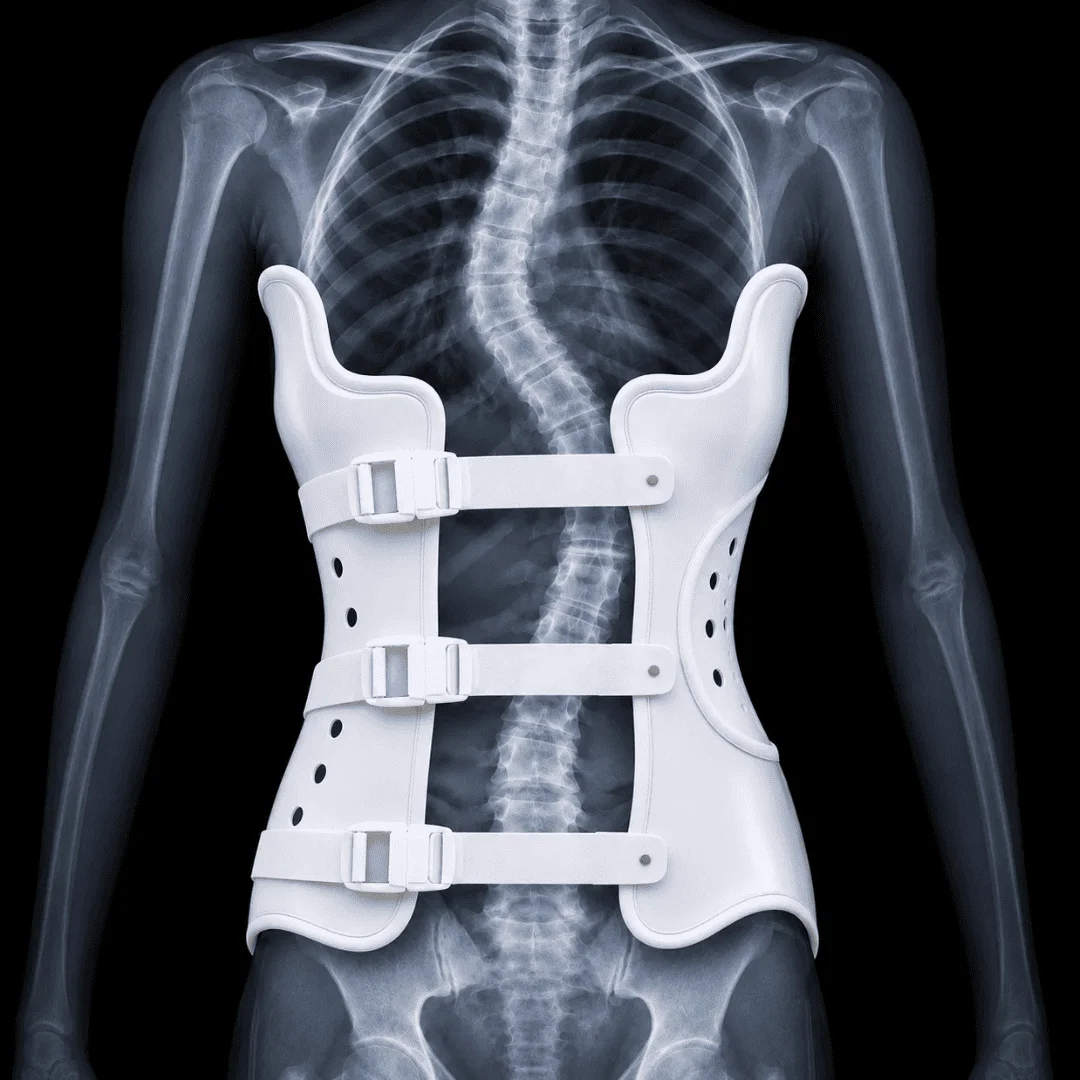
- Vigorizante: A spinal brace may help prevent curve progression in growing children and adolescents with appropriate curve patterns. It does not permanently straighten the spine, but wearing it as prescribed can reduce the likelihood of needing surgery.
- Fisioterapia: Individualised exercises help improve muscle strength, posture, flexibility, and functional movement.
- Scoliosis-specific exercises: Programmes such as Schroth therapy use specialised exercises and breathing techniques to improve postural control and support spinal management.
- El manejo del dolor: Adults experiencing discomfort may benefit from appropriate pain medication, activity modification, and supervised physical therapy.
The effectiveness of these approaches varies. A specialist should determine which option is suitable based on the patient's individual condition.
Alternative Medicines for Scoliosis
Some patients explore chiropractic treatment, acupuncture, yoga, or other complementary therapies to manage scoliosis-related discomfort.
These approaches may help some individuals with pain, flexibility, or general well-being. However, there is insufficient evidence that they can reliably correct a structural spinal curve or prevent its progression. They should not replace established treatments such as bracing or specialist monitoring.
Patients should consult their treating specialist before introducing complementary therapies, particularly when the spinal curve is severe or surgery is being considered.
Surgical Treatments / Techniques
When the spinal curve progresses significantly or begins affecting spinal balance, nerve function, or daily activities, surgical correction may be considered.
The choice of procedure depends on the curve's location, flexibility, severity, and the patient's age.
Fusión espinal
Spinal fusion is one of the most commonly performed procedures for correcting significant scoliosis. It involves realigning the affected vertebrae and permanently joining selected spinal bones using bone graft material to create a stable section of bone.
During the procedure, the surgeon uses metal rods, screws, or hooks to hold the vertebrae in the corrected position. Bone graft material is placed between the vertebrae to encourage new bone growth and help them fuse together over time.
The bone graft may come from the patient's own body (autograft), a donor (allograft), or synthetic materials. The number of vertebrae fused depends on the location and severity of the spinal curve. Fusion typically takes several months, during which regular follow-ups help monitor bone healing and spinal alignment.
osteotomía
An osteotomy involves surgically cutting or removing a portion of bone to improve spinal alignment. It may be recommended for patients with rigid or severe spinal deformities where conventional correction techniques may not provide sufficient flexibility.
During the procedure, the surgeon removes or reshapes a selected portion of the vertebra to allow the spine to move into a better-aligned position. The corrected section is then stabilised using metal rods and screws, usually as part of spinal fusion surgery.
The type of osteotomy depends on the severity and location of the spinal deformity. Since it is a complex procedure performed close to the spinal cord and nerves, careful surgical planning and neurological monitoring may be required.
Minimally Invasive Spine Surgery (MISS)
Minimally Invasive Spine Surgery (MISS) is a surgical approach that uses smaller incisions and specialised instruments to access the spine while minimising damage to surrounding muscles and soft tissues.
During the procedure, surgeons use instruments and imaging guidance to perform spinal correction through small openings rather than a large traditional incision. In selected scoliosis patients, MISS may be used for procedures such as spinal fusion, with screws and rods placed to stabilise the affected vertebrae.
Compared with traditional open surgery, potential benefits include reduced blood loss, less muscle damage, smaller scars, and shorter hospital stays. However, MISS is not suitable for every patient, particularly those with severe or complex spinal curves. The surgeon selects the approach based on the patient's spinal anatomy, curve severity, and treatment requirements.
Tecnologías quirúrgicas avanzadas
These technologies provide real-time guidance during surgery, helping the surgical team make informed decisions while performing complex spinal corrections.
| Tecnología | Cómo Funciona | Role in Scoliosis Surgery | Beneficios |
| O-arm 3D Navigation System | Provides detailed, real-time 3D images of the spine during surgery. | Helps surgeons visualise complex spinal anatomy and guide accurate placement of pedicle screws and other implants. | Improves surgical precision, supports accurate implant placement, and helps manage complex spinal deformities. |
| Intraoperative Neuromonitoring (IOM) | Continuously monitors electrical signals from the spinal cord and nerves during surgery. | Helps detect potential changes in neurological function, allowing the surgical team to respond promptly and reduce the risk of nerve injury. | Allows timely intervention and helps reduce the risk of neurological injury. |
Note: These technologies support surgical precision and safety but cannot eliminate all surgical risks or guarantee successful outcomes.
Servicial: Tratamientos médicos avanzados para la escoliosis por Dr. Hamza Shaikh
Riesgos y complicaciones
- Infection at the surgical site or around implants.
- Pérdida excesiva de sangre durante la cirugía.
- Nerve injury causing numbness, tingling, or muscle weakness.
- Loosening or breakage of screws and rods.
- Failure of vertebrae to fuse properly (pseudarthrosis).
- Persistent pain or discomfort after surgery.
- Blood clots due to reduced mobility.
- Respiratory complications in severe cases.
Recovery Timeline After Scoliosis Surgery
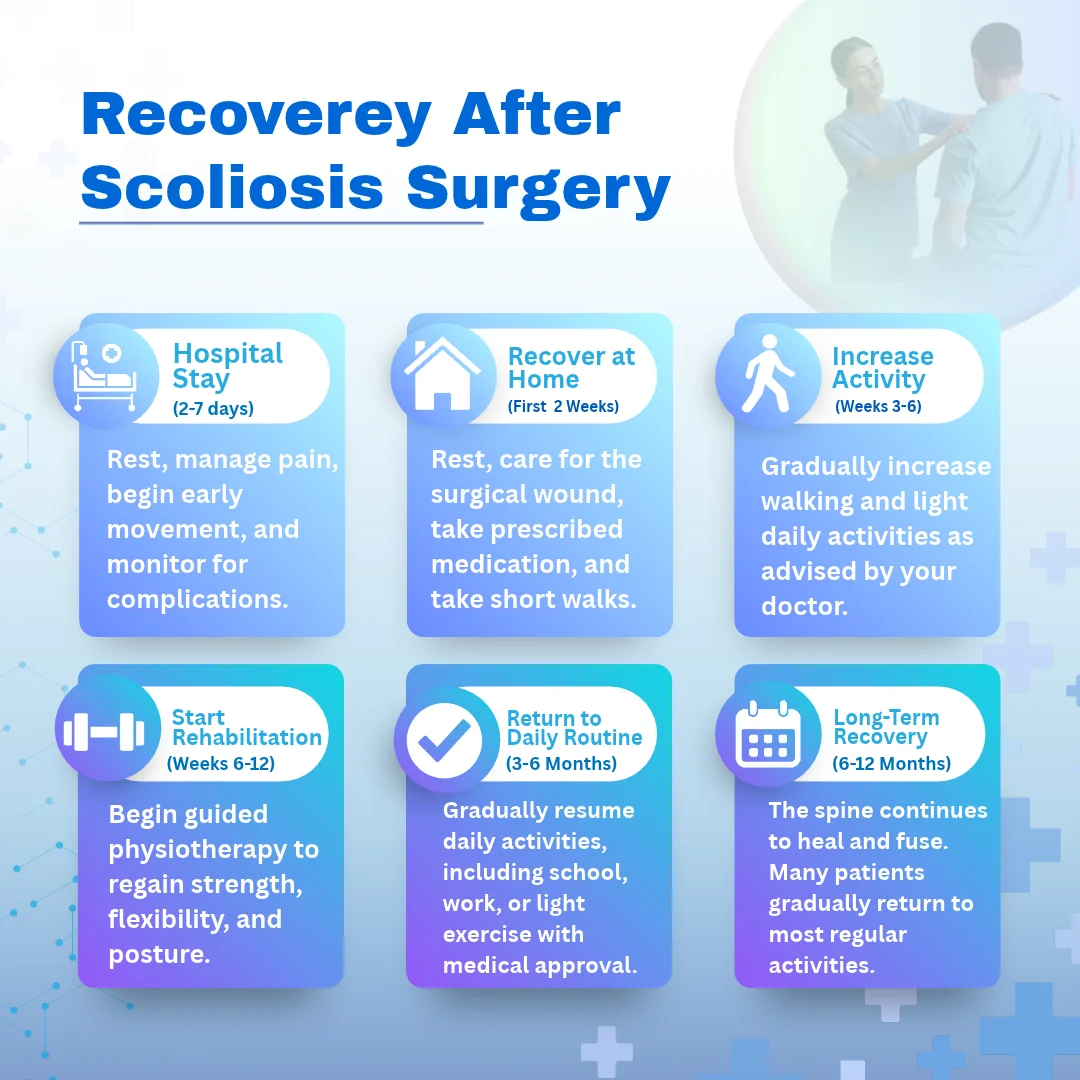
Recovery after scoliosis correction surgery happens gradually and varies from patient to patient. From the initial hospital stay to returning to everyday activities, each stage requires proper care, rehabilitation, and regular medical follow-ups.
Rehabilitación y fisioterapia
Rehabilitation plays an important role in helping patients regain strength, mobility, and confidence after scoliosis surgery.
A personalised rehabilitation programme may begin with gentle walking and basic movements before progressing to supervised strengthening and flexibility exercises. Physiotherapists guide patients on safe movement, posture, and activity modification while the spine heals.
The rehabilitation plan differs between adolescents and adults and depends on the extent of surgery. Patients should avoid heavy lifting, strenuous exercise, and activities restricted by their surgeon until they receive clearance.
Consistent follow-up and adherence to rehabilitation instructions help support recovery and a gradual return to daily activities.
Perspectivas a largo plazo
What can patients expect after scoliosis correction surgery? For many individuals, surgery can significantly improve spinal alignment, prevent further curve progression, and support better balance and function. However, the degree of correction and symptom improvement varies from person to person.
Patients who undergo spinal fusion should understand that the fused spinal segments will have reduced movement. Some individuals may also experience persistent pain or require additional treatment later.
Long-term care involves regular specialist follow-ups, maintaining general physical fitness, and following medical advice. Children and adolescents may need monitoring as they continue growing, while adults may require ongoing management of age-related spinal changes.
For international patients, planning follow-up care before returning home is particularly important.
HOSPIDIO can help coordinate treatment discussions and connect patients with suitable hospitals and specialists in India. Talk to Our Patient Consultant
Lea también Scoliosis FAQs
Conclusión
A scoliosis diagnosis does not automatically mean surgery is necessary. While some patients require only observation or non-surgical management, others may benefit from spinal correction procedures depending on the severity and progression of their condition.
Understanding the available treatment options, surgical techniques, potential risks, and recovery expectations can help patients make informed decisions.
If you or your child has been diagnosed with scoliosis and are considering treatment in India, HOSPIDIO can help you explore suitable treatment options, connect with experienced spine specialists, and coordinate your medical journey. Share your medical reports to take the first step towards understanding your treatment possibilities.
Blogs
Shruti Verma se licenció en Biotecnología y cuenta con experiencia en redacción médica y desarrollo de contenido científico. Se especializa en traducir información biomédica y sanitaria compleja en contenido claro, preciso y accesible para diversos públicos. Cuando no está diseñando contenido, probablemente se dedica al diseño gráfico.
Guneet Bhatia es la fundadora de HOSPIDIO y una experta revisora de contenido con amplia experiencia en desarrollo de contenido médico, diseño instruccional y blogs. Apasionada por la creación de contenido impactante, se destaca por garantizar la precisión y claridad de cada pieza. Guneet disfruta entablando conversaciones significativas con personas de diversos orígenes étnicos y culturales, lo que enriquece su perspectiva. En su tiempo libre, disfruta del tiempo de calidad con su familia, disfruta de la buena música y le encanta generar ideas innovadoras con su equipo.