

Spine surgery is performed to relieve pain, restore mobility, and improve quality of life. However, not every patient experiences the expected improvement. Some continue to experience back pain, nerve-related symptoms, or mobility difficulties, while others develop new complications months or even years after surgery.
When symptoms persist or return after an initial procedure, patients may require further evaluation to determine whether another treatment or surgery is necessary. This can be particularly concerning for patients who have already experienced the physical, emotional, and financial challenges of their first operation.
If you are experiencing persistent pain after spine surgery, have been diagnosed with failed back surgery syndrome (FBSS), or have been advised to undergo another spinal procedure, understanding your treatment options is important.
This guide explains the causes of unsuccessful spine surgery, available treatments, revision spine surgery techniques, and the cost of seeking treatment in India to help you make a more informed decision about your next step.
What is Revision Spine Surgery?
Revision spine surgery is a secondary surgical procedure performed to address problems that persist or develop after an initial spine operation. It may be recommended when the previous surgery fails to provide adequate relief, symptoms return, or postoperative complications affect spinal stability or nerve function.
Compared with primary spine surgery, revision procedures are often more challenging because surgeons must account for scar tissue, changes in spinal anatomy, and previously placed implants.
However, persistent pain after spine surgery does not always mean another operation is required. A thorough evaluation is necessary to identify the underlying cause and determine whether revision surgery or an alternative treatment would be more appropriate.
¿Qué es el síndrome de cirugía de espalda fallida?
Failed Back Surgery Syndrome (FBSS), also known as síndrome de dolor espinal persistente or post-laminectomy syndrome, refers to persistent or recurring back or leg pain following one or more spinal surgeries. Symptoms may continue after surgery, return after initial relief, or develop as new complications.
FBSS does not necessarily indicate a surgical error. It may result from recurrent spinal conditions, nerve damage, scar tissue formation, or unresolved pain.
Not every patient requires revision surgery. Treatment may include medication, physiotherapy, pain management, or another operation, depending on the underlying cause.
Common Causes and Risk Factors of Failed Back Surgery Syndrome (FBSS)
Several factors can contribute to persistent or recurring pain after spine surgery, ranging from incomplete correction of the original problem to postoperative complications and patient-related factors.
| Causas y factores de riesgo | Mareas Ideales para Lecciones |
| Diagnóstico incorrecto | The actual source of pain was not identified before surgery. |
| Descompresión incompleta | Pressure on spinal nerves remains after surgery. |
| Hernia discal recurrente | Disc material herniates again after the initial procedure. |
| Failed spinal fusion | Vertebrae fail to fuse properly (pseudarthrosis). |
| Fallo de hardware | Spinal implants become loose, broken, or displaced. |
| Fibrosis epidural | Scar tissue develops around spinal nerves. |
| Enfermedad del segmento adyacente | Degeneration develops in spinal segments next to a previous fusion. |
| Complicaciones postoperatorias | Infection or nerve injury affects recovery. |
| Factores relacionados con el paciente | Smoking, obesity, diabetes, anxiety, and depression may affect pain perception, postoperative recovery, and overall treatment outcomes. |
Predictability of Pain After Back Surgery
The likelihood of persistent or recurring pain after spine surgery varies depending on the procedure, underlying condition, patient health, and surgical complexity.
Some studies suggest that complex procedures carry a higher risk of Failed Back Surgery Syndrome (FBSS) than simpler operations.
| Tipo de cirugía de columna | Reported risk of FBSS |
| Fusión espinal lumbar | 30-46% |
| Microdisectomía | 19-25% |
Repeated spine surgeries may have lower success rates due to scar tissue and increased surgical complexity. However, outcomes depend on the underlying condition, patient health, and surgical approach. Specialist evaluation helps determine whether another operation is appropriate.
Note: These figures are estimates from published clinical literature and may vary across patient populations and surgical settings.
Symptoms of Failed Back Surgery Syndrome (FBSS)
- Persistent or recurring back pain
- Pain radiating to the legs or buttocks
- Ciática
- Entumecimiento u hormigueo en las piernas o los pies.
- Debilidad muscular
- Dificultad para caminar o pararse
- Movilidad espinal reducida
- New or worsening pain after surgery
Nota: Progressive leg weakness, saddle numbness, or loss of bladder or bowel control requires immediate medical attention.
Experiencing these symptoms after spine surgery? Consult a spine specialist in India through HOSPIDIO.
How is the Problem Diagnosed?
Accurate diagnosis is essential before recommending revision spine surgery. The specialist must determine whether the symptoms originate from the previously operated spinal segment, a newly developed condition, or another source.
| Prueba de diagnóstico | Propósito |
| Historial médico y examen físico. | Reviews previous surgery, pain patterns, neurological symptoms, and mobility. |
| MRI scan | Identifies recurrent disc herniation, nerve compression, spinal stenosis, and scar-related changes. |
| Un TC | Evaluates bone healing, failed fusion, fractures, and implant positioning. |
| Rayos X | Assess spinal alignment, instability, and the position of screws and rods. |
| Dynamic X-rays | Evaluate abnormal spinal movement between different positions. |
| La electromiografía (EMG) | Assesses nerve and muscle function when neurological involvement is suspected. |
| Los análisis de sangre. | Help investigate infection or inflammation when clinically indicated. |
Previous operative reports, implant details, and older imaging scans are also important for understanding what was performed during the initial surgery.
For international patients considering revision spine surgery in India, sharing these records before travelling can help the treating specialist assess the case and determine whether an in-person evaluation or further testing is required.
Share your medical reports with HOSPIDIO for a specialist assessment and treatment guidance.
Tratamientos
Treatment for failed back surgery syndrome depends on the underlying cause, severity of symptoms, and the patient's overall condition. Another operation is not always necessary. Doctors generally consider conservative and interventional approaches before recommending revision surgery, unless an urgent structural or neurological problem requires surgical attention.
Fisioterapia
A structured physiotherapy program can help improve spinal mobility, strengthen supporting muscles, and restore functional movement. Exercises are customized according to the previous operation, pain severity, and current physical limitations.
Medicamentos
Doctors may prescribe medications to manage pain and associated symptoms, including:
- Nonsteroidal anti-inflammatory drugs (NSAIDs), when appropriate.
- Neuropathic pain medications such as pregabalin or gabapentin.
- Muscle relaxants for selected patients with muscle spasms.
- Other prescribed pain-relieving medications depending on the patient's condition.
Medication selection requires consideration of existing health conditions and potential side effects.
Manejo del dolor intervencionista
Interventional pain management techniques can help relieve persistent back and leg pain when medication and physical therapy do not provide sufficient relief. These minimally invasive procedures target specific nerves or pain-generating structures to reduce discomfort.
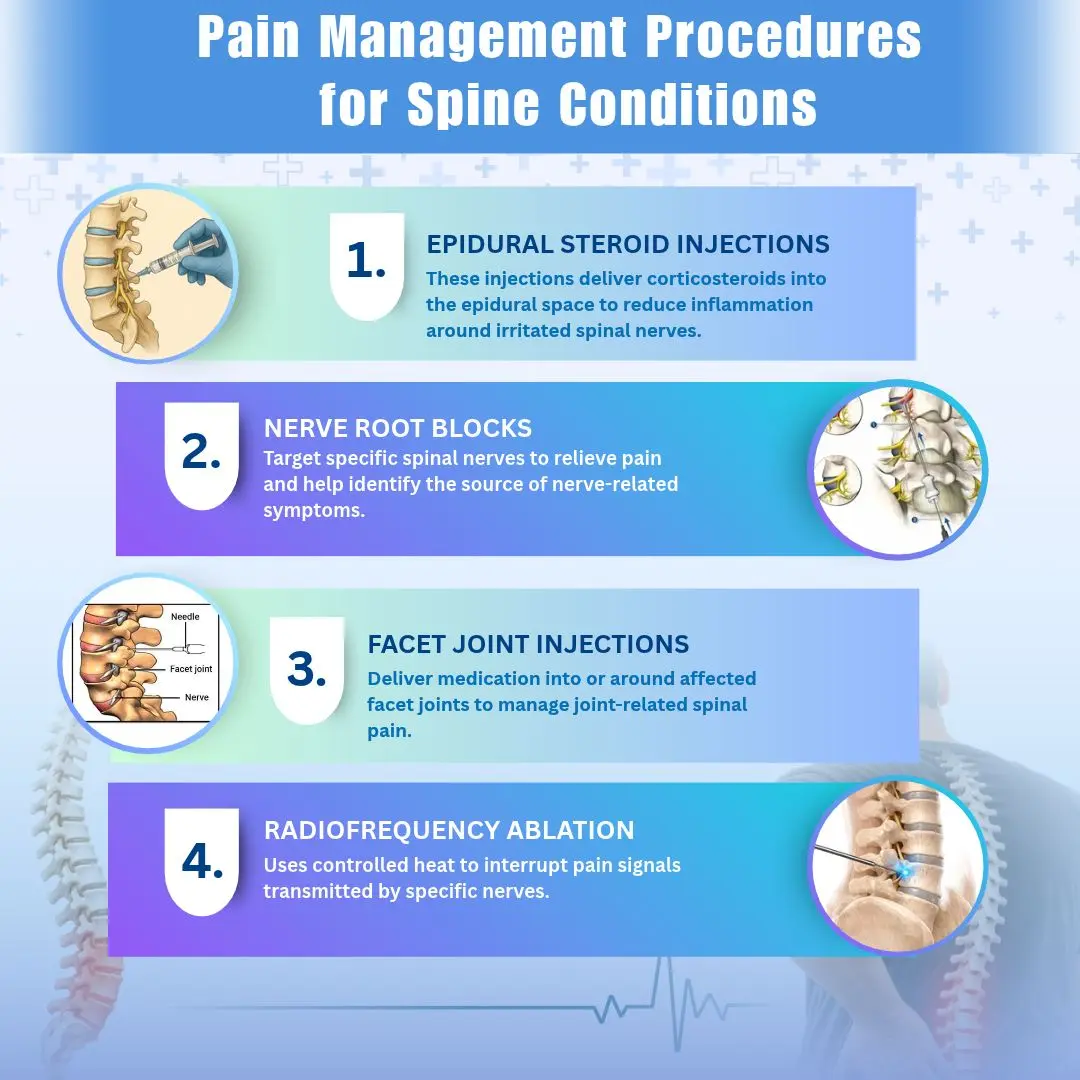
These procedures may provide symptom relief and help patients manage FBSS without undergoing another major spinal operation. However, their suitability depends on the underlying cause of pain and individual clinical assessment.
Tratamientos Quirúrgicos
Revision spine surgery may be recommended when investigations identify a structural problem that is likely to benefit from surgical correction.
Las opciones quirúrgicas comunes incluyen:
- Revision spinal fusion: Corrects failed fusion, spinal instability, or pseudarthrosis. Existing implants may be replaced, repositioned, or extended.
- Revision decompression surgery: Removes remaining or newly developed bone or soft-tissue compression affecting spinal nerves.
- Revision discectomy: Removes recurrent herniated disc material compressing a nerve.
- Hardware revision or replacement: Corrects loose, broken, or displaced spinal screws, rods, or cages.
- Adjacent segment disease surgery: Treats degeneration or nerve compression affecting spinal levels next to a previous fusion, sometimes through decompression or extension of the fusion.
- Spinal deformity correction: Addresses significant alignment problems that develop or persist after an earlier operation.
The choice of revision procedure depends on the underlying spinal condition, previous surgery, and the patient's overall health. A spine specialist evaluates these factors to determine the most appropriate surgical approach and expected outcomes.
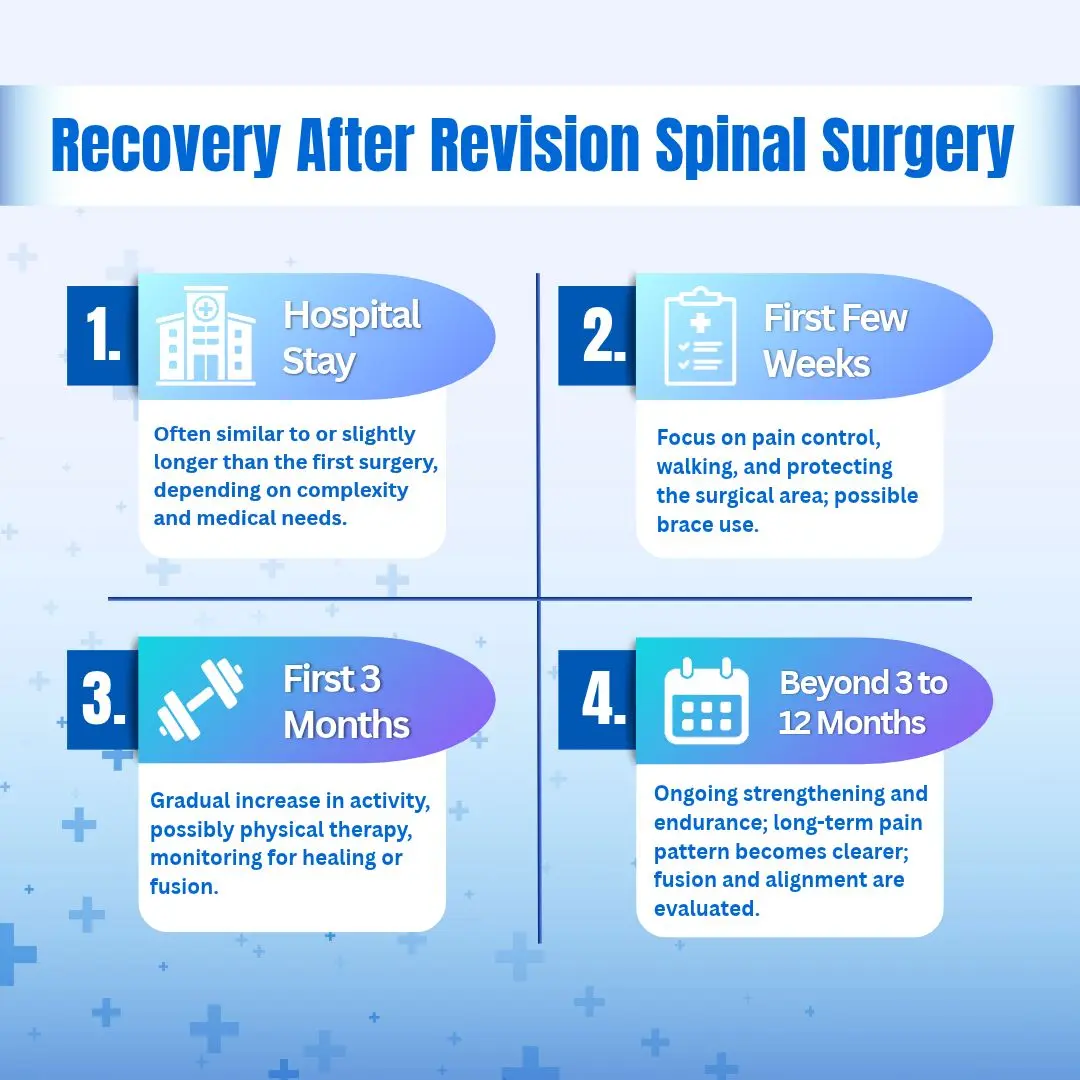
Los mejores cirujanos de la columna vertebral en India



How to minimize the probability of Revision Spine Surgery
Although not every cause of FBSS can be prevented, certain measures may help improve the likelihood of a favorable surgical outcome:
- Obtain an accurate diagnosis before undergoing spine surgery.
- Seek a second opinion if the proposed procedure is complex.
- Discuss realistic surgical outcomes and potential complications.
- Choose a surgeon with relevant experience in the recommended procedure.
- Stop smoking before surgery, as advised by the treating doctor.
- Manage existing medical conditions such as diabetes.
- Follow postoperative physiotherapy and rehabilitation instructions.
- Asista a las citas de seguimiento programadas.
- Avoid returning to strenuous activities before receiving medical clearance.
Proper patient selection, surgical planning, and postoperative care are important parts of reducing the risk of persistent symptoms.
Cost of Revision Spine Surgery in India
The cost of revision spine surgery in India depends on the type of procedure, complexity of the previous surgery, surgeon's experience, hospital facilities, and length of hospitalization. Procedures involving spinal fusion, implant replacement, or multilevel correction may require additional surgical resources.
| Procedimiento | Costo aproximado en India |
| Single-Level Revision Discectomy | Desde USD 4,500 |
| Revision Decompression Surgery | USD 4,500 |
| Fusión espinal de revisión | USD 5,500 |
| Hardware Revision or Replacement | USD 5,500 |
| Corrección de la deformidad espinal | USD 9,000-13,000 |
Nota: The cost is indicative and may vary depending on the patient's condition, surgical requirements, and hospital.
- The type of revision procedure, such as spinal fusion, decompression, or discectomy
- The number of spinal levels involved and complexity of the previous surgery
- Whether existing implants need replacement or additional hardware is required
- The surgeon's experience and hospital facilities
- Length of hospital stay and complications, such as infections or delayed recovery
- Postoperative medications, physiotherapy, accommodation, and follow-up care
Ask for a written estimate that clearly specifies what is included and what may be charged separately. Keep an additional financial cushion for unexpected expenses during treatment and recovery.
Conclusión
Persistent or recurring pain after spine surgery can be challenging, but it does not mean that further treatment options are unavailable. Understanding the underlying cause of failed back surgery is essential to determining whether conservative treatment, pain management, or revision spine surgery is appropriate. A detailed evaluation by an experienced spine specialist can help identify the most suitable approach based on your previous surgery and current condition.
For international patients considering revision spine surgery in India, the country offers options for specialized spine care across established hospitals and healthcare facilities.
HOSPIDIO can help you connect with experienced spine specialists in India and explore suitable treatment options. Share your previous surgical records, medical reports, and recent MRI or CT scans with HOSPIDIO to seek an expert medical opinion and receive guidance on the next steps in your treatment journey.
Blogs


Shruti Verma se licenció en Biotecnología y cuenta con experiencia en redacción médica y desarrollo de contenido científico. Se especializa en traducir información biomédica y sanitaria compleja en contenido claro, preciso y accesible para diversos públicos. Cuando no está diseñando contenido, probablemente se dedica al diseño gráfico.
Guneet Bhatia es la fundadora de HOSPIDIO y una experta revisora de contenido con amplia experiencia en desarrollo de contenido médico, diseño instruccional y blogs. Apasionada por la creación de contenido impactante, se destaca por garantizar la precisión y claridad de cada pieza. Guneet disfruta entablando conversaciones significativas con personas de diversos orígenes étnicos y culturales, lo que enriquece su perspectiva. En su tiempo libre, disfruta del tiempo de calidad con su familia, disfruta de la buena música y le encanta generar ideas innovadoras con su equipo.