
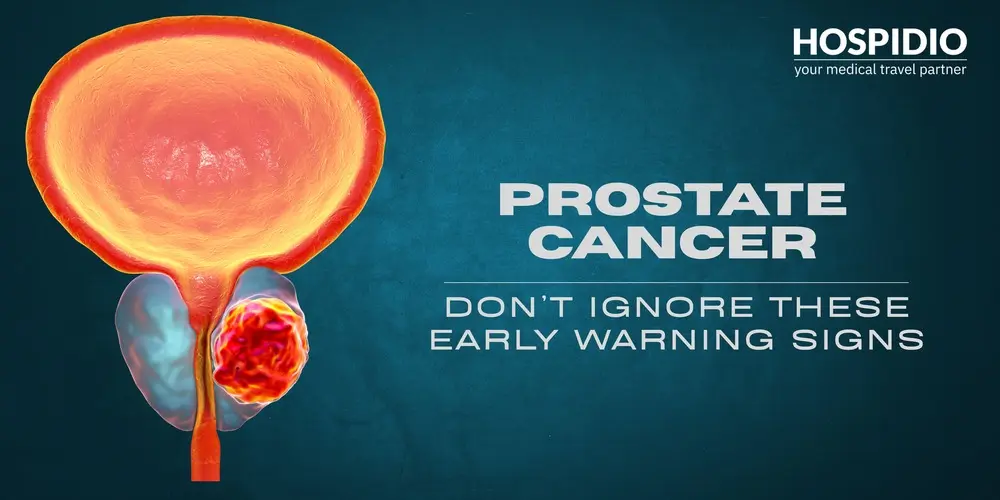
O câncer de próstata continua sendo um dos tipos de câncer mais comuns que afetam homens em todo o mundo. E em algumas regiões, o número de casos de câncer de próstata supera o de câncer de mama. Em muitos casos, ele se desenvolve silenciosamente, sem sintomas perceptíveis em seus estágios iniciais, o que reforça a importância do rastreamento regular e da detecção precoce.
Quando detectado precocemente, o câncer de próstata é altamente tratável, com excelentes taxas de sobrevida. Este blog explica o que é o câncer de próstata, seus tipos, sintomas, como ele se espalha, métodos de diagnóstico, opções de tratamento — especialmente para casos metastáticos — e por que a Índia se tornou um destino popular para o tratamento do câncer de próstata.
O que é câncer de próstata?
O câncer de próstata é um tumor maligno (canceroso) que se desenvolve na glândula prostática. A próstata, um pequeno órgão em forma de noz presente nos homens, secreta o fluido seminal, que nutre e transporta os espermatozoides. O câncer ocorre quando as células da próstata proliferam descontroladamente e se transformam em um tumor. O câncer pode se desenvolver lentamente e permanecer localizado (limitado à próstata) ou pode se tornar agressivo e se espalhar (metastatizar) para outras regiões do corpo, geralmente o fígado, os pulmões, os linfonodos ou os ossos.
Tipos de câncer de próstata
Formato | Comunalidade | Comportamento |
Adenocarcinoma acinar | Mais comum (>95%) | Geralmente de crescimento lento |
Adenocarcinoma ductal | Menos comum | Mais agressivo |
Carcinoma de células transicionais | Rare | Agressivo |
Carcinoma de células pequenas | Muito raro | Altamente agressivo |
Carcinoma de células escamosas | Extremamente raro | Agressivo e de rápido crescimento |
Tumores neuroendócrinos | Rare | Comportamento variável |
Nós cuidamos do planejamento.
Você se concentra na recuperação.
Desde a assistência com o visto médico até o traslado do aeroporto e a hospedagem local, a HOSPIDIO gerencia toda a sua viagem para tratamento médico.
Conte-nos sobre a sua necessidade.
Análise gratuita do caso. Confidencial. Sem compromisso.O que é câncer de próstata metastático?
O termo "metástase" descreve como o câncer se espalha de seu local original para diferentes partes do corpo. Em geral, o câncer que migrou para fora dos linfonodos e tecidos ao redor da próstata é chamado de câncer de próstata metastático ou câncer de próstata em estágio IV (4). É frequentemente chamado de câncer de próstata avançado. Na maioria das vezes, o câncer de próstata se espalha para o fígado, pulmões ou ossos.
Sinais precoces que os homens devem observar antes do desenvolvimento do câncer de próstata
Em seus estágios iniciais, o câncer de próstata geralmente não causa sintomas perceptíveis, por isso exames regulares são importantes, especialmente para homens com mais de 50 anos ou com fatores de risco. De acordo com a Clínica Mayo , alguns sinais de alerta precoce que podem sugerir problemas na próstata (não necessariamente câncer, mas que merecem avaliação médica) incluem:
- Micção frequente, especialmente à noite (noctúria)
- Preciso ir correndo ao banheiro.
- Sangue no sêmen
- Dor ou ardência ao urinar (disúria)
- Dificuldade para começar a urinar
- Fluxo fraco
- Disfunção erétil ou ejaculação dolorosa
- Dor nas costas ou nos ossos que não desaparece com o repouso
- Perda de peso sem motivo
- Dor surda na região lombar, nos quadris ou na pélvis.
Esses sintomas também podem ser causados por condições benignas, como hiperplasia prostática benigna (HPB) ou infecções, mas é importante consultar um médico se persistirem.
Exames regulares de PSA (Antígeno Prostático Específico), exames de sangue e toque retal são ferramentas essenciais para a detecção precoce do câncer de próstata, muitas vezes antes do aparecimento dos sintomas.
Como se dissemina a metástase do câncer de próstata?
A seguir, apresentamos os diferentes níveis de disseminação metastática do câncer de próstata:
Invasão local
As células cancerígenas primeiro crescem além da cápsula da próstata, invadindo os tecidos circundantes, tais como:
- Vesículas seminais (Os fluidos que se tornarão o sêmen são produzidos por glândulas chamadas vesículas seminais)
- Colo da bexiga
- Reto (menos comum)
Propagação Linfática
O câncer entra nos vasos linfáticos próximos, viajando para os linfonodos regionais, particularmente na área pélvica (linfonodos obturadores, ilíacos e para-aórticos).
Disseminação hematogênica (via sangue)
As células cancerígenas invadem os vasos sanguíneos e viajam pela corrente sanguínea. O local mais comum de metástase à distância: Osso, especialmente:
- Coluna
- Pélvis
- costelas
- Fémur (osso da coxa)
- Outros locais menos comuns: fígado, pulmões e cérebro (raramente).
Características das Metástases Ósseas
No câncer de próstata, as metástases ósseas geralmente são osteoblásticas, o que significa que causam formação óssea anormal em vez de destruição óssea. Isso pode levar a:
- Dor óssea
- Fracturas
- Compressão da medula espinhal
- Níveis elevados de cálcio no sangue (raro)
Para onde se espalha o câncer de próstata?
O câncer de próstata pode se espalhar para qualquer lugar, mas geralmente se dissemina para:
- Esqueleto
- Gânglios linfáticos
- Fígado
- Pulmões
Metástase óssea
O osso é o principal órgão para o qual o câncer de próstata se dissemina após sair da próstata. Cerca de 60% dos homens com câncer de próstata avançado desenvolverão metástases ósseas. Os ossos mais comumente afetados incluem os quadris, as costelas e a coluna vertebral.
Metástases ósseas podem levar a complicações graves, tais como:
- Fracturas
- Dor óssea intensa (insuportável)
- Problemas de mobilidade
O câncer de próstata que se espalha para os ossos continua sendo tratado como câncer de próstata, e não como câncer ósseo.
Gânglios linfáticos
Os gânglios linfáticos são um local comum para onde o câncer de próstata se espalha após sair da próstata. Essa disseminação é conhecida como metástase linfonodal e ocorre quando as células cancerígenas se movem pelo sistema linfático.
Os gânglios linfáticos mais comumente afetados estão localizados nas regiões pélvica e abdominal. Cerca de 30 a 40% dos homens com câncer de próstata avançado desenvolverão metástases em gânglios linfáticos.
O comprometimento inicial dos gânglios linfáticos pode não causar sintomas perceptíveis, mas, à medida que os gânglios aumentam de tamanho, pode levar a:
- Inchaço na parte inferior do abdômen ou nas pernas.
- Desconforto ou pressão na região pélvica
- Uma sensação de plenitude
Mesmo após se espalhar para os gânglios linfáticos, a doença ainda é tratada como câncer de próstata, e não como um câncer separado.
Fígado
O fígado é um local menos comum, porém grave, de metástase do câncer de próstata. O envolvimento hepático geralmente indica doença em estágio avançado e está associado a um pior prognóstico.
Aproximadamente 5 a 10% dos homens com câncer de próstata avançado desenvolverão metástases no fígado. Os sintomas de metástase hepática podem incluir:
- Dor ou desconforto abdominal
- Fadiga e fraqueza
- Náuseas e perda de peso não intencional
- Icterícia (amarelamento da pele/olhos) se a função hepática estiver afetada.
Pulmões
Os pulmões são um local menos comum de metástase do câncer de próstata em comparação com os ossos ou os linfonodos. Metástases pulmonares são tipicamente um sinal de câncer de próstata avançado, frequentemente ocorrendo juntamente com disseminação para outros órgãos.
Aproximadamente 3 a 5% dos homens com câncer de próstata avançado desenvolverão metástases pulmonares. Os sintomas de metástase pulmonar podem incluir:
- Tosse persistente
- Falta de ar
- Dor ou desconforto no peito
Em alguns casos, não há sintomas. É descoberto incidentalmente em exames de imagem.
Leia também: Opções não cirúrgicas para hiperplasia prostática benigna
Estágios do câncer de próstata
A seguir, apresentamos a tabela de estadiamento do câncer de próstata:
Etapa | Definição | Descrição |
Fase I | Localizada | O câncer é pequeno e confinado à próstata; geralmente cresce lentamente e pode não causar sintomas. |
Estágio II | Localizado (Mais Avançado) | O câncer ainda está presente na próstata, mas está maior ou envolve uma área maior da próstata; ele pode crescer mais rapidamente. |
Estágio III | Avançado local | O câncer se espalhou para além da próstata, atingindo tecidos próximos como as vesículas seminais, mas não para órgãos distantes. |
Estágio IV | Avançado (Metastático) | O câncer se espalhou para gânglios linfáticos distantes, ossos ou outros órgãos, como fígado ou pulmões. |
Classificação do câncer de próstata
O escore de Gleason é usado para descrever o grau do câncer de próstata. A agressividade do câncer — se e com que rapidez o tumor pode se desenvolver e se espalhar — é estimada usando esse escore.
A seguir, apresentamos uma versão simplificada da tabela de classificação do câncer de próstata:
Grupo de notas | Pontuação de Gleason | Definição | Descrição |
Grupo de séries 1 | Gleason 6 (3+3) | Nota baixa | As células cancerígenas são semelhantes às células normais: crescem lentamente e são pouco agressivas. |
Grupo de séries 2 | Gleason 7 (3+4) | Nota intermediária favorável | Predominantemente células menos agressivas, com algumas mais anormais; crescimento ainda relativamente lento. |
Grupo de séries 3 | Gleason 7 (4+3) | Nota intermediária desfavorável | Células mais agressivas do que as do Grupo 2; maior risco de crescimento e disseminação. |
Grupo de séries 4 | Gleason 8 (4+4, 3+5 ou 5+3) | Nota alta | As células cancerígenas têm uma aparência muito anormal e tendem a crescer e se espalhar mais rapidamente. |
Grupo de séries 5 | Gleason 9–10 (4+5, 5+4 ou 5+5) | Qualidade muito alta | Forma mais agressiva; o câncer cresce rapidamente e tem maior probabilidade de se espalhar para outras partes do corpo. |
Os graus e os estágios determinam o curso do tratamento para o câncer de próstata.
Nós cuidamos do planejamento.
Você se concentra na recuperação.
Desde a assistência com o visto médico até o traslado do aeroporto e a hospedagem local, a HOSPIDIO gerencia toda a sua viagem para tratamento médico.
Conte-nos sobre a sua necessidade.
Análise gratuita do caso. Confidencial. Sem compromisso.Quais são as causas do câncer de próstata?
Causas e fatores de risco do câncer de próstata: O câncer de próstata surge devido a uma combinação de fatores genéticos, hormonais, ambientais e de estilo de vida.
Embora a causa exata não seja totalmente compreendida, vários fatores-chave foram identificados:
1. Fatores Genéticos e Biológicos
A. Idade
- Fator de risco mais significativo – Raro antes dos 40 anos, mas o risco aumenta acentuadamente após os 50.
- Aproximadamente 60% dos casos ocorrem em homens com mais de 65 anos.
B. História Familiar e Genética
O risco é 2 a 3 vezes maior se o pai ou irmão teve câncer de próstata.
Mutações genéticas hereditárias aumentam o risco:
- BRCA1/BRCA2 (também associados ao câncer de mama/ovário).
- HOXB13 (gene do câncer de próstata familiar).
- defeitos no reparo do DNA (ex.: síndrome de Lynch, ATM, PALB2).
C. Raça / Etnia
- Homens negros apresentam o maior risco (risco de 1 em 6 ao longo da vida) e uma forma mais agressiva da doença.
- Homens asiáticos (especialmente no Leste Asiático) apresentam o menor risco, possivelmente devido à dieta/genética.
D. Influências Hormonais
- Testosterona e DHT (diidrotestosterona) alimentam o crescimento do câncer de próstata.
- Homens com maior exposição a andrógenos ao longo da vida podem apresentar risco aumentado.
2. Fatores Ambientais e de Estilo de Vida
A. Dieta
- O consumo elevado de carne vermelha/processada pode estar associado a um câncer de próstata agressivo.
- Laticínios com alto teor de gordura podem aumentar o risco de câncer de próstata (possível associação).
- Baixo consumo de vegetais crucíferos (brócolis, couve-flor), tomates (licopeno) e peixe (ômega-3).
B. Obesidade
- Homens obesos apresentam maior risco de câncer de próstata agressivo.
- O tecido adiposo promove inflamação e desequilíbrios hormonais.
C. Tabagismo e Álcool
- Fumar pode aumentar o risco de câncer de próstata, que é fatal.
- Consumo excessivo de álcool (possível ponto fraco).
D. Exposições químicas
- Agente Laranja (veteranos do Vietnã) – Possível aumento do risco.
- Cádmio (trabalhadores de fábricas de baterias, soldadores) – Associação fraca.
E. Inflamação Crônica e Infecções
- A prostatite (inflamação crônica) pode contribuir para o problema.
- Infecções sexualmente transmissíveis (ISTs) – Possível ligação (ex.: gonorreia, HPV).
Exames de diagnóstico para o tratamento do câncer de próstata
Os seguintes exames são geralmente realizados para um diagnóstico correto e completo do câncer de próstata.
Os exames de sangue
Isso inclui exames de sangue básicos para verificar o funcionamento dos órgãos, o estado de infecção e os marcadores tumorais (níveis de PSA, níveis de CEA).
Avaliação Radiológica
Isso inclui ressonância magnética, cintilografia óssea ou quaisquer outros exames para verificar o estado do tumor.
Exame Histopatologia
Isso inclui exames como a citologia por aspiração com agulha fina (CAAF) e a biópsia guiada por ultrassom transretal (TRUS) do tecido prostático retirado do local do tumor para estabelecer o escore de Gleason.
PET Scan de corpo inteiro
Isso inclui um exame PET de corpo inteiro com FDG ou PET com PSMA (antígeno de membrana específico da próstata) para verificar a presença de metástases e determinar o estágio do câncer.
Tratamento para câncer de próstata metastático
O câncer de próstata metastático (câncer que se espalhou além da próstata para órgãos distantes, como ossos, linfonodos, fígado ou pulmões) não tem cura, mas é tratável. As opções de tratamento geralmente disponíveis para pacientes com câncer de próstata metastático são as seguintes:
Terapia hormonal (terapia de privação de andrógenos – TPA)
Finalidade: Reduz os níveis de testosterona, que alimenta o crescimento do câncer de próstata.
Tipos de terapia hormonal:
- Agonistas/antagonistas de LHRH (ex.: leuprolida, degarelix)
- castração cirúrgica (orquiectomia)
Frequentemente combinado com: quimioterapia ou agentes bloqueadores hormonais mais recentes.
Quimioterapia
Finalidade: Elimina células cancerígenas que se dividem rapidamente; usado especialmente em casos agressivos ou resistentes a hormônios.
Uso: Pode ser administrado inicialmente com terapia de privação androgênica (ADT) em casos de doença metastática de alto volume.
Terapia com radionuclídeos (radioterapia direcionada)
Essas terapias utilizam partículas radioativas que têm como alvo as células do câncer de próstata, especialmente aquelas que expressam PSMA (Antígeno de Membrana Específico da Próstata):
um. Lutécio-177-PSMA (¹⁷⁷Lu-PSMA)
- Mecanismo da terapia: Administra radiação direcionada às células PSMA-positivas.
- Uso: Para câncer de próstata metastático resistente à castração (mCRPC) que progrediu após terapia hormonal e quimioterapia.
- Benefícios: Demonstrou-se que melhora a sobrevida e a qualidade de vida com efeitos colaterais controláveis.
b. Terapia com Actínio-225-PSMA (²²⁵Ac-PSMA)
- Mecanismo: Utiliza um radionuclídeo emissor de partículas alfa mais potente para destruir células tumorais em profundidade.
- Uso: Ainda em grande parte experimental; pode ser considerado em pacientes que não respondem à terapia com ¹⁷⁷Lu-PSMA.
- Vantagens: Maior energia e menor penetração nos tecidos podem levar a uma localização mais precisa do tumor, com menos danos ao tecido saudável.
imunoterapia
- Exemplo: Sipuleucel-T (Provenge) — uma vacina contra o câncer para mCRPC.
- Uso: Pode oferecer um benefício modesto de sobrevida em pacientes selecionados.
Terapia direcionada aos ossos
- Uso: Quando o câncer se espalhou para os ossos. Protege os ossos contra danos causados pelo câncer e fraturas.
- Opções: Bifosfonatos (ex.: ácido zoledrônico), inibidores de RANKL (ex.: denosumabe), radiofármacos (ex.: rádio-223 para metástases ósseas).
Tratamentos paliativos
- Objetivo: Controlar sintomas como dor óssea, compressão da medula espinhal ou obstrução urinária.
- Métodos: Radioterapia, medicamentos para dor, cirurgia (raramente)
Tratamento do câncer de próstata na Índia: Resultados esperados
Às vezes, o câncer se desenvolve tão lentamente que você pode não precisar de tratamento imediato. Os cânceres de próstata que não se espalharam para fora da glândula prostática geralmente são curados com tratamento.
Se o seu médico detectar o câncer de próstata precocemente, o prognóstico é muito bom. Após o diagnóstico de câncer que não se espalhou para fora da próstata, 99% dos pacientes sobrevivem por pelo menos cinco anos.
Quando o câncer de próstata se espalha, ou se dissemina para fora da próstata, as chances de sobrevivência diminuem. Após cinco anos, 32% dos pacientes com câncer de próstata metastático ainda estão vivos.
Por que a Índia é considerada um dos melhores países para tratamento médico?
A Índia se consolidou como um dos destinos mais procurados para tratamento médico no mundo, atraindo mais de 2 milhões de pacientes internacionais anualmente. Essa crescente popularidade se deve a diversos fatores convincentes, incluindo uma infraestrutura de saúde robusta, hospitais com acreditação internacional, profissionais médicos qualificados e vantagens significativas em termos de custo. De acordo com a Associação de Turismo Médico, pacientes que viajam para a Índia podem economizar de 60% a 90% em custos de saúde em comparação com os EUA, Reino Unido ou Europa, sem comprometer a qualidade do atendimento.
Uma das principais vantagens para pacientes internacionais é a ausência de longos períodos de espera. Em países como o Reino Unido ou o Canadá, os pacientes podem esperar semanas ou meses por exames diagnósticos ou cirurgias. Em contrapartida, os hospitais indianos oferecem internações rápidas, consultas imediatas e intervenções cirúrgicas oportunas, o que é particularmente benéfico em condições que exigem intervenção imediata, como o câncer.
O sistema de saúde da Índia possui mais de 40 hospitais credenciados pela Joint Commission International (JCI) e centenas de instalações credenciadas pela NABH, garantindo o cumprimento dos padrões globais de segurança, higiene e protocolos médicos. O país também abriga médicos e cirurgiões de renome mundial, muitos dos quais se formaram e trabalharam em instituições de ponta nos EUA, Reino Unido, Europa e Austrália. Equipes médicas que falam inglês e departamentos dedicados a pacientes internacionais facilitam ainda mais a experiência de pacientes estrangeiros.
Tratamento avançado do câncer, incluindo câncer de próstata.
A Índia é particularmente reconhecida por sua expertise em oncologia, oferecendo tratamento oncológico abrangente que inclui radioterapia, imunoterapia , terapia-alvo, quimioterapia e cirurgia robótica. O tratamento do câncer na Índia não é apenas acessível, mas também altamente especializado, apoiado por tecnologias de diagnóstico e terapêuticas de ponta.
O câncer de próstata, um dos tipos de câncer mais comuns entre os homens em todo o mundo, é tratado na Índia com técnicas de ponta e abordagens de precisão. Hospitais em cidades como Delhi, Mumbai, Chennai e Bangalore oferecem prostatectomia laparoscópica assistida por robô, utilizando plataformas como o Sistema Cirúrgico da Vinci, que aumenta a precisão, reduz a perda de sangue, acelera a recuperação e minimiza o tempo de internação.
Além disso, os hospitais indianos estão equipados com sistemas avançados de radioterapia, tais como:
- O CyberKnife para radioterapia estereotáxica corporal (SBRT) é uma opção não invasiva para o câncer de próstata localizado.
- Radioterapia guiada por ressonância magnética e radioterapia de intensidade modulada (IMRT), que administra altas doses de radiação com danos mínimos aos tecidos circundantes.
Além disso, oncologistas indianos estão na vanguarda do uso de exames PET-CT com PSMA para estadiamento preciso e terapias direcionadas ao PSMA, especialmente em casos de câncer de próstata metastático ou recorrente. Essas tecnologias são comparáveis às disponíveis em países desenvolvidos, mas a um custo muito menor.
Abordagem orientada para a inovação e a pesquisa
A Índia também está avançando na pesquisa do câncer e na medicina personalizada. Muitos hospitais de referência colaboram com instituições de pesquisa globais e realizam ensaios clínicos para as terapias mais recentes contra o câncer. Os hospitais estão integrando cada vez mais o perfil genômico e o diagnóstico molecular para adaptar os planos de tratamento de acordo com o tipo de câncer e a composição genética do paciente.
Principais hospitais para tratamento de câncer de próstata na Índia


- 4.7
- 31k Avaliações
- (Google)
- 100+ Camas
- 35+ Departamentos
- 85+ Médicos
- 5k + Pacientes internacionais



- 4.3
- 6k Avaliações
- (Google)
- 402+ Camas
- 34+ Departamentos
- 348+ Médicos
- 50k + Pacientes internacionais
- 4.6
- 18k Avaliações
- (Google)
- 650+ Camas
- 60+ Departamentos
- 300+ Médicos
- 90k + Pacientes internacionais

- 4.6
- 12k Avaliações
- (Google)
- 330+ Camas
- 30+ Departamentos
- 250+ Médicos
- 72k + Pacientes internacionais

- 4.7
- 18k Avaliações
- (Google)
- 345+ Camas
- 25+ Departamentos
- 100+ Médicos
- 45k + Pacientes internacionais

- 4.5
- 5k Avaliações
- (Google)
- 350+ Camas
- 55+ Departamentos
- 200+ Médicos
- 50k + Pacientes internacionais

- 4.9
- 5k Avaliações
- (Google)
- 150+ Camas
- 10+ Departamentos
- 30+ Médicos
- 2k + Pacientes internacionais

- 4.7
- 22k Avaliações
- (Google)
- 276+ Camas
- 40+ Departamentos
- 150+ Médicos
- 33k + Pacientes internacionais

- 4.7
- 14k Avaliações
- (Google)
- 710+ Camas
- 50+ Departamentos
- 200+ Médicos
- 45k + Pacientes internacionais

- 3.8
- 4k Avaliações
- (Google)
- 750+ Camas
- 35+ Departamentos
- 410+ Médicos
- 25k + Pacientes internacionais
Blogs Recentes





Dr. Basim Parvez é fisioterapeuta licenciado e Consultor Sênior de Pacientes na HOSPIDIO, com MBA em Gestão de Saúde. Com vasta experiência clínica e uma abordagem humanizada, ele auxilia pacientes a navegar pelos tratamentos médicos. Dr. Basim também utiliza seu talento para a escrita a fim de simplificar informações complexas sobre saúde, capacitando os pacientes a tomar decisões informadas e promovendo clareza e confiança em seus processos médicos.
Guneet Bhatia é a fundadora da HOSPIDIO e uma revisora de conteúdo experiente, com ampla atuação em desenvolvimento de conteúdo médico, design instrucional e blogs. Apaixonada por criar conteúdo impactante, ela se destaca por garantir precisão e clareza em cada peça. Guneet gosta de participar de conversas significativas com pessoas de diversas origens étnicas e culturais, o que enriquece sua perspectiva. Quando não está trabalhando, ela valoriza o tempo de qualidade com sua família, aprecia boa música e adora trocar ideias inovadoras com sua equipe.