
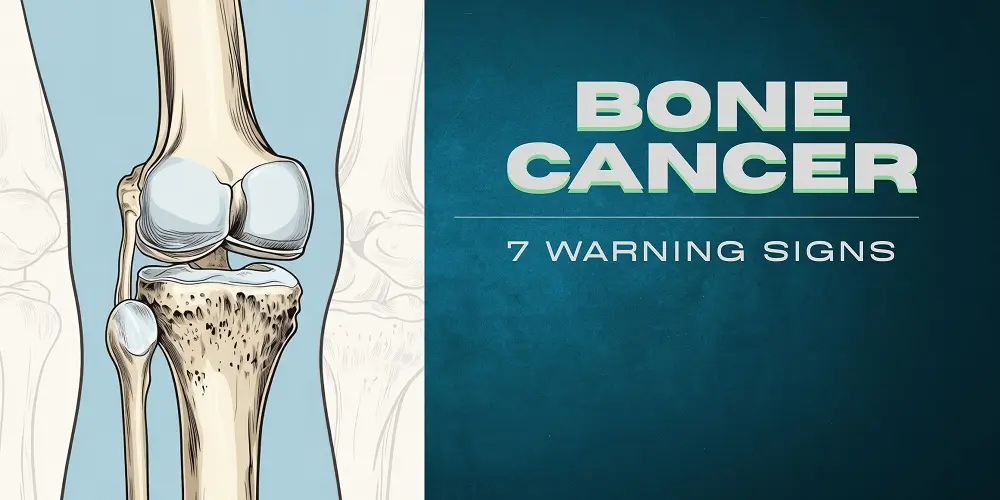
Le cancer des os est rare, mais lorsqu'il survient, ses premiers symptômes sont souvent discrets et faciles à ignorer . Nombreuses sont les personnes qui vivent avec des signes de cancer des os pendant des mois, voire des années, sans se rendre compte de ce qui ne va pas, confondant souvent ces symptômes avec des blessures, de l'arthrite ou de simples douleurs corporelles.
Reconnaître les signes avant-coureurs du cancer des os peut faire toute la différence. Un dépistage précoce offre souvent plus d'options de traitement et de meilleurs résultats.
Dans ce guide, nous expliquerons clairement :
- Qu'est-ce que le cancer des os ?
- Là où ça commence habituellement
- Le 7 signes avant-coureurs du cancer des os vous ne devez pas ignorer
Nous nous occupons de la planification
Vous vous concentrez sur le rétablissement
De l'assistance pour l'obtention du visa médical à la prise en charge à l'aéroport et à l'hébergement local, HOSPIDIO gère l'intégralité de votre voyage médical.
Parlez-nous de votre besoin
Analyse gratuite de votre dossier. Confidentialité assurée. Sans engagement.Qu’est-ce que le cancer des os ?
Le cancer des os est une maladie caractérisée par la prolifération incontrôlée de cellules anormales à l'intérieur d'un os , endommageant ainsi les tissus osseux sains. Il peut fragiliser les os, provoquer des douleurs et affecter les muscles, les nerfs ou les articulations avoisinantes.
Il existe deux types principaux :
- Cancer primitif des os – commence directement dans l'os
- Cancer des os secondaire (métastatique) – se propage aux os à partir d'un autre cancer (tel qu'un cancer du sein, du poumon ou de la prostate)
Le cancer des os peut toucher les enfants, les adolescents et les adultes , selon son type. Certaines formes évoluent lentement, tandis que d'autres sont agressives ; c'est pourquoi il est important de reconnaître les symptômes précoces. Pour en savoir plus sur les options de traitement après le diagnostic, consultez notre guide sur le coût de la chirurgie des tumeurs osseuses en Inde.
Où le cancer des os commence-t-il généralement ?
Le cancer des os débute le plus souvent dans les zones où les os sont volumineux ou en pleine croissance , mais il peut se développer dans n'importe quel os.
Les points de départ les plus courants sont :
- Os longs des jambes (surtout autour du genou)
- Os longs des Avant-Bras
- Bassin
- Colonne vertébrale
- Travers de porc
La douleur dans ces zones est souvent considérée à tort comme :
- blessures sportives
- Fatigue musculaire
- Problèmes articulaires
C’est l’une des raisons pour lesquelles le cancer des os passe souvent inaperçu à ses débuts.
Les 7 signes avant-coureurs du cancer des os
Voici les sept signes avant-coureurs les plus courants du cancer des os . La présence d'un seul symptôme ne signifie pas nécessairement un cancer, mais des symptômes persistants ou qui s'aggravent ne doivent jamais être ignorés.
1. Douleurs osseuses persistantes (surtout la nuit)
Le symptôme précoce le plus courant du cancer des os est une douleur osseuse persistante qui ne s'améliore pas avec le repos.
Principales caractéristiques:
- Douleur profonde dans l'os
- S'aggrave la nuit ou pendant le repos
- Cela devient plus intense avec le temps
Contrairement à la douleur liée à une blessure, cette gêne ne disparaît souvent pas complètement.
2. Gonflement ou grosseur près d'un os
À mesure qu'une tumeur se développe, elle peut provoquer :
- Gonflement visible
- Une grosseur dure près de l'os
- Chaleur ou tendresse dans la zone
Au niveau des os plus profonds (comme le bassin), le gonflement peut ne pas être visible, mais peut tout de même provoquer une gêne ou une sensation de pression.
3. Fractures osseuses fréquentes ou inexpliquées
Le cancer des os peut affaiblir la structure d'un os, augmentant ainsi le risque de fracture.
Les signes avant-coureurs comprennent :
- Fractures suite à des chutes mineures ou à des mouvements de routine
- Les os se cassent plus facilement que prévu
On les appelle parfois fractures pathologiques.
4. Fatigue et faiblesse générale
Le cancer affecte les systèmes énergétiques du corps, ce qui peut entraîner :
- Fatigue constante
- Faiblesse non soulagée par le repos
- Capacité réduite à effectuer des activités quotidiennes
Cette fatigue n'a souvent pas d'explication claire , comme le manque de sommeil ou le surmenage.
5. Limitation des mouvements articulaires ou raideur
Lorsqu'une tumeur se développe près d'une articulation, elle peut provoquer :
- Rigidité
- Difficulté à mobiliser complètement l'articulation
- Douleur pendant le mouvement
On confond souvent cette affection avec de l'arthrite ou une inflammation articulaire.
6. Engourdissements ou picotements (si la colonne vertébrale est touchée)
Les tumeurs osseuses proches de la colonne vertébrale peuvent comprimer les nerfs, entraînant :
- Engourdissement
- Sensations de picotements
- Faiblesse des bras ou des jambes
Ces symptômes nécessitent une évaluation médicale immédiate.
7. Perte de poids inexpliquée ou fièvre
Aux stades plus avancés, le cancer des os peut provoquer des symptômes généraux tels que :
- Perte de poids involontaire
- Fièvre légère persistante
- Perte d'appétit
Ce sont des signes systémiques indiquant que l'organisme est soumis au stress.
Utile : Coût des traitements de radiothérapie en Inde
Quels sont les symptômes du cancer des os à un stade précoce ?
Aux premiers stades, les symptômes du cancer des os sont souvent légers et trompeurs.
Beaucoup de personnes pensent que leurs symptômes sont dus à :
- Blessures liées à l'exercice ou au sport
- Douleurs de croissance (chez les enfants et les adolescents)
- Problèmes articulaires liés à l'âge
C’est pourquoi les cancers des os sont souvent diagnostiqués tardivement à un stade précoce – non pas parce que les gens ignorent les symptômes , mais parce que ces symptômes ne semblent pas graves au premier abord.
Types de cancer des os
Le cancer des os comprend plusieurs types, selon sa localisation et le type de cellules impliquées. Son évolution, le traitement et la tranche d'âge concernée varient selon le type.
Les types les plus courants de cancer primitif des os sont les suivants :
- Ostéosarcome – Il s'agit du type le plus fréquent de cancer primitif des os. Il se développe généralement dans les os longs des bras ou des jambes, notamment autour du genou. On l'observe le plus souvent chez les adolescents et les jeunes adultes.
- Sarcome d'Ewing – Un cancer rare mais agressif qui peut se développer dans l'os ou les tissus mous environnants. Il touche le plus souvent les enfants et les adolescents.
- Chondrosarcome – Elle prend naissance dans les cellules cartilagineuses et est plus fréquente chez l'adulte. Elle se développe souvent au niveau du bassin, de la hanche ou de l'épaule.
Chaque type de cancer des os peut présenter des symptômes légèrement différents, mais des douleurs osseuses persistantes et un gonflement restent des signes avant-coureurs fréquents. L'identification du type précis nécessite des examens d'imagerie et une biopsie.
Découvrez plus d'informations sur le coût du traitement de l'ostéosarcome en Inde et sur la diversité des parcours de soins.
Combien de temps pouvez-vous avoir un cancer des os sans le savoir ?
L’une des questions les plus fréquemment posées après avoir pris connaissance des symptômes du cancer des os est : « Depuis combien de temps cela a-t-il pu être là sans que je le sache ? »
La réponse varie.
Dans de nombreux cas, une personne peut être atteinte d'un cancer des os pendant plusieurs mois, voire des années, sans le savoir. Cela s'explique par le fait que les premiers symptômes sont souvent vagues et facilement confondus avec des affections courantes.
La durée pendant laquelle un cancer des os peut passer inaperçu dépend de plusieurs facteurs :
- Le type de cancer des os
- Sa vitesse de croissance
- Où il se trouve
- Que cela affecte les nerfs ou les articulations avoisinantes
Les tumeurs à croissance lente peuvent provoquer une gêne légère pendant longtemps avant de devenir évidentes, tandis que les tumeurs agressives peuvent progresser plus rapidement mais ressembler tout de même à des blessures au début.
Il est important de noter que le diagnostic tardif est fréquent et compréhensible . Nombreuses sont les personnes qui consultent un médecin à plusieurs reprises avant que l'imagerie ou des examens complémentaires ne révèlent la véritable cause du problème.
Pourquoi le cancer des os est souvent détecté précocement
Le cancer des os est rare et la plupart des douleurs osseuses ne sont pas d'origine cancéreuse . C'est pourquoi les premiers symptômes sont souvent attribués à des causes plus courantes, telles que :
- Entorses musculaires ou blessures sportives
- Arthrite ou inflammation articulaire
- Problèmes de dos ou de disques intervertébraux
- Douleurs de croissance chez les enfants et les adolescents
Une douleur intermittente, ou qui s'atténue temporairement, peut être particulièrement trompeuse. Dans certains cas, les analgésiques ou le repos peuvent soulager les symptômes pendant une courte période, retardant ainsi les investigations.
C’est pourquoi la reconnaissance des schémas au fil du temps est plus importante que n’importe quel symptôme isolé.
Causes et facteurs de risque du cancer des os
La cause exacte de la plupart des cancers osseux primitifs demeure inconnue. Dans de nombreux cas, un cancer des os se développe sans raison apparente. Toutefois, certains facteurs de risque peuvent accroître la probabilité de développer cette maladie.
Les facteurs de risque connus comprennent :
- Conditions génétiques – Certaines maladies héréditaires, comme le syndrome de Li-Fraumeni ou le rétinoblastome héréditaire, sont associées à un risque plus élevé.
- Radiothérapie antérieure – Un traitement par radiothérapie à haute dose pour un autre cancer peut augmenter le risque de développer un cancer des os plus tard dans la vie.
- croissance osseuse rapide – L’ostéosarcome est plus fréquent à l’adolescence, lorsque les os croissent rapidement.
- Maladie osseuse de Paget – Une affection chronique qui touche la croissance osseuse chez les personnes âgées peut, dans de rares cas, augmenter le risque.
Il est important de noter que la présence d'un ou plusieurs facteurs de risque n'implique pas nécessairement le développement d'un cancer des os. De nombreuses personnes atteintes d'un cancer des os ne présentent aucun facteur de risque connu.
Quand devriez-vous consulter un médecin ?
Il n'y a pas lieu de s'inquiéter outre mesure pour des douleurs occasionnelles. Toutefois, une consultation médicale est recommandée si vous ressentez :
- Douleurs osseuses persistantes plus de 2 à 3 semaines
- La douleur qui s'aggrave la nuit ou pendant le repos
- Un gonflement ou une grosseur qui augmente de volume
- Fractures répétées ou fractures osseuses anormalement faciles
- Engourdissement, picotements ou faiblesse dans les membres
- Fatigue persistante associée à des douleurs osseuses
Une évaluation précoce ne signifie pas supposer le pire, mais plutôt écarter les causes graves et retrouver la tranquillité d'esprit.
Pourquoi le dépistage précoce du cancer des os est important
Lorsque le cancer des os est diagnostiqué précocement :
- Davantage d'options de traitement sont généralement disponibles.
- L'intervention chirurgicale pourrait être moins invasive.
- Les résultats sont souvent meilleurs
- La récupération et la réadaptation peuvent être plus efficaces
Le cancer des os à un stade précoce est généralement plus facile à traiter que la maladie à un stade avancé. C'est pourquoi il est si important de reconnaître les signes avant-coureurs et d'agir face aux symptômes persistants.
Les cancers osseux à un stade avancé peuvent atteindre les tissus environnants ou se propager à d'autres parties du corps, ce qui complexifie le traitement. La sensibilisation joue un rôle essentiel dans la réduction de ces risques.
Que faire si vous remarquez ces signes avant-coureurs
Si l'un des signes avant-coureurs évoqués dans cet article vous semble familier, les prochaines étapes sont généralement simples :
- Commencez par une consultation médicale
- Partage le calendrier vos symptômes clairement
- Demandez si une imagerie ou des examens complémentaires sont appropriés.
De nombreuses affections peuvent présenter des symptômes similaires à ceux du cancer des os, et la plupart s'avèrent bénignes . Toutefois, un dépistage précoce permet de s'assurer qu'aucun problème grave ne soit négligé.
En bref
- Les symptômes du cancer des os sont souvent discrets au début.
- La douleur osseuse persistante est le signe avant-coureur le plus courant
- Le cancer des os peut passer inaperçu pendant des mois, voire des années, en raison d'un diagnostic erroné.
- Une évaluation précoce améliore les résultats et les options de traitement
- La prise de conscience mène à l'action, et non à la peur.
Lectures complémentaires



Avertissement médical:
Ce contenu est fourni à titre informatif et éducatif uniquement et ne saurait se substituer à un avis médical. Les symptômes du cancer des os peuvent varier et de nombreuses affections peuvent présenter des signes similaires. Consultez toujours un professionnel de santé qualifié pour obtenir un diagnostic précis et un plan de traitement personnalisé. Ne retardez pas et ne négligez pas un avis médical en vous basant sur les informations contenues dans cet article.
Références
- Société américaine du cancer
- Mayo Clinic
- Institut national du cancer
Blogs récents





Sasmita Bal est spécialiste du marketing digital et du contenu chez HOSPIDIO, experte en SEO et en contenu relatif à la santé internationale. Elle vérifie les contenus publiés afin d'optimiser leur visibilité dans les moteurs de recherche et de garantir leur pertinence par rapport aux besoins des patients internationaux souhaitant se faire soigner en Inde. Tous les contenus qu'elle examine sont rédigés et validés cliniquement par le fondateur de HOSPIDIO et les spécialistes médicaux concernés avant leur publication.
Guneet Bhatia est la fondatrice d'HOSPIDIO et une réviseuse de contenu accomplie, forte d'une vaste expérience en développement de contenu médical, en conception pédagogique et en blogging. Passionnée par la création de contenu percutant, elle excelle à garantir l'exactitude et la clarté de chaque article. Guneet aime engager des conversations enrichissantes avec des personnes d'origines ethniques et culturelles diverses, enrichissant ainsi son point de vue. Lorsqu'elle ne travaille pas, elle savoure des moments privilégiés en famille, apprécie la bonne musique et adore échanger des idées innovantes avec son équipe.