
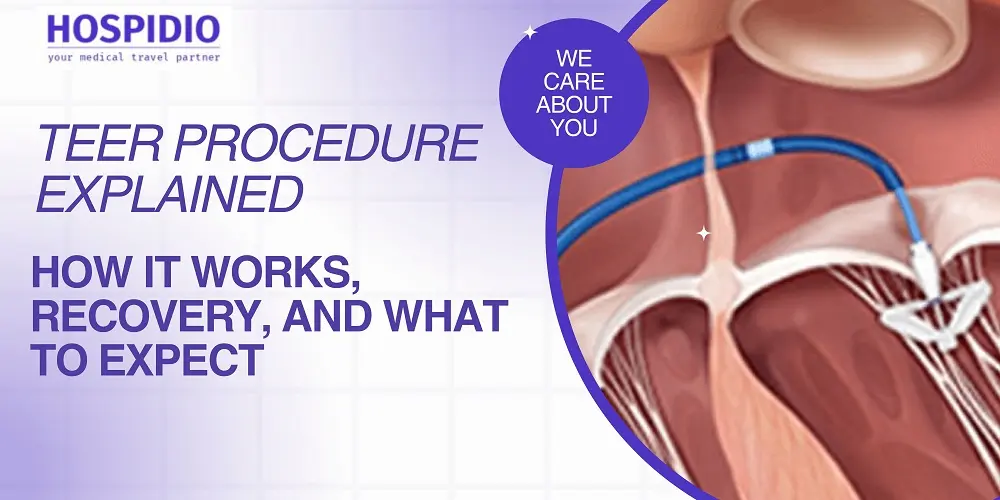
TEER (Transkatheter-Edge-to-Edge-Reparatur) ist ein kathetergestütztes Verfahren, bei dem eine undichte Mitral- oder Trikuspidalklappe so weit verschlossen wird, dass der Blutfluss wiederhergestellt wird – und das ohne Öffnung des Brustkorbs. Die meisten Patienten können innerhalb von ein bis drei Tagen nach Hause gehen, nach etwa zwei Wochen wieder leichten Tätigkeiten nachgehen und sind innerhalb eines Monats wieder im normalen Alltag. Dieser Leitfaden erklärt Ihnen die Voraussetzungen für den Eingriff, den Ablauf am Tag der Operation, die wöchentliche Genesung und den Nachsorgeplan, den Ihr Kardiologe festlegen wird.
Was ist TEER, einfach erklärt?
TEER behandelt eine Mitralklappeninsuffizienz (Undichtigkeit), indem die undichten Segel der Klappe in der Mitte miteinander verbunden werden, sodass sie sich besser schließen. Das am häufigsten für die Mitralklappe verwendete Gerät heißt MitraClip, die Variante für die Trikuspidalklappe TriClip. Im Gegensatz zum Klappenersatz wird bei TEER nichts entfernt oder ersetzt; Ihre eigene Klappe bleibt erhalten. Wenn Sie sich zwischen TEER und einem Klappenersatz entscheiden müssen, handelt es sich um eine separate Entscheidung, die ausführlich im Artikel „ TEER vs. Mitralklappenersatz: Welche Behandlung ist die richtige für Sie?“ behandelt wird . Dieser Leitfaden konzentriert sich auf das TEER-Verfahren selbst.
Wer ist ein Kandidat für TEER?
Die transkatheterale endovaskuläre Rekonstruktion (TEER) wird in der Regel für Patienten mit mittelgradiger bis schwerer oder schwerer Mitral- oder Trikuspidalklappeninsuffizienz in Betracht gezogen, die aufgrund eines standardisierten Risikoscores, erheblicher Gebrechlichkeit oder gesundheitlicher Probleme, die eine offene Herzoperation riskanter als üblich machen, ein erhöhtes Operationsrisiko aufweisen. Auch die Klappenanatomie spielt eine Rolle: Die Segel müssen so positioniert sein, dass ein Clip den Spalt korrekt verschließen kann. Die Eignung hängt zudem davon ab, ob es sich um eine primäre (strukturelles Problem der Klappe selbst) oder sekundäre (durch ein geschwächtes oder vergrößertes Herz verursachte) Insuffizienz handelt, da die beiden Formen unterschiedlich beurteilt werden und die Evidenz für die TEER je nach Art variiert. Ihr Kardiologenteam bestätigt die Eignung mittels Echokardiografie, gegebenenfalls ergänzt durch eine Computertomografie (CT), bevor der Eingriff geplant wird.
Vor dem Eingriff: Wie Sie sich vorbereiten
Die Vorbereitung umfasst in der Regel eine routinemäßige Blutuntersuchung, das Legen eines intravenösen Zugangs und ein Anästhesiegespräch. Die meisten Zentren führen innerhalb der drei Tage vor dem Eingriff eine transösophageale Echokardiographie (TEE) durch, um ein neues Blutgerinnsel oder eine Infektion im Herzen auszuschließen. Da der Eingriff unter Vollnarkose erfolgt, müssen Sie einige Stunden vorher fasten. Ihr Behandlungsteam wird außerdem Ihre aktuelle Medikation, insbesondere Blutverdünner, überprüfen, da einige davon gegebenenfalls vorab abgesetzt werden müssen.
Verschlechtert sich Ihr Zustand vor Ihrem Eingriffstermin? Rufen Sie Ihren Kardiologen diese Woche an, nicht nächste.
Schritt für Schritt: Was geschieht während des Eingriffs?
Am Tag des Eingriffs erhalten Sie eine Vollnarkose, sodass Sie tief schlafen und nichts spüren. Ihr Arzt punktiert eine Vene in Ihrer Leiste und führt einen Katheter unter ständiger Röntgen- und transösophagealer Echokardiographie bis in Ihr Herz ein. Die Katheterspitze schafft einen winzigen Kanal durch die Wand zwischen den Herzkammern, um die undichte Herzklappe zu erreichen. Sobald die Klappe richtig positioniert ist, werden ein oder mehrere kleine Clips an den Segelrändern befestigt und unter Bildkontrolle so lange justiert, bis die Undichtigkeit so weit wie möglich reduziert ist. Der gesamte Eingriff dauert in der Regel zwei bis vier Stunden. Es ist kein Brustschnitt erforderlich, und Ihr Herz schlägt während des gesamten Eingriffs selbstständig weiter.
Unmittelbar danach: Krankenhausaufenthalt und sofortige Genesung
Sie wachen im Aufwachraum auf und müssen sich in der Regel etwa sechs Stunden lang schonen, damit sich die Punktionsstelle in der Leiste verschließen kann. Der kleine Schnitt wird mit einem Verband abgedeckt, der die ersten 24 Stunden trocken bleibt. Die meisten Patienten sind noch am selben Abend oder am nächsten Morgen wieder auf den Beinen und können innerhalb von ein bis drei Tagen nach Hause gehen – ein deutlicher Unterschied zu den fünf bis zehn Tagen Krankenhausaufenthalt, die nach einer offenen Herzklappenoperation üblicherweise anfallen.
Genesungsverlauf, Woche für Woche
In den ersten zwei Wochen stehen kurze, gemütliche Spaziergänge von wenigen Minuten im Vordergrund, die nach und nach gesteigert werden, sobald es sich angenehm anfühlt. Schweres Heben und anstrengende körperliche Betätigung sollten vermieden werden. Die meisten Leitlinien empfehlen zudem, mindestens zwei Wochen mit sexueller Aktivität zu warten. Die vollständige Genesung, also die Rückkehr zum normalen Alltag vor dem Eingriff, dauert in der Regel ein bis vier Wochen, abhängig von der Ausgangskraft und dem allgemeinen Gesundheitszustand. Viele Patienten fühlen sich nach etwa einem Monat wieder nahezu vollständig erholt. Einige Patienten profitieren von einem kurzen, strukturierten Herzrehabilitationsprogramm zum Wiederaufbau ihrer Ausdauer, obwohl die transarterielle endovaskuläre Rekonstruktion (TEER) selbst deutlich weniger invasiv ist als ein chirurgischer Eingriff.
Nachsorgeplan nach TEER
Etwa vier bis sechs Wochen nach dem Eingriff ist ein Kontrolltermin bei Ihrem interventionellen Kardiologen vorgesehen, um die korrekte Funktion des Clips zu überprüfen. Formale Nachuntersuchungen mittels Echokardiografie erfolgen in der Regel nach sechs Monaten, nach zwölf Monaten und anschließend jährlich, um die Langzeitstabilität der Reparatur zu beurteilen. Durch die Einhaltung dieser Termine können schleichende Veränderungen der Klappenfunktion frühzeitig erkannt werden, bevor sie erneut Symptome verursachen.
Risiken und Komplikationen
Die TEER ist deutlich weniger invasiv als eine offene Herzoperation, dennoch können Komplikationen auftreten. Am häufigsten treten Probleme an der Punktionsstelle in der Leiste auf, von Blutergüssen bis hin zu schwerwiegenderen Gefäßverletzungen, die in etwa 1 bis 4 Prozent der Fälle vorkommen. Weitere, seltenere Risiken sind das unvollständige oder teilweise Ablösen des Clips, Verletzungen der Klappensegel, Schlaganfall oder andere durch Blutgerinnsel verursachte Ereignisse, vorübergehende Nierenbelastung durch das Kontrastmittel während der Bildgebung und in seltenen Fällen ein dringender Operationsbedarf, wenn die Leckage nicht ausreichend behoben werden kann. Fragen Sie Ihr Behandlungsteam, wie sich diese Risikoraten in dem Krankenhaus, das Ihren Eingriff durchführt, vergleichen lassen, da die Ergebnisse je nach Zentrum und Erfahrung variieren können.
Bei neu auftretenden Brustschmerzen, Fieber oder einer heißen und geschwollenen Leistengegend nach der Entlassung ist noch am selben Tag eine ärztliche Untersuchung erforderlich.
TEER für die Trikuspidalklappe, kurz erklärt
Alles oben Genannte gilt auch für die Trikuspidalklappe bei Verwendung des TriClip-Systems, wobei die Eignungskriterien leicht abweichen (ein sehr großer Spalt zwischen den Segeln, eine stark erweiterte Klappenöffnung oder durch die Klappe verlaufende Schrittmacherelektroden können die Eignung der Trikuspidalklappen-TEER einschränken). Ein ausführlicher Vergleich der Trikuspidalklappen-TEER mit dem Trikuspidalklappenersatz folgt in einem separaten Artikel. Wenn bei Ihnen eine Trikuspidalklappeninsuffizienz diagnostiziert wurde, nutzen Sie diese Anleitung für die allgemeine Vorgehensweise und besprechen Sie die anatomiespezifischen Faktoren mit Ihrem Kardiologenteam.
Wie sich TEER im Vergleich zu anderen Optionen verhält
Die transarterielle Mitralklappenrekonstruktion (TEER) ist neben der chirurgischen Reparatur (offenes Herz, Klappenerhalt) und dem Klappenersatz (Entfernung und Ersatz der natürlichen Klappe) eine von drei Behandlungsoptionen bei einer undichten Herzklappe. Die richtige Wahl hängt von Ihrem Operationsrisiko und der Anatomie Ihrer Klappe ab, nicht nur von Ihrer persönlichen Präferenz. Einen detaillierten Vergleich von TEER und Klappenersatz, einschließlich Daten zur Haltbarkeit und Eignungskriterien, finden Sie unter „TEER vs. Mitralklappenersatz“.
Wenn ein Kontrolltermin versäumt wird, bleibt ein verrutschter Clip unbemerkt. Nehmen Sie den Termin wahr.
TEER-Planung als internationaler Patient
Wenn Sie eine TEER-Behandlung außerhalb Ihres Heimatlandes in Erwägung ziehen, sind Kosten- und Logistikplanung ebenso wichtig wie die medizinische Entscheidung. In Indien werden in erfahrenen Herzzentren zahlreiche Eingriffe am strukturellen Herzen durchgeführt, darunter auch TEER – in der Regel zu einem Bruchteil der Kosten in den USA, Großbritannien oder der EU. Da die Preise stark vom jeweiligen Implantat, Krankenhaus und der Komplexität des Eingriffs abhängen, ist es ratsam, sie anhand Ihrer Berichte direkt zu überprüfen, anstatt sie anhand allgemeiner Angaben zu schätzen. Hospidio unterstützt internationale Patienten dabei, einen individuellen Kostenvoranschlag für TEER zu erhalten, Kontakt zu erfahrenen Teams für strukturelle Herzerkrankungen in Indien aufzunehmen und Reise, Unterkunft und Nachsorge rund um den Eingriff zu koordinieren. Schildern Sie uns Ihren Fall für eine kostenlose Erstberatung.
Referenzen
- MitraClip: Ein Leitfaden für Patienten und Angehörige, Ottawa Heart Institute
- Vorbereitung auf den MitraClip-Eingriff, Cottage Health
- Zuhause nach Ihrer TMVr oder TTVr mit MitraClip, UW Health
- Mitralklappenrekonstruktion mittels transkathetergestützter Edge-to-Edge-Technik (TEER), UCSF Health
- Komplikationen nach transkathetergestützter Edge-to-Edge-Mitralklappenreparatur, Nationales Zentrum für Biotechnologie-Informationen
- TEER (Transkatheter-Edge-to-Edge-Reparatur), Cleveland Clinic
Aktuelle Blogeinträge




Häufig gestellte Fragen
Sie spüren während des Eingriffs selbst nichts, da er unter Vollnarkose durchgeführt wird. Im Anschluss berichten die meisten Patienten von leichten Schmerzen oder Druckempfindlichkeit an der Punktionsstelle in der Leiste, jedoch nicht von starken Schmerzen. Diese klingen in der Regel innerhalb weniger Tage ab; gegebenenfalls können einfache Schmerzmittel eingenommen werden.
Die meisten Patienten bleiben ein bis drei Tage im Krankenhaus, im Vergleich zu fünf bis zehn Tagen nach einer offenen Herzklappenoperation. Normalerweise können Sie noch am selben Abend oder am nächsten Morgen wieder aufstehen und herumlaufen, sobald die Punktionsstelle in der Leiste verheilt ist.
Leichte körperliche Aktivitäten können in der Regel nach etwa zwei Wochen wieder aufgenommen werden. Schweres Heben und anstrengende körperliche Betätigung sollten in diesem Zeitraum vermieden werden. Viele Patienten fühlen sich nach etwa einem Monat wieder weitgehend normal. Ihr Kardiologe wird Ihnen jedoch, abhängig von Ihrem Genesungsverlauf und den örtlichen Richtlinien, den genauen Zeitpunkt für die Wiederaufnahme des Autofahrens und der Arbeit mitteilen.
Nein. Der Clip ist klein, sitzt direkt auf den Klappensegeln und ist für Patienten im Alltag weder spürbar noch wahrnehmbar. Jegliches Empfinden des Herzens in den Tagen nach dem Eingriff ist in der Regel auf die normale postoperative Erholung zurückzuführen und nicht auf das Implantat selbst.
Rechnen Sie mit einer Kontrolluntersuchung etwa vier bis sechs Wochen nach dem Eingriff, gefolgt von Echokardiografien nach sechs und zwölf Monaten sowie anschließend jährlich. Diese Termine dienen dazu, den Heilungsverlauf zu überwachen und eventuelle Veränderungen frühzeitig zu erkennen.
Ja. Bei erneutem Auftreten einer Regurgitation ist häufig eine erneute TEER-Prozedur möglich. Sollte die Anatomie keine weitere Clip-Implantation mehr zulassen, ist der Klappenersatz die letzte Option. Ein wiederkehrendes Leck bedeutet nicht, dass alle Behandlungsmöglichkeiten ausgeschöpft sind.
Die Flugtauglichkeitsgenehmigung ist individuell: Ihr Kardiologenteam muss bestätigen, dass die Punktionsstelle in der Leiste verheilt ist und keine Komplikationen aufgetreten sind, bevor Sie Ihre Flugreise genehmigen. Der Zeitpunkt dieser Bestätigung variiert von Patient zu Patient. Buchen Sie keinen festen Rückflug, bevor Ihr behandelnder Kardiologe Ihnen diese Genehmigung schriftlich erteilt hat. Wenn Sie für eine Behandlung ins Ausland reisen, planen Sie in Ihrer Reiseroute ausreichend Zeit für eine persönliche Nachuntersuchung vor Ihrem geplanten Abflug ein.
Die Kosten variieren je nach Gerät, Krankenhaus und Komplexität des Eingriffs. Strukturelle Herzoperationen in Indien, einschließlich TEER, werden jedoch in der Regel zu einem Bruchteil der Preise in den USA, Großbritannien oder der EU angeboten, obwohl dieselben international zugelassenen Geräte verwendet werden. Ein individueller Kostenvoranschlag auf Grundlage Ihrer medizinischen Berichte ist die genaueste Planungsmethode, da veröffentlichte allgemeine Zahlen bei einem so geräteabhängigen Eingriff irreführend sein können.
Dr. Basim Parvez ist ein staatlich anerkannter Physiotherapeut und leitender Patientenberater bei HOSPIDIO. Er besitzt einen MBA in Gesundheitsmanagement. Dank seiner umfassenden klinischen Erfahrung und seines einfühlsamen Umgangs unterstützt er Patienten bei der Bewältigung medizinischer Behandlungen. Dr. Basim nutzt sein schriftstellerisches Talent auch, um komplexe Informationen aus dem Gesundheitswesen zu vereinfachen, Patienten in die Lage zu versetzen, informierte Entscheidungen zu treffen und Klarheit und Vertrauen in ihren medizinischen Behandlungsprozess zu fördern.
Sasmita Bal ist Spezialistin für digitales Marketing und Content bei HOSPIDIO und verfügt über Expertise in SEO und internationalen Gesundheitsinhalten. Sie prüft veröffentlichte Inhalte auf Suchmaschinenoptimierung und Relevanz für die Bedürfnisse internationaler Patienten, die sich in Indien behandeln lassen möchten. Alle von ihr geprüften Inhalte wurden vor der Veröffentlichung vom Gründer von HOSPIDIO und relevanten medizinischen Fachkräften verfasst und klinisch freigegeben.