
عندما يسمع معظم الناس مصطلح خلل التنسج النمائي للورك، يتخيلون مولودًا جديدًا في عيادة فحص. هذا جزء من قصة خلل التنسج النمائي للورك، ولكنه ليس الجزء الذي يتناوله هذا الدليل.
كُتب هذا الدليل لثلاث فئات من المرضى الذين نراهم بانتظام في مستشفى هوسبيديو: الأطفال الذين تجاوزوا مرحلة الرضاعة ولم يُشفَ خلع الورك الخلقي لديهم باستخدام حزام داعم ويحتاجون الآن إلى تصحيح جراحي، والمراهقون الذين تم تشخيصهم بخلع الورك الخلقي ويخضعون لعملية جراحية للحفاظ على مفصل الورك، والبالغون الذين لم يتم اكتشاف خلع الورك الخلقي لديهم أو عاود الظهور بعد سنوات من الطفولة. لم نتطرق هنا عمدًا إلى فحص حديثي الولادة، أو أحزمة بافليك الداعمة، أو استخدام الدعامات، لأن ذلك يُعدّ رعاية طبية روتينية للأطفال في معظم دول العالم، وليس أمرًا تسافر العائلات إلى الخارج من أجله. بدلًا من ذلك، نتناول النقطة التي يصبح عندها خلع الورك الخلقي قرارًا جراحيًا، في أي عمر، وكيف يبدو هذا القرار عمليًا.
إذا تم تشخيص إصابة طفلك أو مراهقك أو أنت نفسك بخلل التنسج النمائي للورك وأصبحت الجراحة الآن جزءًا من المحادثة، فنحن نريد أن نقدم لك صورة واضحة وكاملة عن الخيارات، وعن شكل العلاج في الهند.
سنغطي الصورة السريرية بالكامل، وسنوضح لكم بوضوح كيف يمكن لـ HOSPIDIO مساعدتكم. نحن نتعاون مع مستشفيات جراحة العظام، بما في ذلك مستشفيات جراحة عظام الأطفال، في جميع أنحاء الهند، والتي تعالج خلع الورك الخلقي بشكل منتظم. وإذا تبين أن العلاج في الخارج هو الخيار الأمثل لعائلتكم، فسيتولى فريقنا الجوانب العملية للرحلة إلى جانب الرعاية الطبية، دون أي تكلفة عليكم.
ما هو خلل التنسج النمائي للورك؟
يُشير مصطلح خلل التنسج النمائي للورك، والذي يُختصر عادةً إلى DDH، إلى مجموعة من الحالات التي لا يتشكل فيها مفصل الورك أو لا يستقر بشكل صحيح. في الورك السليم، يستقر رأس عظم الفخذ عميقًا داخل التجويف الحقي (الحُق) المُتشكل جيدًا في الحوض. أما في حالة DDH، فقد يكون التجويف الحقي أقل عمقًا أو بزاوية مختلفة عن الوضع الطبيعي، مما يعني أن رأس عظم الفخذ لا يكون مغطى بالكامل أو مثبتًا بإحكام في مكانه.
تتفاوت شدة هذه الحالة بشكل كبير. ففي الحالات الأقل حدة، قد يكون مفصل الورك مرتخياً أو غير مكتمل النمو قليلاً، ويُطلق على ذلك أحياناً عدم الاستقرار أو خلل التنسج البسيط. أما في الحالات الأكثر حدة، فقد يكون مفصل الورك مخلوعاً جزئياً، ويُعرف ذلك بالخلع الجزئي، أو خارج تجويف المفصل تماماً، ويُعرف ذلك بالخلع الكامل.
يُناقش خلع الورك الخلقي عادةً كحالة تصيب حديثي الولادة، وتُجري معظم الدول ذات أنظمة الرعاية الصحية المنظمة فحوصاتٍ للكشف عنه لدى الرضع من خلال الفحص السريري، وعند الحاجة، التصوير بالموجات فوق الصوتية خلال الأسابيع الأولى من العمر. في حال اكتشافه مبكراً، غالباً ما يزول خلع الورك الخلقي الخفيف باستخدام حزام أو دعامة. أما ما يُناقش بشكل أقل، وهو ما يركز عليه هذا الدليل، فهو ما يحدث عندما لا يزول خلع الورك الخلقي تماماً في مرحلة الرضاعة، أو عندما يُشخّص بعد أن يبدأ الطفل بالمشي، أو عندما لا تظهر أعراض الشكل الخفيف من خلل التنسج إلا في سن المراهقة أو البلوغ.
لماذا تصبح الجراحة ضرورية بعد مرحلة الرضاعة؟
في الأشهر الأولى من العمر، عادةً ما يُعالج خلع الورك الخلقي دون جراحة. يُستخدم حزام بافليك أو دعامة مماثلة لتثبيت الورك في وضع ثابت بينما يستمر التجويف الحقي في النمو، وفي الغالبية العظمى من الأطفال الذين يُعالجون بهذه الطريقة، يستمر نمو الورك بشكل طبيعي.
تُصبح الجراحة خيارًا مطروحًا في ثلاث حالات: عندما يفشل استخدام الدعامة في تثبيت مفصل الورك، أو عندما لا يتم تشخيص الطفل إلا بعد بدء المشي، أي بعد مرور ما بين 12 و18 شهرًا، حيث تكون قدرة مفصل الورك الطبيعية على إعادة تشكيل نفسه قد بدأت بالتراجع، أو عندما يُصاب مفصل الورك الذي استجاب للعلاج المبكر بخلل التنسج المتبقي لاحقًا في مرحلة الطفولة. وتُظهر الدراسات الهندية في جراحة عظام الأطفال خبرة عملية واسعة مع هذه الفئة من المرضى تحديدًا، إذ يُلاحظ في الهند، على نحوٍ أكثر شيوعًا من الدول التي لديها برامج فحص شاملة لحديثي الولادة، تأخر ظهور الأعراض، حيث لا يُعرض الطفل للتقييم إلا بعد انقضاء فترة العلاج المثالية. وهذا أحد الأسباب التي جعلت الهند تُطور خبرة جراحية متقدمة في هذا المجال تحديدًا.
العلاج الجراحي للأطفال بعد مرحلة الرضاعة
بمجرد أن يبلغ الطفل سن المشي أو يتجاوزه، يتحول هدف العلاج من استخدام دعامة إلى إعادة تموضع مفصل الورك، وعند الحاجة، إعادة تشكيل التجويف لتثبيته في مكانه. ويعتمد النهج المتبع بشكل كبير على عمر الطفل وكيفية استجابة مفصل الورك أثناء الجراحة نفسها.
| الفئة العمرية | النهج الجراحي النموذجي | ملاحظة |
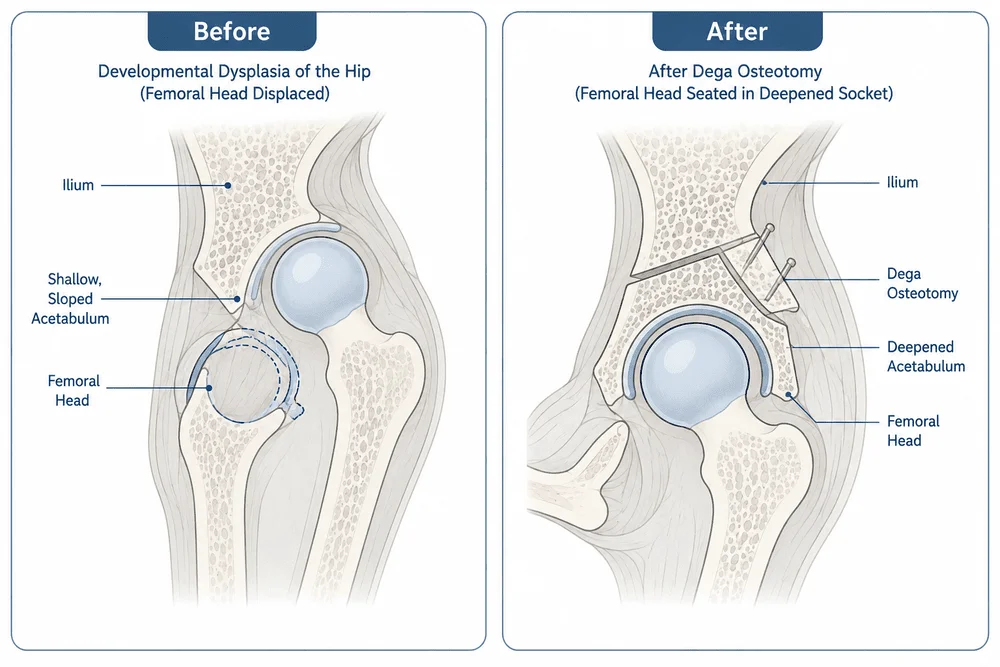
| من حوالي 18 شهرًا إلى 4 سنوات | عملية ردّ مغلقة أو مفتوحة، غالباً مع تقصير عظم الفخذ | تُجرى عملية قطع عظم الحوض، غالباً بتقنية ديغا أو سالتر، بشكل متزايد في نفس الوقت بدلاً من انتظار رؤية كيفية إعادة تشكيل التجويف من تلقاء نفسه |
| من 4 إلى 8 سنوات تقريباً | التثبيت المفتوح مع قطع عظم الحوض | تتراجع قدرة التجويف الحقي على إعادة تشكيل نفسه بشكل حاد بعد حوالي أربع سنوات من العمر، لذلك يتم إجراء عملية قطع عظم الحوض، عادةً ما تكون عملية سالتر أو بيمبرتون أو ديجا اعتمادًا على تشريح الطفل، بشكل روتيني جنبًا إلى جنب مع عملية ردّ المفصل. |
إن التعافي في هذه الفئة العمرية أشبه بماراثون طويل الأمد وليس سباقاً قصيراً. يقضي الأطفال عادةً ما بين أربعة إلى سبعة أيام في المستشفى، ثم يرتدون جبيرة تثبيت الورك والحوض لمدة تتراوح بين ستة إلى اثني عشر أسبوعاً تقريباً ريثما تلتئم العظام، يليها عودة تدريجية إلى تحميل الوزن والمشي. يعود معظم الأطفال إلى المدرسة وممارسة أنشطتهم اليومية المعتادة قبل اكتمال نمو مفصل الورك، ولكن قد يستغرق نمط المشي الطبيعي ما يقارب العام حتى يستقر تماماً.
الأطفال الأكبر سنًا، والمراهقون الصغار، والجسر إلى جراحة المراهقين
بمجرد أن يتجاوز الطفل سن الثامنة تقريبًا، تكون قدرة التجويف الحقي على إعادة التشكيل قد استُنفدت إلى حد كبير. يتطلب تصحيح التشوه المتبقي الكبير في هذه المرحلة عادةً إجراءً جراحيًا أكثر شمولًا في الحوض، وغالبًا ما يكون قطعًا ثلاثيًا لعظم الحوض، والذي يُعيد وضع التجويف الحقي من خلال شقوق في ثلاثة عظام حوضية منفصلة بدلًا من عظمة واحدة. يسد هذا الإجراء الفجوة بين عمليات قطع عظم الحوض في مرحلة الطفولة المذكورة أعلاه وقطع عظم الحوض المحيط بالتجويف الحقي، والذي لا يمكن إجراؤه إلا بعد توقف نمو الحوض إلى حد كبير، وعادةً ما يكون ذلك في بداية سنوات المراهقة.
بالنسبة للأطفال في مرحلة ما قبل المراهقة والمراهقين الذين تم تشخيص إصابتهم، تُعد هذه المرحلة العمرية تحديدًا هي التي يكون فيها اختيار جراح متخصص في جراحة مفصل الورك للأطفال والمراهقين، بدلاً من جراح عام متخصص في مفاصل البالغين، أمرًا بالغ الأهمية. تمتلك الهند نخبة متميزة من جراحي العظام المتخصصين في جراحة الأطفال، الحاصلين على زمالات تدريبية وممارسات متخصصة في الحفاظ على مفصل الورك.
Dr. يتمتع مانوج بادمان، مدير قسم جراحة العظام للأطفال في مستشفى مادوكار رينبو للأطفال في نيودلهي، بخبرة تزيد عن عقدين من الزمن في علاج مجموعة كاملة من حالات الجهاز العضلي الهيكلي لدى الأطفال، بما في ذلك الحفاظ على مفصل الورك وتصحيح التشوهات، وذلك بعد حصوله على تدريب الزمالة في مستشفى شيفيلد للأطفال في المملكة المتحدة. الدكتور. سوميش ورمانيكرّس جراح عظام الأطفال، الحاصل على زمالة من كلية الطب المسيحية في فيلور، إحدى أكبر وحدات جراحة عظام الأطفال في الهند، ممارسته الطبية لأكثر من عقد من الزمن، حيث تخصص في حالات خلع الورك الخلقي لدى الأطفال، بما في ذلك جراحة الحفاظ على مفصل الورك. ويعمل في مستشفى سارفودايا في فريد آباد، التابع لشبكة HOSPIDIO. إن الجراحين من هذا النوع، الذين يعالجون خلع الورك الخلقي لدى الأطفال والمراهقين كجزء أساسي من ممارستهم الطبية وليس كحالة عرضية، هم تحديدًا من نسعى لربط العائلات بهم.
عرض مستشفى سارفودايا، فريد آباد على HOSPIDIO
اطلع على مستشفى رينبو للأطفال، نيودلهي على موقع HOSPIDIO
إن التشخيص المؤكد لخلع الورك الخلقي لدى طفل أو مراهق، بالإضافة إلى أي صور أشعة سينية أو فحوصات موجودة، يكفينا للبدء في مطابقة عائلتك مع أخصائي الحفاظ على مفصل الورك المناسب للأطفال وإعطائك فكرة مبكرة عن شكل العلاج.
لماذا غالباً ما يتم إغفال خلع الورك الخلقي ويظهر مجدداً في مرحلة البلوغ
يتناول المسار المذكور أعلاه الأطفال والمراهقين الذين يتم تشخيص خلع الورك لديهم، أو يعاود الظهور، قبل سن البلوغ. وهناك نمط ثانٍ ومختلف، وهو ما يفسر سبب مفاجأة خلع الورك لدى البالغين للعديد من المرضى وعائلاتهم: فهناك طريقتان ينتهي بهما الأمر بالبالغين إلى الإصابة بخلع الورك المصحوب بأعراض، والذي لم يتم علاجه جراحياً في مرحلة الطفولة على الإطلاق.
أولها خلل التنسج المتبقي من الطفولة. يختلف فحص خلع الورك الخلقي اختلافًا كبيرًا بين الدول، وحتى ضمن المجتمعات التي تخضع لفحوصات دقيقة، قد لا تُكتشف الحالات الحدية أو الخفيفة بالفحص السريري، خاصةً إذا لم يُستخدم التصوير بالموجات فوق الصوتية بشكل روتيني. قد يظل مفصل الورك الذي بدا مستقرًا بما فيه الكفاية في مرحلة الرضاعة ضحلًا بشكل طفيف، وهذا الضحل يُسبب ضغطًا إضافيًا على المفصل على مدى عقود من الاستخدام.
أما النوع الثاني فهو خلل التنسج الحقي الذي يبدأ في سن المراهقة، وهو حالة منفصلة تمامًا. في هذه الحالة، ينمو مفصل الورك بشكل طبيعي في الطفولة المبكرة، ولكن يظهر خلل مرتبط بالنمو في الحُقّ خلال طفرة النمو في سن المراهقة، بين الثانية عشرة والثامنة عشرة تقريبًا. وهذا يعني أنه يمكن تشخيص إصابة شاب بخلل التنسج على الرغم من أن فحص الورك الذي أُجري له عند الولادة كان طبيعيًا تمامًا.
يشترك كلا النمطين في عوامل الخطر نفسها: التاريخ العائلي لمشاكل الورك، والولادة المقعدية، والجنس الأنثوي. يُعدّ خلل التنسج الوركي لدى البالغين أكثر شيوعًا بشكل ملحوظ لدى النساء منه لدى الرجال، على الرغم من أن الفارق أقل منه في خلل التنسج الوركي الخلقي لدى الرضع. في عموم السكان البالغين، تشير التقديرات المنشورة إلى أن نسبة الإصابة بخلل التنسج الوركي الشعاعي تبلغ حوالي 3.8% لدى النساء مقارنةً بـ 2.7% لدى الرجال. أما بين البالغين الذين تم تشخيص إصابتهم تحديدًا بخلل التنسج الحُقّي، فتشكل النساء حوالي 88% من الحالات.
يُعدّ هذا الأمر بالغ الأهمية في مجال جراحة العظام. ففي بعض بيانات السجلات الوطنية للمفاصل، يُمثّل خلع الورك الخلقي أكثر من خُمس عمليات استبدال مفصل الورك التي تُجرى للبالغين دون سن الخمسين، مما يجعله أحد الأسباب الرئيسية لتدهور مفصل الورك المبكر في هذه الفئة العمرية، ويأتي في المرتبة الثانية بعد التهاب المفاصل التنكسي الناتج عن التآكل العام في عموم السكان، ولكنه يُمثّل نسبةً أعلى بين المرضى الأصغر سنًا.
هل تعاني من ألم مزمن في الورك أو الفخذ لم يتم تشخيصه بشكل صحيح لاستبعاد خلل التنسج؟ أرسل لنا تاريخك الطبي وأي صور أشعة موجودة، وسيساعدك فريقنا في فهم ما هي الفحوصات التصويرية والمراجعة المتخصصة المناسبة لك.
كيف يظهر خلع الورك الخلقي لدى البالغين والمراهقين
على عكس خلع الورك الخلقي عند الرضع، والذي يُكتشف عادةً بالفحص قبل ظهور الأعراض، فإن خلع الورك الخلقي عند البالغين يُظهر أعراضه دائمًا تقريبًا من خلال الألم. تشمل الأعراض الشائعة ما يلي:
- ألم الفخذ، وهو غالباً العرض الأول والأكثر ثباتاً، ويزداد سوءاً عادةً مع النشاط أو الوقوف لفترات طويلة أو بعد التمرين.
- إحساس ميكانيكي بالنقر أو التعثر أو الانغلاق، والذي غالباً ما يشير إلى تمزق مصاحب في الغضروف المفصلي.
- عرج طفيف، خاصة بعد فترات طويلة من المشي أو الوقوف
- انخفاض نطاق الحركة، خاصة مع ثني الورك والدوران الداخلي
- الشعور بالتيبس بعد الجلوس لفترات طويلة، كما هو الحال أثناء السفر أو العمل المكتبي
- في الحالات الأكثر تقدماً، تشمل أعراض التهاب المفاصل المبكر ما يلي: ألم مستمر أثناء الراحة، وتيبس صباحي، وفقدان تدريجي للوظيفة.
نظرًا لتشابه هذه الأعراض بشكل كبير مع أعراض إجهاد الورك العام، والإصابات الرياضية، والتهاب المفاصل المبكر، غالبًا ما يُشخَّص خلع الورك الخلقي لدى البالغين بشكل خاطئ أو يُعزى إلى الإفراط في الاستخدام لأشهر أو سنوات قبل تحديد الخلل التنسجي الكامن. ومن القواعد المفيدة: أن استمرار ألم الفخذ لدى شاب أو بالغ في منتصف العمر يتمتع بصحة جيدة، وخاصةً لدى النساء، والذي لا يزول بالراحة والعلاج الطبيعي الأساسي، يستدعي إجراء تصوير طبي لتحديد وجود أو استبعاد الخلل التنسجي.
التشخيص وضرورة الحصول على رأي ثانٍ
يبدأ التشخيص بتصوير الحوض بالأشعة السينية أثناء تحمل الوزن، مما يسمح للجراح بقياس درجة تغطية الحُق باستخدام زوايا قياسية مثل زاوية مركز الحافة الجانبية وزاوية تينيس. تُحدد هذه القياسات موقع الورك على طيف يتراوح من الطبيعي إلى الحد الفاصل وصولاً إلى خلل التنسج الواضح.
في حالة الاشتباه في حدوث تمزق في الشفا أو تلف في الغضروف، وهو أمر شائع إلى جانب خلل التنسج، فإن التصوير بالرنين المغناطيسي أو التصوير بالرنين المغناطيسي المفصلي يعطي صورة أوضح بكثير للأنسجة الرخوة مقارنة بالأشعة السينية وحدها.
هنا يكمن الجانب الذي نعتقد أن المرضى الذين يبحثون عن هذه الحالة لا يحصلون على المعلومات الكافية من معظم المصادر المتاحة عبر الإنترنت: فقياس خلل التنسج ليس دائمًا واضحًا تمامًا. الحالات الحدية، على وجه الخصوص، قد تُفسَّر بشكل مختلف من قِبَل أخصائيي الأشعة والجراحين، وتكون آثار العلاج المترتبة على هذه القراءة الحدية كبيرة. قد يُعالج مفصل الورك الذي يُصنَّف على أنه طبيعي بشكل حدي بالعلاج الطبيعي والمتابعة. أما مفصل الورك نفسه الذي يُصنَّف على أنه مصاب بخلل تنسج حدي، فقد يكون مرشحًا قويًا لجراحة الحفاظ على المفصل. هذه ليست تفصيلة فنية بسيطة، بل غالبًا ما تكون هي العامل الحاسم الذي يُحدد ما إذا كانت الجراحة مطروحة أصلًا.
لهذا السبب، نوصي باستمرار بالحصول على رأي ثانٍ من جراح يعالج على وجه التحديد خلل التنسج الوركي ويجري جراحة الحفاظ على المفصل، بدلاً من الاعتماد فقط على التقييم العام لجراحة العظام، قبل الالتزام بخطة العلاج.
خيارات علاج خلع الورك الخلقي لدى المراهقين والبالغين: نظرة عامة
بالنسبة للمرضى الذين بلغوا أو اقتربوا من اكتمال نمو الهيكل العظمي، أي في بداية سن المراهقة وما فوق، يعتمد العلاج بشكل كبير على شدة خلل التنسج، وحالة الغضروف، وعمر المريض وأهدافه من حيث النشاط. يوضح الجدول أدناه إطارًا عامًا. أما بالنسبة للأطفال الأصغر سنًا، فيُرجى الاطلاع على الخيارات الجراحية المصنفة حسب الفئة العمرية والمذكورة سابقًا في هذا الدليل.
| خيار | الأنسب ل | ما تنطوي عليه |
| إدارة المحافظين | خلل التنسج الخفيف، أعراض مبكرة أو متقطعة | العلاج الطبيعي، وتعديل النشاط والحمل، وإدارة الالتهابات، والمراقبة بالتصوير الدوري |
| تنظير مفصل الورك | تمزق أو انحشار في الشفا مع خلل تنسج طفيف، وغضروف محفوظ جيدًا | إصلاح الغضروف المفصلي أو إزالة العظم المتداخل باستخدام تقنية ثقب المفتاح. لا يُعالج هذا الإجراء خلل التنسج الأساسي نفسه. |
| قطع عظم الحوض حول الحُق (PAO) | خلل التنسج المتوسط إلى الشديد المصحوب بأعراض، في الأعمار من 12 إلى 40 عامًا تقريبًا، مع الحفاظ على الغضروف إلى حد كبير | إعادة وضع الحُقّ لاستعادة تغطية رأس عظم الفخذ، مع الحفاظ على المفصل الأصلي. |
| استبدال مفصل الورك | تلف المفاصل المتقدم، أو فقدان الغضروف الكبير، أو فشل محاولات الحفاظ على المفاصل، في أي عمر | استبدال أسطح المفاصل التالفة بمكونات اصطناعية |
اقرأ مقارنتنا الكاملة بين العلاج الطبيعي والجراحة لعلاج التهاب مفاصل الورك والركبة
قطع عظم الحوض حول الحُق: الحفاظ على مفصل الورك الأصلي
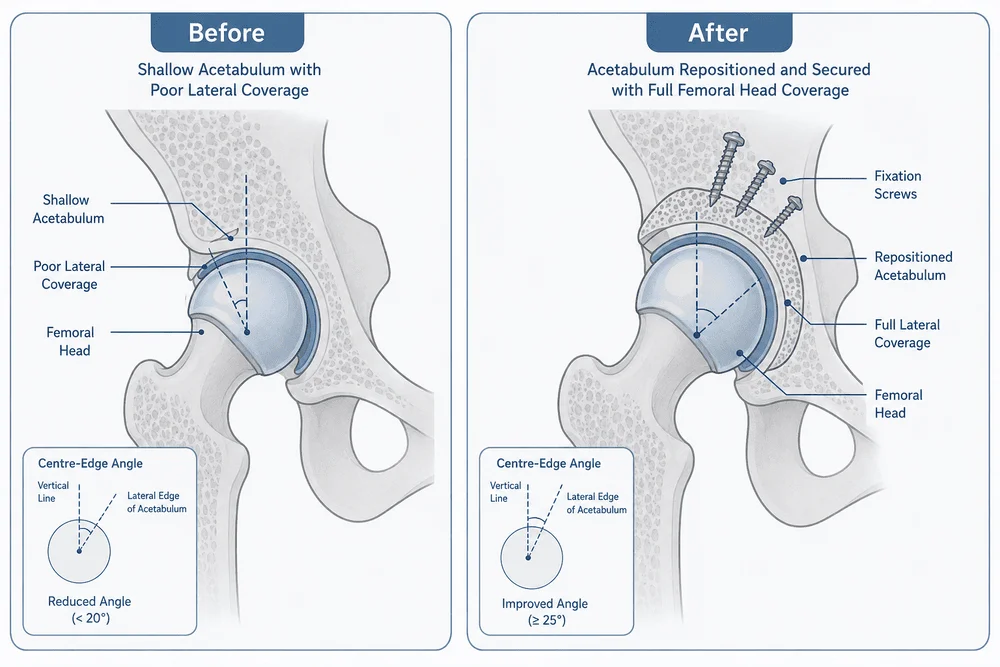
يُعدّ قطع عظم الحوض حول الحُقّ، والذي يُختصر عادةً إلى PAO، الإجراء الأمثل لعلاج خلل التنسج المصحوب بأعراض لدى المرضى صغار السن، أو الذين يتمتعون بسلامة غضروفية جيدة، بحيث لا يُبرر اللجوء مباشرةً إلى استبدال مفصل الورك. وتتضمن هذه التقنية، التي يُشار إليها غالبًا باسم PAO البرني نسبةً إلى المركز السويسري الذي طُوّرت فيه، إجراء سلسلة من الشقوق المُتحكّم بها حول الحُقّ، وفصله عن عظام الحوض المحيطة، ثم إعادة توجيه التجويف لتغطية رأس عظم الفخذ بشكل صحيح قبل تثبيته في موضعه الجديد باستخدام البراغي. ويبقى عظم الفخذ نفسه دون أي تدخل.
الهدف هو تصحيح المشكلة الميكانيكية الأساسية مع الحفاظ على مفصل المريض الأصلي. عند نجاح هذه العملية، يتم تخفيف الألم، واستعادة استقرار المفصل، والأهم من ذلك بالنسبة للمرضى الأصغر سنًا، تأخير أو إلغاء الحاجة إلى استبدال مفصل الورك لسنوات عديدة، وأحيانًا مدى الحياة.
يُنصح عمومًا بإجراء عملية إعادة توجيه الحوض (PAO) للمرضى الذين تتراوح أعمارهم بين 12 و40 عامًا تقريبًا، والذين يعانون من خلل التنسج المصحوب بأعراض وتغيرات التهابية مفصلية مبكرة طفيفة إلى متوسطة في التصوير. وبمجرد حدوث فقدان كبير في الغضروف، تقل احتمالية نجاح عملية إعادة توجيه الحوض في تحقيق نتائج دائمة، ويصبح استبدال مفصل الورك الخيار الأنسب.
هذه عملية جراحية دقيقة تتطلب مهارة عالية، وتُجرى في ممر جراحي ضيق بالقرب من الأعصاب والأوعية الدموية الرئيسية، وتعتمد نتائجها بشكل كبير على عدد مرات إجراء الجراح لها. عند تقييم المستشفيات أو الجراحين لإجراء عملية إعادة توجيه مفصل الورك (PAO)، فإن السؤال الأهم هو عدد عمليات PAO التي يُجريها هذا الجراح تحديدًا سنويًا، وليس سمعة المستشفى العامة في مجال جراحة العظام.
خلال فترة التعافي: تتطلب عملية إعادة توجيه مفصل الورك عادةً إقامة في المستشفى لمدة تتراوح بين ثلاثة وخمسة أيام، تليها فترة تتراوح بين ستة وثمانية أسابيع باستخدام العكازات مع تحميل محدود للوزن أثناء التئام العظم المُعاد وضعه، ثم العودة التدريجية إلى النشاط الكامل على مدى ستة إلى تسعة أشهر. تشير الدراسات المنشورة حول النتائج طويلة الأمد التي تتابع مرضى إعادة توجيه مفصل الورك لمدة خمسة عشر عامًا إلى أن معظم المرضى الذين تم اختيارهم بعناية يحتفظون بمفصلهم الأصلي خلال تلك الفترة دون الحاجة إلى استبدال مفصل الورك، على الرغم من أن النسبة الدقيقة تختلف بين الدراسات وتعتمد بشكل كبير على مدى تقدم تلف المفصل وقت الجراحة. من الأفضل مناقشة هذا الأمر مباشرةً مع جراحك في ضوء نتائج التصوير الطبي الخاص بك، بدلاً من اعتبار أي رقم منشور واحد بمثابة ضمان.
استبدال مفصل الورك بالكامل في حالة خلل التنسج الوركي
عندما يتطور خلل التنسج إلى التهاب مفصلي حاد، أو عندما يتجاوز المريض السن أو حالة المفصل التي تجعل الجراحة المحافظة خيارًا مناسبًا، يصبح استبدال مفصل الورك بالكامل هو الخيار الموصى به. من المهم فهم أن عملية استبدال مفصل الورك في حالة خلل التنسج تختلف اختلافًا جوهريًا عن عملية استبدال مفصل الورك القياسية التي تُجرى لعلاج التهاب المفاصل التنكسي المرتبط بالتقدم في السن.
يكمن الاختلاف الأساسي في التشريح. غالبًا ما يكون التجويف الحقي المصاب بخلل التنسج أقل عمقًا أو أصغر حجمًا أو مختلفًا في اتجاهه عن التجويف الحقي الطبيعي، مما قد يُصعّب تثبيت مكون التجويف البديل بشكل آمن ومُغطّى جيدًا. اعتمادًا على شدة الحالة، قد يحتاج الجراح إلى استخدام غرسات أصغر حجمًا أو مصممة خصيصًا، أو تدعيم التجويف بطعم عظمي لزيادة التغطية، أو تخطيط العملية الجراحية بما يتناسب مع درجة اختلاف طول الساقين الشائعة في حالات خلل التنسج المزمن. لا يُعد أي من هذا إجراءً قياسيًا في جراحة استبدال مفصل الورك الروتينية لعلاج التهاب المفاصل الناتج عن التآكل.
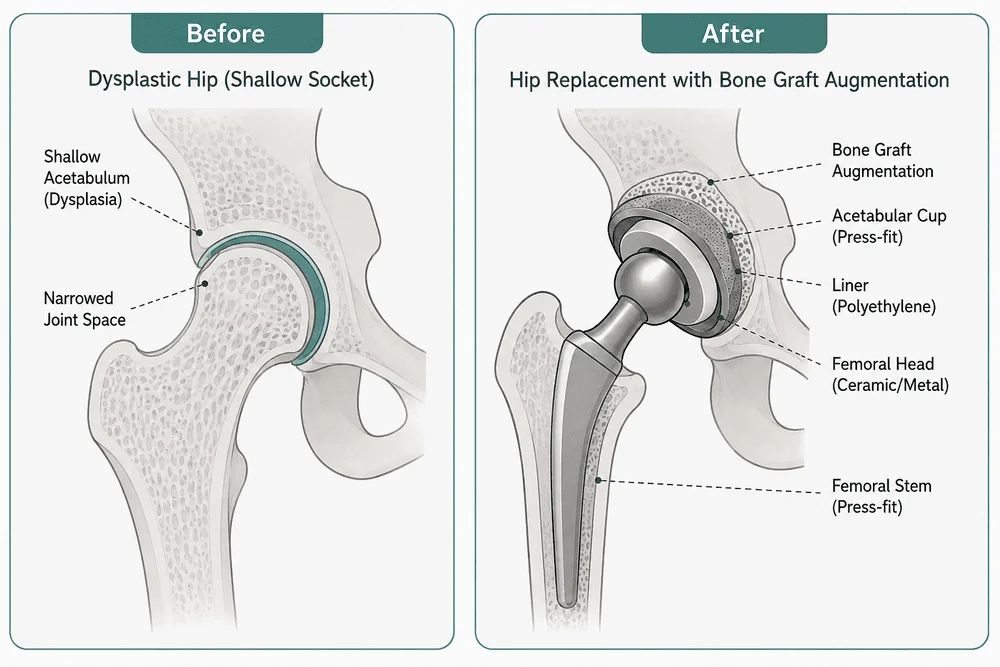
والنتيجة العملية لذلك هي أن خبرة الجراح في التعامل مع التشريح التشريحي غير الطبيعي تحديدًا، وليس فقط في عدد عمليات استبدال مفصل الورك بشكل عام، تؤثر بشكل كبير على أداء الزرعة على المدى الطويل. ويزداد هذا الأمر أهميةً بالنسبة للمرضى الأصغر سنًا، الذين تزيد احتمالية حاجتهم إلى جراحة تصحيحية في مرحلة ما من حياتهم، نظرًا لأنهم يعيشون على الزرعة لفترة أطول، وعادةً ما يكونون أكثر نشاطًا من المرضى الأكبر سنًا الذين يخضعون لنفس العملية.
ملاحظة سريعة حول مخاطر إعادة الجراحة: إن اختيار جراح ومستشفى يتمتعان بخبرة محددة في تشريح مفصل الورك المصاب بخلل التنسج ليس تفضيلاً بسيطاً، بل يؤثر بشكل كبير على مدى نجاح عملية استبدال مفصل الورك على مدى السنوات الخمس عشرة إلى العشرين التالية، وخاصة بالنسبة للمرضى في العشرينات أو الثلاثينات أو الأربعينات من العمر.
اطلع على تفاصيل تكلفة استبدال مفصل الورك في الهند
قارن تكلفة استبدال مفصل الورك في تركيا
توقيت الجراحة وتنظيم الأسرة
نظرًا لأن خلل التنسج أكثر شيوعًا بين النساء، فإن السؤال الحقيقي والعملي الذي يطرحه العديد من المرضى في العشرينات والثلاثينات من العمر هو كيفية التوفيق بين جراحة إعادة توجيه الحوض أو استبدال مفصل الورك وخطط الإنجاب. هذه نقطة حاسمة نادرًا ما نجدها مطروحة في المعلومات العامة حول خلل التنسج النمائي للورك، ومع ذلك فهي تُثار باستمرار في أحاديثنا مع مرضانا.
لا توجد إجابة صحيحة واحدة، وهذا نقاش يجب إجراؤه مباشرة مع الجراح المعالج، ولكن الأسئلة التي تستحق الطرح تشمل عادةً ما يلي:
- ما هي المدة الموصى بها للتعافي قبل محاولة الحمل، بالنظر إلى وقت التئام العظام المصاحب لجراحة إعادة توجيه الحوض أو التئام الأنسجة الرخوة المصاحب لجراحة استبدال مفصل الورك؟
- سواء تم الحفاظ على المفصل بعد عملية إعادة توجيه الحوض أو استبداله بعد عملية استبدال مفصل الورك، فإن ذلك يستلزم اعتبارات مختلفة فيما يتعلق بالحمل وتحمل الوزن والولادة.
- سواء كان من الأنسب، بالنظر إلى حالتك الخاصة، إجراء الجراحة قبل الحمل أو إدارة الأعراض بشكل تحفظي وإعادة النظر في إجراء الجراحة بعد ذلك
إن طرح هذا الأمر بشكل مباشر ومبكر، ويفضل أن يكون ذلك في نفس الاستشارة التي يتم فيها مناقشة خيارات العلاج لأول مرة، يسمح بإدراجه في خطة العلاج بدلاً من التعامل معه كفكرة لاحقة.
خلع الورك الخلقي الثنائي وتخطيط العلاج على مراحل
غالباً ما يُلاحظ وجود خلل التنسج بدرجة ما في كلا الوركين، وإن لم يكن ذلك دائماً، حتى عند تشخيص حالة واحدة فقط. إذا استدعت الحالة إجراء جراحة لكلا الوركين، فعادةً ما تُجرى الجراحة على مرحلتين بدلاً من إجرائها في وقت واحد، مع التوصية بفترة نقاهة تمتد لعدة أشهر بين العملية الأولى والثانية للسماح بالشفاء والتأهيل الكافيين قبل تحميل الورك الذي خضع للجراحة بشكل كامل.
بالنسبة للمرضى الذين يسافرون دوليًا لتلقي العلاج، فإن لهذا الأمر دلالة عملية مباشرة: فالعلاج الثنائي لا يتطلب رحلة واحدة. من المهم تحديد ما إذا كانت حالتك تتطلب جراحة ثنائية على مراحل، وذلك في وقت مبكر من التخطيط، ويفضل خلال مراجعة حالتك الأولية، لأن هذا يؤثر على مدة العلاج الإجمالية، وعدد الرحلات المطلوبة، والتكلفة الإجمالية. يراعي فريقنا هذا الأمر في خطة علاجك منذ البداية، بدلاً من تركه مفاجأة في منتصف الطريق.
ما يجب التحقق منه عند اختيار مستشفى أو جراح لعلاج خلع الورك الخلقي في الخارج
يُعدّ خلع الورك الخلقي من التخصصات الدقيقة في جراحة العظام، ولا تضمن الخبرة العامة في جراحة استبدال المفاصل بالضرورة نتائج ممتازة لعلاج خلع الورك الخلقي تحديدًا. عند تقييم المستشفيات والجراحين، نقترح البحث عن:
- برنامج متخصص للحفاظ على مفصل الورك، وليس مجرد قسم عام لاستبدال المفاصل
- بالنسبة للطفل أو ما قبل المراهقة، يُفضل جراح عظام أطفال متخصص في حالات الورك لدى الأطفال، بدلاً من جراح مفاصل عام للبالغين يُجري عمليات جراحية للمرضى الأصغر سنًا من حين لآخر.
- جراح لديه عدد كبير من العمليات السنوية، وتحديداً في جراحة إعادة توجيه الحوض حول الحُق أو استبدال مفصل الورك المرتبط بخلل التنسج، وليس فقط أعداد عمليات استبدال مفصل الورك العامة.
- إمكانية الوصول إلى خبرات الحفاظ على المفاصل واستبدالها في نفس المركز، بحيث يمكن تعديل الخطة الجراحية إذا اختلفت النتائج أثناء العملية عما أشارت إليه نتائج التصوير.
- توفر الغرسات المتخصصة وإمكانية ترقيع العظام للحالات التي تتطلب استبدال مفصل الورك المعزز
- اعتماد معترف به دوليًا مثل JCI أو NABH، وقسم دولي راسخ للمرضى
نعمل مع شبكة من مستشفيات جراحة العظام في جميع أنحاء الهند، ونختار لكل مريض جراحًا متخصصًا بناءً على صور الأشعة وتاريخ حالته، بدلًا من الاعتماد على مستشفى واحد لكل حالة خلع الورك الخلقي. ندعوكم للاطلاع على بعض مقارناتنا التفصيلية بين المستشفيات لفهم كيفية مقارنة المراكز الرائدة في مختلف المدن.
- أبولو مقابل إم آي أو تي مقابل جلين إيجلز مقابل إم جي إم مقابل سيمز: أفضل مستشفى في تشيناي
- أبولو مقابل مانيبال مقابل فورتيس مقابل أستر: أفضل مستشفى في بنغالور
- أفضل 10 مستشفيات جراحة العظام في الهند
التخطيط لرحلة علاجك إلى الهند
بمجرد تأكيد خطة العلاج، يصبح الجانب العملي للسفر لتلقي الرعاية لا يقل أهمية عن الجراحة نفسها. تتولى HOSPIDIO إدارة هذه العملية بالكامل، دون أي تكلفة عليك، بما في ذلك:
- نساعدك في اختيار أخصائي مناسب للحفاظ على مفصل الورك أو استبداله بناءً على حالتك.
- إرشادات ودعم في إعداد تأشيرات العلاج الطبي
- الاستقبال من المطار، وترتيبات الإقامة، وخدمات النقل المحلية
- التنسيق مع فريق المرضى الدوليين في المستشفى طوال فترة إقامتك، بما في ذلك أي جراحة ثنائية المراحل.
- متابعة طبية عن بعد الخروج من المستشفى مع طبيبك المعالج بمجرد عودتك إلى المنزل
إذا كان التأمين جزءًا من تخطيطك المالي للعلاج، فإن تغطية الجراحة في الخارج تختلف اختلافًا كبيرًا حسب البوليصة ومقدم الخدمة، ومن الجدير بالاهتمام فهم ما هو ممكن عادةً قبل السفر.
- هل يغطي التأمين العلاج الطبي في الهند للأجانب؟
- تأشيرة العلاج الطبي في الهند ودعم الإقامة: دليل شامل للمرضى الدوليين
- من واتساب إلى الخروج من المستشفى: كيف تدير HOSPIDIO رحلتك الطبية بأكملها
الجداول الزمنية للتعافي وإعادة التأهيل
تختلف فترات التعافي باختلاف الإجراء الطبي والحالة الفردية. النطاقات المذكورة أدناه هي إرشادات عامة وليست ضمانًا لأي مريض محدد، وينبغي على المرضى المسافرين دوليًا التخطيط وفقًا للحدود الأطول لكل نطاق.
| العملية | الإقامة النموذجية في المستشفى | تحمل الوزن | العودة إلى المدرسة أو العمل المكتبي | العودة إلى النشاط الكامل |
| جراحة ردّ مفتوح للأطفال مع قطع عظم الحوض | 4 إلى أيام 7 | جبيرة سبايكا، من 6 إلى 12 أسبوعًا | بمجرد إزالة الجبيرة | 6 إلى أشهر 12 |
| تنظير مفصل الورك | حالة يومية أو ليلة واحدة | جزئي، من أسبوع إلى أسبوعين | 1 إلى أسابيع 2 | 3 إلى أشهر 4 |
| بيستيتابولار العظم | 3 إلى أيام 5 | استخدام العكازات، جزئياً، من 6 إلى 8 أسابيع | 6 إلى أسابيع 8 | 6 إلى أشهر 9 |
| استبدال مفصل الورك | 4 إلى أيام 6 | أداة مساعدة على المشي، من أسبوعين إلى أربعة أسابيع | 4 إلى أسابيع 6 | 3 إلى أشهر 6 |
تكلفة علاج خلع الورك الخلقي: الهند في سياقها
تُعد التكلفة أحد أبرز الأسباب التي تدفع المرضى الدوليين لاختيار الهند لعلاج خلع الورك الخلقي، على الرغم من أنه ينبغي قراءة الأرقام الواردة أدناه كنقاط بداية إرشادية وليست عرض أسعار ثابت، حيث تعتمد التكلفة النهائية بشكل كبير على مدى تعقيد الإجراء، وما إذا كان مطلوبًا ترقيع العظام أو غرسات متخصصة، ومستوى المستشفى المختار.
| العملية | تكلفة المؤشر في الهند (بالدولار الأمريكي) |
| جراحة ردّ مفتوح للأطفال مع قطع عظم الحوض | من 5,000$ الي 7,000$ |
| تنظير مفصل الورك | من 1,200$ الي 3,500$ |
| قطع عظم الحوض حول الحُق (PAO) | من 3,500$ الي 6,000$ |
| استبدال مفصل الورك | من 4,500$ الي 7,500$ |
| استبدال مفصل الورك بالكامل، تركيا للمقارنة | من 10,000$ الي 15,000$ |
للتوضيح، بلغت تكلفة عملية استبدال مفصل الورك بالكامل في الولايات المتحدة تاريخياً أكثر من 40,000 ألف دولار، وعادةً ما تصل تكلفة العلاج الخاص في المملكة المتحدة أو أوروبا الغربية إلى نطاق مماثل بعد إضافة أجور الجراح والمستشفى وزرع المفصل. هذا هو جوهر الميزة الاقتصادية التي يأخذها المرضى في الاعتبار عند التفكير في العلاج في الهند.
يقدم HOSPIDIO تقديرًا شخصيًا للتكلفة في غضون 24 إلى 48 ساعة بناءً على مراجعة تقاريرك وصورك، بدون أي تكلفة أو التزام.
جاهز للبدء؟
سواء كنت تبحث عن خيارات للحفاظ على المفصل أو تفكر في استبدال مفصل الورك لعلاج خلع الورك الخلقي، يمكن لفريقنا مراجعة صور الأشعة الخاصة بك وربطك بالأخصائي المناسب في الهند. مراجعة مجانية للحالة. سرية تامة. بدون أي التزامات.
المدونات الأخيرة


الأسئلة الشائعة
يعتمد الأمر على عمر الطفل عند تأكيد عدم استقرار مفصل الورك أو خلعه. عادةً ما يخضع الأطفال الذين تتراوح أعمارهم بين 18 شهرًا و4 سنوات لعملية ردّ مغلقة أو مفتوحة، وأحيانًا تُضاف إليها عملية قطع عظم الحوض. يحتاج الأطفال الذين تتراوح أعمارهم بين 4 و8 سنوات تقريبًا إلى عملية قطع عظم الحوض إلى جانب ردّ المفصل، نظرًا لتراجع قدرة تجويف الحوض على إعادة تشكيل نفسه في هذا العمر. أما الأطفال الأكبر سنًا والمراهقون، بعد سن الثامنة تقريبًا، فيحتاجون غالبًا إلى عملية قطع عظم الحوض الثلاثية، وتصبح عملية قطع عظم الحوض حول الحُقّ خيارًا متاحًا عندما يقترب الحوض من اكتمال نموه، عادةً في بداية سنوات المراهقة.
تُستخدم الجبيرة الكاملة لتثبيت الورك والحوض، وعادةً إحدى الساقين أو كلتيهما، للحفاظ على المفصل في مكانه أثناء التئام العظم بعد عملية ردّ الكسر أو قطع عظم الحوض. يرتدي الأطفال هذه الجبيرة عادةً لمدة تتراوح بين ستة إلى اثني عشر أسبوعًا، وتختلف المدة الدقيقة حسب نوع العملية الجراحية وسرعة التئام الورك. يُعدّ هذا تغييرًا كبيرًا للطفل وعائلته، ويمكن لفريقنا المساعدة في توفير الدعم العملي اللازم خلال هذه الفترة من الإقامة في الهند.
نعم. يمكن أن تمر حالات خلل التنسج الخفيفة أو الحدية دون أن يتم اكتشافها خلال مرحلة الرضاعة والطفولة، ولا تظهر أعراضها إلا عندما يبدأ الإجهاد التراكمي لسنوات من النشاط في التسبب في تلف الغضروف المفصلي أو الغضروف، وعادة ما يكون ذلك في أواخر سن المراهقة وحتى الثلاثينيات.
لا يكفي وحده. يعالج تنظير مفصل الورك المشاكل المصاحبة مثل تمزق الغضروف المفصلي أو انحشار المفصل، ولكنه لا يُصحح شكل التجويف المفصلي الأساسي. بالنسبة للمرضى الذين يعانون من خلل التنسج الملحوظ، غالبًا ما يوفر التنظير وحده راحة مؤقتة فقط، ولهذا السبب من المهم تقييم درجة خلل التنسج بدقة قبل اختيار هذا الخيار.
تُعيد عملية إعادة توجيه مفصل الورك (PAO) وضع تجويف مفصل الورك الطبيعي لإصلاح المشكلة الميكانيكية الأساسية مع الحفاظ على المفصل. أما عملية استبدال مفصل الورك فتزيل أسطح المفصل التالفة وتستبدلها بمكونات اصطناعية. تُعتبر عملية إعادة توجيه مفصل الورك (PAO) مناسبة بشكل عام للمرضى الأصغر سنًا الذين يتمتعون بغضروف سليم، بينما تُستخدم عملية استبدال مفصل الورك عندما يُصاب المفصل بتلف مفصلي كبير نتيجة التهاب المفاصل.
يُنجب العديد من المرضى أطفالاً بعد أيٍّ من العمليتين. يختلف التوقيت وأي احتياطات خاصة بحالتك، ويجب مناقشتها مباشرةً مع جراحك المعالج كجزء من خطة علاجك.
ليس بالضرورة. غالبًا ما يكون خلل التنسج موجودًا بدرجة ما في كلا الجانبين، لكن العديد من المرضى لا يحتاجون إلا إلى علاج جراحي للورك المصاب بالأعراض. إذا كان كلا الوركين بحاجة إلى علاج، فعادةً ما يتم ذلك على مرحلتين منفصلتين بدلًا من إجرائه في نفس الوقت.
يختلف هذا الأمر باختلاف الإجراء. كدليل عام، يُنصح بتخصيص فترة تتراوح بين أسبوع إلى أسبوعين لجراحة تنظير مفصل الورك، وثلاثة إلى أربعة أسابيع لجراحة إعادة تشكيل الحوض، وأسبوعين إلى ثلاثة أسابيع لجراحة استبدال مفصل الورك، وذلك لإتاحة الوقت الكافي للتقييم قبل الجراحة، وإجراء العملية نفسها، والتعافي المبكر قبل أن تصبح لائقًا للسفر جوًا. سيؤكد استشاري المرضى الخاص بك التوقيت الدقيق بمجرد الانتهاء من وضع خطة العلاج.
يعتمد هذا الأمر كلياً على وثيقة التأمين الخاصة بك. بعض خطط التأمين الدولية تُتيح العلاج بدون دفع نقدي أو تعويض تكاليف الرعاية الصحية في الخارج، بينما لا تُغطي خطط أخرى العمليات الجراحية الاختيارية في الخارج. يُمكن لفريقنا مساعدتك في فهم ما تُغطيه وثيقة التأمين الخاصة بك بمجرد تزويدنا بالتفاصيل.
Dr. باسم بارفيز أخصائي علاج طبيعي مرخص واستشاري أول للمرضى في مستشفى هوسبيديو، حاصل على ماجستير إدارة الأعمال في الإدارة الصحية. بفضل خبرته السريرية الواسعة ونهجه الإنساني، يساعد المرضى في رحلة علاجهم. Dr. كما يستغل باسم موهبته في الكتابة لتبسيط المعلومات المعقدة المتعلقة بالرعاية الصحية، مما يمكّن المرضى من اتخاذ قرارات مستنيرة ويعزز الوضوح والثقة في رحلاتهم الطبية.
غونيت بهاتيا مؤسسة هوسبيديو، وهي مُراجعة محتوى بارعة تتمتع بخبرة واسعة في تطوير المحتوى الطبي، وتصميم المواد التعليمية، والتدوين. شغوفةٌ بإنشاء محتوى مؤثر، تُبدع في ضمان الدقة والوضوح في كل مادة. تستمتع غونيت بالتفاعل مع أشخاص من خلفيات عرقية وثقافية متنوعة، مما يُثري منظورها. في أوقات فراغها، تُقدّر غونيت قضاء وقت ممتع مع عائلتها، وتستمتع بالموسيقى الجميلة، وتُحبّ تبادل الأفكار المبتكرة مع فريقها.