
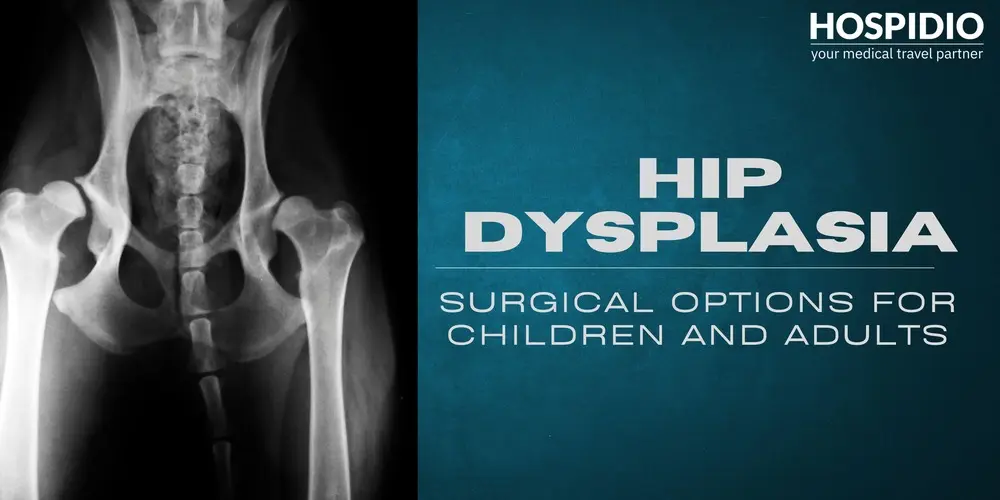
Quando la maggior parte delle persone sente parlare di displasia evolutiva dell'anca, immagina un neonato in una clinica di screening. Questa è una parte della storia della DDH, ma non è l'argomento di questa guida.
Questa guida è pensata per tre gruppi di pazienti che visitiamo regolarmente presso HOSPIDIO: bambini che hanno superato la prima infanzia e la cui displasia congenita dell'anca (DCA) non si è risolta con un tutore e ora necessita di un intervento chirurgico; preadolescenti e adolescenti con diagnosi confermata che devono sottoporsi a un intervento di conservazione dell'anca; e adulti la cui displasia non è stata diagnosticata o si è ripresentata anni dopo l'infanzia. Abbiamo volutamente omesso di trattare lo screening neonatale, i tutori di Pavlik o le ortesi, poiché si tratta di procedure pediatriche di routine in quasi tutti i paesi e non di interventi per i quali le famiglie si recano all'estero. Ci concentriamo invece sul momento in cui la DCA diventa un problema che richiede un intervento chirurgico, a qualsiasi età, e su come tale decisione si concretizza nella pratica clinica.
Se a vostro figlio, a vostro figlio adolescente o a voi stessi è stata diagnosticata una displasia congenita dell'anca (DCA) e si sta valutando la possibilità di un intervento chirurgico, desideriamo fornirvi un quadro chiaro e completo delle opzioni disponibili e di come potrebbe essere il trattamento in India.
Descriveremo in dettaglio il quadro clinico e spiegheremo chiaramente come HOSPIDIO può essere d'aiuto. Collaboriamo con ospedali ortopedici e pediatrici in tutta l'India che trattano regolarmente la displasia congenita dell'anca (DCA) e, qualora il trattamento all'estero si rivelasse la soluzione migliore per la vostra famiglia, il nostro team si occuperà di tutti gli aspetti pratici del viaggio, oltre all'assistenza medica, senza alcun costo aggiuntivo per voi.
Che cos'è la displasia evolutiva dell'anca?
La displasia evolutiva dell'anca, comunemente abbreviata in DDH, descrive uno spettro di condizioni in cui l'articolazione dell'anca non si forma o non si posiziona correttamente. In un'anca sana, la testa del femore si trova in profondità all'interno di un acetabolo ben formato, la cavità nel bacino. Nella DDH, l'acetabolo può essere meno profondo o avere un'angolazione diversa da quella corretta, il che significa che la testa del femore non è completamente coperta o non è mantenuta saldamente in posizione.
La gravità di questa condizione varia notevolmente. Nei casi più lievi, l'anca può essere semplicemente instabile o leggermente sottosviluppata, condizione talvolta definita instabilità o displasia lieve. Nei casi più gravi, l'anca può essere parzialmente dislocata, in una condizione nota come sublussazione, o completamente fuori dalla cavità articolare, in una condizione chiamata lussazione.
La displasia congenita dell'anca (DCA) è comunemente considerata una condizione neonatale e la maggior parte dei paesi con sistemi sanitari organizzati effettua uno screening sui neonati tramite un esame fisico e, se indicato, un'ecografia nelle prime settimane di vita. Se diagnosticata precocemente, la DCA lieve spesso si risolve con l'uso di un tutore o di un'imbracatura. Ciò di cui si parla molto meno spesso, e su cui si concentra questa guida, è cosa succede quando la DCA non si risolve completamente durante l'infanzia, quando viene diagnosticata dopo che il bambino ha iniziato a camminare, o quando una forma più lieve di displasia non diventa sintomatica fino all'adolescenza o all'età adulta.
Perché la chirurgia diventa necessaria dopo l'infanzia?
Nei primi mesi di vita, la displasia congenita dell'anca (DCA) viene solitamente gestita senza intervento chirurgico. Un'imbracatura di Pavlik o un tutore simile mantiene l'anca in una posizione stabile mentre l'acetabolo continua a svilupparsi e, nella stragrande maggioranza dei bambini trattati in questo modo, l'anca si sviluppa normalmente.
L'intervento chirurgico diventa un'opzione in tre situazioni: quando l'ortesi non riesce a stabilizzare l'anca, quando la diagnosi viene formulata solo dopo che il bambino ha iniziato a camminare, in genere dopo i dodici-diciotto mesi, momento in cui la naturale capacità di rimodellamento dell'anca ha già iniziato a diminuire, oppure quando un'anca che ha risposto positivamente al trattamento precoce sviluppa displasia residua in età infantile. La letteratura ortopedica pediatrica indiana riflette una notevole esperienza pratica proprio con questo gruppo di pazienti, poiché la diagnosi tardiva, in cui il bambino viene portato a visita specialistica ben oltre la finestra temporale ideale per il trattamento, è più frequente in India rispetto ai paesi con programmi universali di screening neonatale. Questo è uno dei motivi per cui l'India ha sviluppato una solida competenza chirurgica in questo specifico ambito.
Trattamento chirurgico per bambini oltre la prima infanzia
Una volta che il bambino ha raggiunto o superato l'età in cui cammina, l'obiettivo del trattamento si sposta dall'utilizzo di tutori al riposizionamento fisico dell'anca e, se necessario, al rimodellamento dell'acetabolo per mantenerla in posizione. L'approccio dipende in larga misura dall'età e da come l'anca reagisce durante l'intervento chirurgico stesso.
| Fascia d'età | Approccio chirurgico tipico | Note |
| Da circa 18 mesi a 4 anni | Riduzione chiusa o aperta, spesso con accorciamento femorale. | Un'osteotomia pelvica, il più delle volte di Dega o di Salter, viene sempre più spesso aggiunta contemporaneamente, anziché attendere di vedere come la cavità si rimodella spontaneamente. |
| Da circa 4 a 8 anni | Riduzione a cielo aperto combinata con osteotomia pelvica | La capacità dell'acetabolo di rimodellarsi diminuisce drasticamente dopo i quattro anni di età circa, quindi un'osteotomia pelvica, in genere di Salter, Pemberton o Dega a seconda dell'anatomia del bambino, viene eseguita di routine insieme alla riduzione. |
Il recupero per questa fascia d'età è una vera e propria maratona, non uno sprint. I bambini in genere trascorrono dai quattro ai sette giorni in ospedale, poi indossano un gesso spica, un tutore che immobilizza l'anca e il bacino, per circa sei-dodici settimane, durante le quali le ossa guariscono, seguite da un graduale ritorno al carico e alla deambulazione. La maggior parte dei bambini torna a scuola e alle normali attività quotidiane ben prima che l'anca sia completamente guarita, ma un'andatura normale può richiedere quasi un anno per stabilizzarsi del tutto.
Bambini più grandi, preadolescenti e il passaggio alla chirurgia adolescenziale
Una volta superati gli otto anni circa, il potenziale di rimodellamento dell'acetabolo si è in gran parte esaurito. La correzione di una displasia residua significativa in questa fase richiede solitamente un intervento pelvico più esteso, il più delle volte un'osteotomia tripla dell'osso iliaco, che riposiziona la cavità acetabolare attraverso tagli in tre ossa pelviche separate anziché in una sola. Questo intervento colma il divario tra le osteotomie pelviche infantili descritte in precedenza e l'osteotomia periacetabolare, che non può essere eseguita finché il bacino non ha sostanzialmente completato la crescita, di solito non prima dell'inizio dell'adolescenza.
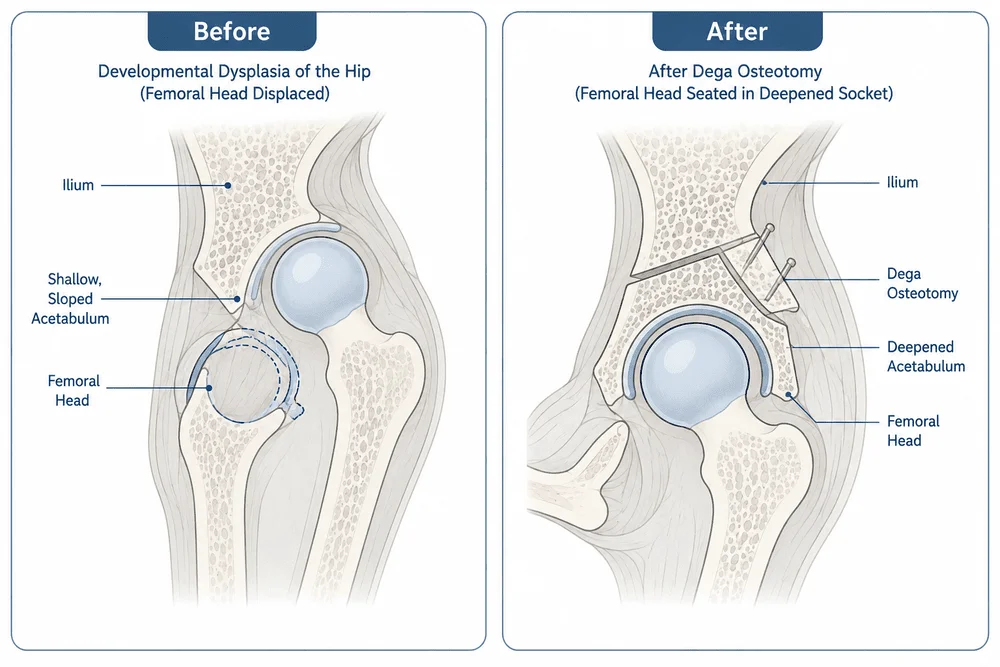
Per i preadolescenti e gli adolescenti con una diagnosi confermata, questa è proprio la fascia d'età in cui è fondamentale affidarsi a un chirurgo specializzato in chirurgia dell'anca pediatrica e adolescenziale, piuttosto che a un chirurgo ortopedico generico per adulti. L'India vanta un team di chirurghi ortopedici pediatrici di altissimo livello, con una formazione specialistica e una pratica dedicata alla conservazione dell'anca.
Dr. Manoj Padman, direttore di ortopedia pediatrica presso il Madhukar Rainbow Children's Hospital di Nuova Delhi, vanta oltre vent'anni di esperienza nel trattamento di tutte le patologie muscoloscheletriche pediatriche, tra cui la conservazione dell'anca e la correzione delle deformità, maturata dopo un periodo di specializzazione presso lo Sheffield Children's Hospital nel Regno Unito. Dr. Somesh VirmaniIl dottor [Nome del medico], chirurgo ortopedico pediatrico con specializzazione presso il Christian Medical College di Vellore, una delle più grandi unità di ortopedia pediatrica dell'India, si è dedicato per oltre un decennio specificamente alle patologie dell'anca in età pediatrica, tra cui la displasia congenita dell'anca (DCA) e la chirurgia conservativa dell'anca, e opera presso il Sarvodaya Hospital di Faridabad, parte della rete HOSPIDIO. Chirurghi come lui, che trattano la DCA nei bambini e negli adolescenti come parte integrante della loro pratica e non come un caso occasionale, sono esattamente i professionisti che cerchiamo di mettere in contatto con le famiglie.
Visualizza Ospedale Sarvodaya, Faridabad su HOSPIDIO
Visualizza Rainbow Children's Hospital, Nuova Delhi su HOSPIDIO
Una diagnosi confermata di displasia congenita dell'anca (DDH) in un bambino o adolescente, unitamente a eventuali radiografie o esami diagnostici preesistenti, è sufficiente per consentirci di individuare lo specialista pediatrico più adatto alle vostre esigenze e di fornirvi fin da subito un'idea di come potrebbe essere il trattamento.
Perché la displasia congenita dell'anca (DDH) spesso non viene diagnosticata e si ripresenta in età adulta
Il percorso descritto sopra riguarda bambini e adolescenti la cui displasia congenita dell'anca (DCA) viene diagnosticata o si ripresenta prima dell'età adulta. Esiste anche un secondo schema distinto, ed è il motivo per cui la DCA in età adulta sorprende così tanti pazienti e le loro famiglie: ci sono due modi in cui gli adulti possono sviluppare una DCA sintomatica che non è mai stata trattata chirurgicamente durante l'infanzia.
La prima causa è la displasia residua di origine infantile. Lo screening per la displasia congenita dell'anca (DCA) varia significativamente da paese a paese e, anche all'interno di popolazioni sottoposte a screening rigoroso, i casi lievi o borderline possono sfuggire all'esame obiettivo, soprattutto se l'ecografia non viene utilizzata di routine. Un'anca che appariva sufficientemente stabile durante l'infanzia può comunque presentare un lieve appiattimento, e tale appiattimento sottopone l'articolazione a uno stress eccessivo nel corso dei decenni di utilizzo.
La seconda è la displasia acetabolare ad esordio adolescenziale, che rappresenta un processo a sé stante. In questo caso, l'anca si sviluppa normalmente nella prima infanzia, ma un'anomalia legata alla crescita a livello dell'acetabolo si manifesta durante lo scatto di crescita adolescenziale, tra i dodici e i diciotto anni circa. Ciò significa che a un giovane adulto può essere diagnosticata la displasia nonostante uno screening neonatale dell'anca completamente normale.
Entrambi i modelli condividono gli stessi fattori di rischio: anamnesi familiare di problemi all'anca, presentazione podalica alla nascita e sesso femminile. La displasia negli adulti è significativamente più comune nelle donne che negli uomini, sebbene il divario sia inferiore rispetto alla displasia congenita dell'anca infantile. Nella popolazione adulta generale, le stime pubblicate indicano una prevalenza di displasia dell'anca radiografica pari a circa il 3.8% nelle donne rispetto al 2.7% negli uomini. Tra gli adulti con diagnosi specifica di displasia acetabolare, le donne rappresentano circa l'88% dei casi.
Il peso pratico di questo aspetto nella pratica ortopedica è significativo. In alcuni dati di registri nazionali sulle protesi articolari, la displasia congenita dell'anca (DDH) rappresenta oltre un quinto di tutti gli interventi di sostituzione dell'anca eseguiti su adulti di età inferiore ai cinquant'anni, risultando una delle principali cause di degenerazione precoce dell'anca in questa fascia d'età, ben al di sotto dell'artrosi da usura generale nella popolazione nel suo complesso, ma rappresentata in modo sproporzionato tra i pazienti più giovani.
Soffrite da tempo di dolore all'anca o all'inguine che non è mai stato adeguatamente esaminato con tecniche di imaging per escludere la displasia? Inviateci la vostra anamnesi e le eventuali immagini diagnostiche già disponibili, e il nostro team vi aiuterà a capire quali esami di imaging e consulti specialistici sono più indicati.
Come si manifesta la displasia congenita dell'anca negli adulti e negli adolescenti
A differenza della displasia congenita dell'anca (DDH) infantile, che di solito viene diagnosticata durante una visita prima della comparsa dei sintomi, la DDH negli adulti si manifesta quasi sempre con il dolore. I sintomi più comuni includono:
- Il dolore all'inguine, spesso il sintomo più precoce e costante, in genere peggiora con l'attività fisica, stando in piedi a lungo o dopo l'esercizio.
- Una sensazione meccanica di scatto, incastro o blocco, che spesso indica una lesione del labbro glenoideo.
- Una zoppia lieve, soprattutto dopo lunghi periodi di camminata o in piedi.
- Riduzione dell'ampiezza di movimento, in particolare nella flessione e nella rotazione interna dell'anca.
- Rigidità muscolare dopo essere rimasti seduti per periodi prolungati, ad esempio durante i viaggi o il lavoro alla scrivania.
- Nei casi più avanzati, i sintomi dell'artrosi in fase iniziale includono: dolore sordo a riposo, rigidità mattutina e progressiva perdita di funzionalità.
Poiché questi sintomi si sovrappongono ampiamente a quelli di una disfunzione generale dell'anca, di infortuni sportivi e di artrosi in fase iniziale, la displasia congenita dell'anca (DDH) negli adulti viene spesso diagnosticata erroneamente o attribuita al sovraccarico funzionale per mesi o anni prima che venga identificata la displasia sottostante. Una regola pratica utile: un dolore inguinale persistente in un adulto giovane o di mezza età altrimenti sano, in particolare una donna, che non si risolve con il riposo e la fisioterapia di base, giustifica esami di imaging specifici per confermare o escludere la presenza di displasia.
Diagnosi e necessità di un secondo parere
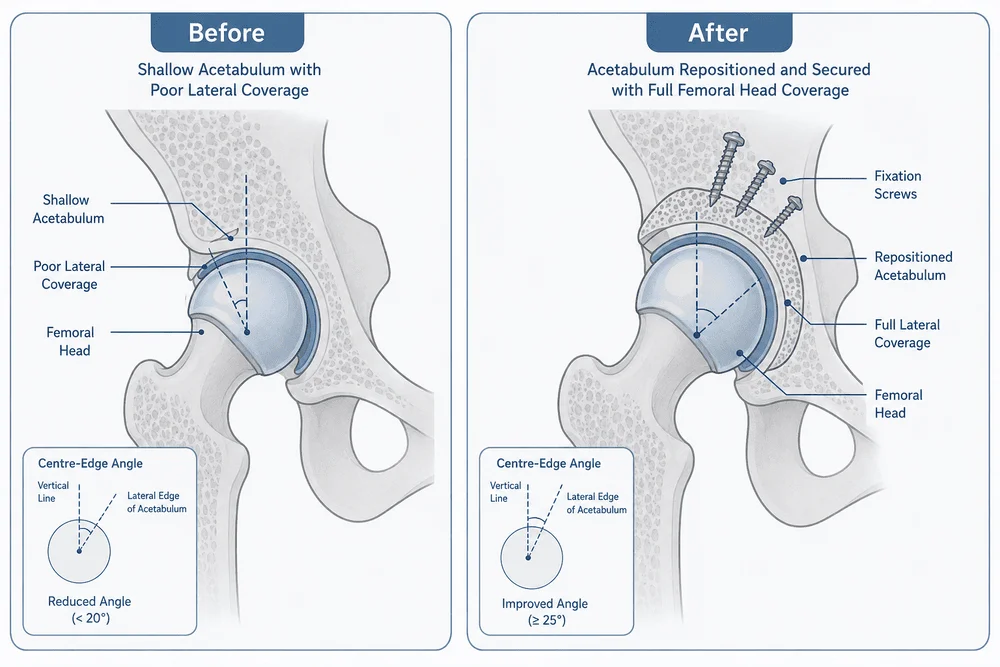
La diagnosi inizia con una radiografia del bacino in carico, che consente al chirurgo di misurare il grado di copertura acetabolare utilizzando angoli standard come l'angolo centro-bordo laterale e l'angolo di Tännis. Queste misurazioni collocano l'anca in un punto qualsiasi dello spettro che va dalla normalità, passando per una condizione borderline, fino a una displasia conclamata.
Nei casi in cui si sospetti una lesione del labbro glenoideo o un danno cartilagineo, evenienza frequente in presenza di displasia, una risonanza magnetica o un'artrografia con risonanza magnetica forniscono un quadro molto più chiaro dei tessuti molli rispetto a una semplice radiografia.
Ecco perché riteniamo che la maggior parte delle informazioni disponibili online non fornisca un supporto adeguato ai pazienti che cercano informazioni su questa patologia: la misurazione della displasia non è sempre univoca. I casi borderline, in particolare, possono essere interpretati in modo diverso da radiologi e chirurghi differenti, e le implicazioni terapeutiche di una diagnosi borderline sono sostanziali. Un'anca classificata come borderline normale potrebbe essere gestita con fisioterapia e monitoraggio. La stessa anca, classificata come borderline displastica, potrebbe invece essere un valido candidato per un intervento chirurgico conservativo dell'articolazione. Non si tratta di un dettaglio tecnico di poco conto, ma spesso del singolo punto decisionale che determina se l'intervento chirurgico sia anche solo un'opzione praticabile.
Per questo motivo, prima di intraprendere un piano di trattamento, raccomandiamo sempre di richiedere un secondo parere a un chirurgo specializzato nel trattamento della displasia dell'anca e nella chirurgia conservativa dell'articolazione, anziché affidarsi esclusivamente a una valutazione ortopedica generale.
Opzioni di trattamento per la displasia congenita dell'anca (DDH) in adolescenti e adulti: una panoramica
Per i pazienti che hanno raggiunto o sono prossimi alla maturità scheletrica, all'incirca dall'adolescenza in poi, il trattamento dipende in larga misura dalla gravità della displasia, dalle condizioni della cartilagine, dall'età del paziente e dai suoi obiettivi di attività. La tabella seguente fornisce un quadro generale. Per i bambini più piccoli, si vedano le opzioni chirurgiche suddivise per fasce d'età descritte in precedenza in questa guida.
| Opzione | Il più adatto per | Cosa comporta |
| Gestione conservativa | Displasia lieve, sintomi precoci o intermittenti | Fisioterapia, modifica dell'attività e del carico, gestione antinfiammatoria, monitoraggio con esami di imaging periodici. |
| Artroscopia dell'anca | Lesione o conflitto labiale associato a lieve displasia, cartilagine ben conservata | Riparazione mininvasiva del labbro glenoideo o rimozione dell'osso che causa l'impingement. Non corregge la displasia di base. |
| Osteotomia periacetabolare (PAO) | Displasia sintomatica da moderata a grave, età approssimativa dai 12 ai 40 anni, cartilagine ancora in gran parte preservata | Riposizionamento dell'acetabolo per ripristinare la copertura della testa del femore, preservando l'articolazione nativa. |
| Sostituzione totale dell'anca | Danni articolari avanzati, significativa perdita di cartilagine o tentativi falliti di preservazione articolare, qualsiasi età | Sostituzione delle superfici articolari danneggiate con componenti protesiche |
Osteotomia periacetabolare: preservazione dell'anca nativa
L'osteotomia periacetabolare, solitamente abbreviata in PAO, è la procedura di scelta per la displasia sintomatica in pazienti troppo giovani o con cartilagine troppo ben conservata per giustificare un intervento di protesi d'anca immediato. La tecnica, spesso chiamata PAO bernese dal nome del centro svizzero dove è stata sviluppata, prevede una serie di tagli controllati intorno all'acetabolo, per liberarlo dal bacino circostante e riorientare la cavità acetabolare in modo da coprire correttamente la testa del femore, prima di fissarla nella sua nuova posizione con viti. Il femore stesso non viene modificato.
L'obiettivo è correggere il problema meccanico di fondo preservando l'articolazione del paziente. Se eseguita con successo, questa procedura allevia il dolore, ripristina la stabilità e, aspetto fondamentale per un paziente giovane, ritarda o elimina la necessità di una protesi d'anca per molti anni, a volte per tutta la vita.
La PAO (osteotomia periacetabolare) è generalmente considerata per pazienti di età compresa tra i 12 e i 40 anni circa, con displasia sintomatica e alterazioni artrosiche iniziali da minime a moderate all'imaging. Una volta che si è verificata una significativa perdita di cartilagine, è meno probabile che la PAO dia risultati duraturi e la protesi d'anca diventa l'opzione più appropriata.
Si tratta di un intervento tecnicamente complesso, eseguito all'interno di uno stretto corridoio chirurgico in prossimità di nervi e vasi sanguigni importanti, e i risultati sono strettamente legati alla frequenza con cui il chirurgo lo esegue. Quando si valutano ospedali o chirurghi per l'osteotomia periacetabolare (PAO), la domanda più utile da porsi è quanti interventi di PAO esegue quel chirurgo specifico ogni anno, piuttosto che la reputazione ortopedica generale dell'ospedale.
In fase di recupero: l'intervento di osteotomia periacetabolare (PAO) prevede in genere un ricovero ospedaliero di tre-cinque giorni, seguito da un periodo di sei-otto settimane con l'uso delle stampelle e un carico limitato, durante il quale l'osso riposizionato guarisce, e da un graduale ritorno alla piena attività nell'arco di sei-nove mesi. Gli studi pubblicati sugli esiti a lungo termine, che seguono pazienti sottoposti a PAO per quindici anni, generalmente riportano che la maggior parte dei pazienti ben selezionati conserva l'articolazione nativa per tutto questo periodo senza necessità di ricorrere a una protesi d'anca, sebbene la percentuale esatta vari tra i diversi studi e dipenda in larga misura dal grado di avanzamento del danno articolare al momento dell'intervento. È opportuno discuterne direttamente con il chirurgo, tenendo conto delle proprie immagini diagnostiche, piuttosto che considerare un singolo dato pubblicato come una garanzia.
Protesi totale d'anca in caso di displasia dell'anca
Quando la displasia è progredita fino a causare un'artrosi significativa, o quando il paziente ha superato l'età o le condizioni articolari per cui un intervento di conservazione è indicato, la protesi totale d'anca diventa la soluzione raccomandata. È importante comprendere che un intervento di protesi d'anca in caso di displasia è sostanzialmente diverso da un intervento di protesi d'anca standard eseguito per la normale artrosi legata all'età.
La differenza fondamentale risiede nell'anatomia. Un acetabolo displastico è spesso meno profondo, più piccolo o orientato in modo diverso rispetto a una cavità tipica, il che può rendere più difficile ottenere un posizionamento sicuro e ben coperto della componente protesica. A seconda della gravità, il chirurgo potrebbe dover utilizzare impianti più piccoli o appositamente progettati, aumentare la cavità con innesti ossei per aumentarne la copertura, oppure pianificare l'intervento tenendo conto di una discrepanza di lunghezza degli arti inferiori, comune nelle displasie di lunga data. Nessuna di queste procedure è standard in un intervento di protesi d'anca di routine per artrosi.
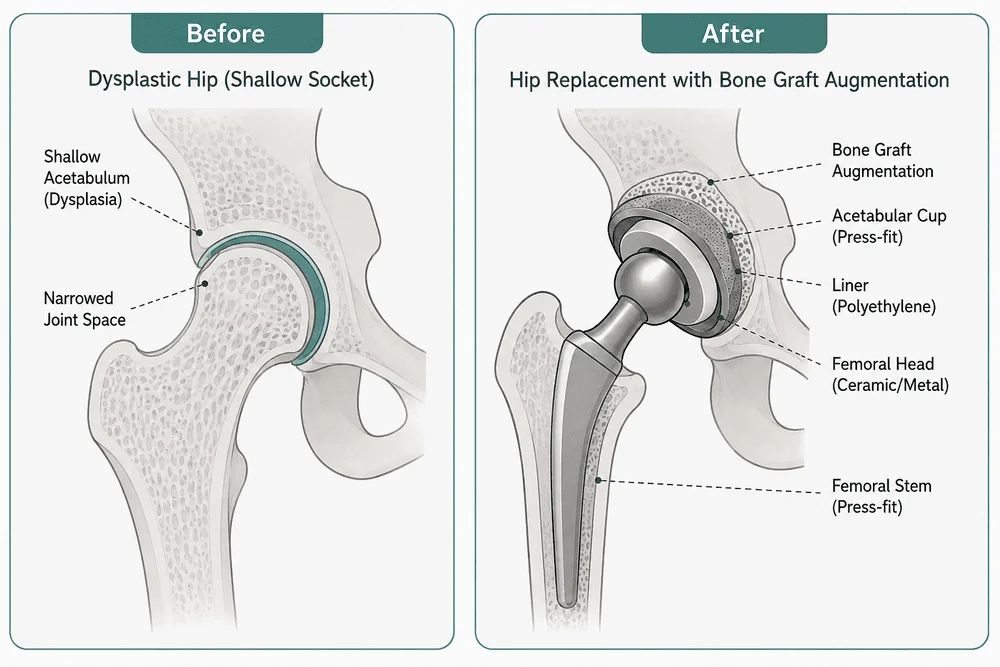
In termini pratici, ciò significa che l'esperienza del chirurgo con l'anatomia displastica in particolare, e non solo il volume generale di interventi di protesi d'anca, ha un impatto reale sulle prestazioni dell'impianto nel tempo. Questo è ancora più importante per i pazienti più giovani, che statisticamente hanno molte più probabilità di necessitare di un intervento di revisione nel corso della loro vita, semplicemente perché vivono con l'impianto più a lungo e sono in genere più attivi rispetto a un paziente più anziano sottoposto allo stesso intervento.
Una breve nota sul rischio di revisione: la scelta di un chirurgo e di un ospedale con esperienza specifica nell'anatomia displastica dell'anca non è una questione di poco conto, in quanto influisce in modo significativo sulla durata e sulla stabilità di una protesi d'anca nei successivi quindici-vent'anni, soprattutto per i pazienti tra i venti e i quarant'anni.
Consulta la nostra analisi dettagliata dei costi per la sostituzione dell'anca in India.
Confronta i costi della protesi d'anca in Turchia
Tempistica dell'intervento chirurgico e pianificazione familiare
Poiché la displasia è significativamente più comune nelle donne, una domanda concreta e pratica per molte pazienti tra i venti e i trent'anni è come la PAO o la protesi d'anca si concilino con i progetti di avere figli. Si tratta di un punto decisionale reale che raramente viene affrontato nelle informazioni generali sulla displasia congenita dell'anca, eppure emerge regolarmente nelle conversazioni con le nostre pazienti.
Non esiste un'unica risposta corretta, e questa è una questione da affrontare direttamente con il chirurgo curante, ma le domande che vale la pena porre in genere includono:
- Quanto tempo di recupero è raccomandato prima di tentare una gravidanza, considerando i tempi di guarigione ossea necessari per l'intervento di osteotomia periacetabolare (PAO) o per i tessuti molli dopo un intervento di protesi d'anca?
- La conservazione dell'articolazione dopo osteotomia periacetabolare (PAO) o la sostituzione articolare dopo artroplastica dell'anca comportano considerazioni diverse per quanto riguarda la gravidanza, il carico ponderale e il parto.
- Considerato il tuo caso specifico, è più opportuno sottoporsi a un intervento chirurgico prima della gravidanza o gestire i sintomi in modo conservativo e valutare un eventuale intervento chirurgico in seguito?
Sollevare la questione direttamente e tempestivamente, idealmente durante la stessa visita in cui si discutono le opzioni terapeutiche, permette di integrarla nel piano di trattamento anziché considerarla un ripensamento successivo.
Displasia congenita bilaterale dell'anca e pianificazione del trattamento a fasi.
La displasia è spesso, anche se non sempre, presente in qualche misura in entrambe le anche, anche quando solo un lato è sintomatico al momento della diagnosi. Se entrambe le anche necessitano di un trattamento chirurgico, questo viene solitamente eseguito in due fasi anziché simultaneamente, con un periodo di recupero di diversi mesi generalmente raccomandato tra il primo e il secondo intervento per consentire un'adeguata guarigione e riabilitazione prima di sottoporre l'anca appena operata a pieno carico.
Per i pazienti che si recano all'estero per cure, questo ha un'implicazione diretta e pratica: il trattamento bilaterale non si risolve in un unico viaggio. È importante stabilire fin dalle prime fasi della pianificazione, idealmente durante la prima visita di valutazione del caso, se è probabile che il vostro caso richieda un intervento chirurgico bilaterale in due tempi, poiché ciò influisce sulla durata totale del trattamento, sul numero di viaggi necessari e sul costo complessivo. Il nostro team tiene conto di questo aspetto fin dall'inizio del piano di trattamento, anziché considerarlo una sorpresa a metà percorso.
Cosa verificare quando si sceglie un ospedale o un chirurgo per il trattamento della displasia congenita dell'anca all'estero.
La displasia congenita dell'anca (DDH) rientra tra le specialità più complesse della chirurgia ortopedica, e le competenze generali in chirurgia protesica articolare non si traducono automaticamente in risultati ottimali per la displasia specifica. Quando si valutano ospedali e chirurghi, si consiglia di considerare i seguenti aspetti:
- Un programma dedicato alla conservazione dell'anca, non solo un reparto generico di sostituzione articolare.
- Per un bambino o un preadolescente, è preferibile un chirurgo ortopedico pediatrico specializzato, la cui pratica è incentrata sulle patologie dell'anca nei bambini, piuttosto che un chirurgo ortopedico generico per adulti che occasionalmente visita pazienti più giovani.
- Un chirurgo con un volume di casi annuale significativo specificamente in PAO o protesi d'anca correlate alla displasia, non solo numeri generali di protesi d'anca
- Accesso, all'interno dello stesso centro, sia alle competenze per la conservazione che per la sostituzione articolare, in modo che il piano chirurgico possa essere adattato qualora i riscontri intraoperatori differiscano da quanto suggerito dalle immagini diagnostiche.
- Disponibilità di impianti specializzati e capacità di innesto osseo per i casi che richiedono una protesi d'anca aumentata
- Accreditamento riconosciuto a livello internazionale come JCI o NABH e un consolidato reparto dedicato ai pazienti internazionali.
Collaboriamo con una rete di ospedali ortopedici in tutta l'India e assegniamo a ciascun paziente un chirurgo in base alle specifiche immagini diagnostiche e all'anamnesi, anziché indirizzarlo automaticamente a un unico ospedale per tutti i casi di displasia congenita dell'anca (DDH). Vi invitiamo a consultare i nostri confronti dettagliati tra ospedali per avere un quadro più completo delle migliori strutture in diverse città.
- Apollo vs MIOT vs Gleneagles vs MGM vs SIMS: il miglior ospedale di Chennai
- Apollo vs Manipal vs Fortis vs Aster: il miglior ospedale di Bangalore
- I 10 migliori ospedali ortopedici in India
Pianificare il tuo percorso di cure in India
Una volta confermato il piano di trattamento, l'aspetto pratico del viaggio per le cure è importante tanto quanto l'intervento chirurgico stesso. HOSPIDIO gestisce tutto, dall'inizio alla fine, senza alcun costo aggiuntivo per te, e include:
- In base al tuo caso, ti metteremo in contatto con uno specialista adeguato per la conservazione dell'anca o la sostituzione articolare.
- Assistenza per visti medici e supporto per la documentazione
- Servizio di prelievo in aeroporto, prenotazione dell'alloggio e trasferimenti locali.
- Coordinamento con l'équipe internazionale dell'ospedale per tutta la durata del soggiorno, anche in caso di interventi chirurgici bilaterali a tappe.
- Dopo le dimissioni, una volta tornati a casa, potrete effettuare un follow-up in telemedicina con lo specialista che vi ha curato.
Se l'assicurazione fa parte della tua pianificazione finanziaria per le cure mediche, la copertura per gli interventi chirurgici all'estero varia notevolmente a seconda della polizza e della compagnia assicurativa, ed è quindi opportuno informarsi su cosa è generalmente possibile prima di partire.
- L'assicurazione sanitaria copre le cure mediche in India per gli stranieri?
- Assistenza per il visto medico e l'alloggio in India: una guida completa per i pazienti internazionali.
- Da WhatsApp alle dimissioni: come HOSPIDIO gestisce l'intero percorso medico.
Tempistiche di recupero e riabilitazione
I tempi di recupero variano a seconda della procedura e del singolo caso. Gli intervalli indicati di seguito sono da intendersi come linee guida generali e non come garanzia per alcun paziente specifico; i pazienti che viaggiano all'estero dovrebbero prevedere tempistiche più lunghe.
| Procedura | Tipica degenza ospedaliera | Cuscinetto di peso | Ritorno a scuola o al lavoro d'ufficio | Ritorna all'attività completa |
| Riduzione a cielo aperto pediatrica con osteotomia pelvica | 4 a 7 giorni | Gesso spica, da 6 a 12 settimane | Una volta rimosso il gesso | 6 ai mesi 12 |
| Artroscopia dell'anca | Custodia da giorno o da notte | Parziale, da 1 a 2 settimane | 1 a 2 settimane | 3 ai mesi 4 |
| Osteotomia periacetabolare | 3 a 5 giorni | Stampelle, parziale, da 6 a 8 settimane | 6 a 8 settimane | 6 ai mesi 9 |
| Sostituzione totale dell'anca | 4 a 6 giorni | Ausilio per la deambulazione, da 2 a 4 settimane | 4 a 6 settimane | 3 ai mesi 6 |
Costo del trattamento della displasia congenita dell'anca: il contesto indiano.
Il costo è uno dei motivi principali per cui i pazienti internazionali scelgono l'India per il trattamento della displasia congenita dell'anca (DDH), sebbene le cifre riportate di seguito debbano essere considerate come punti di partenza indicativi piuttosto che come un preventivo fisso, poiché il costo finale dipende in larga misura dalla complessità della procedura, dalla necessità di innesti ossei o impianti specializzati e dalla tipologia di ospedale scelto.
| Procedura | Costo dell'indicazione in India (USD) |
| Riduzione a cielo aperto pediatrica con osteotomia pelvica | 5,000 $ a $ 7,000 |
| Artroscopia dell'anca | 1,200 $ a $ 3,500 |
| Osteotomia periacetabolare (PAO) | 3,500 $ a $ 6,000 |
| Sostituzione totale dell'anca | 4,500 $ a $ 7,500 |
| Protesi totale d'anca, Turchia per confronto | 10,000 $ a $ 15,000 |
Per contestualizzare, un intervento di protesi totale dell'anca negli Stati Uniti ha storicamente un costo superiore a 40,000 dollari, e un trattamento privato nel Regno Unito o nell'Europa occidentale si attesta in genere su una cifra simile, considerando le spese per il chirurgo, l'ospedale e la protesi. Questo è il principale fattore che influenza il vantaggio economico che i pazienti valutano quando prendono in considerazione un trattamento in India.
HOSPIDIO fornisce un preventivo personalizzato entro 24-48 ore, basato sull'analisi dei referti e delle immagini diagnostiche, senza alcun costo e senza impegno.
Pronto per iniziare?
Che stiate valutando opzioni per la conservazione dell'articolazione o considerando una protesi d'anca per displasia congenita dell'anca (DDH), il nostro team può esaminare le vostre immagini diagnostiche e mettervi in contatto con lo specialista più adatto in India. Valutazione del caso gratuita. Riservatezza assoluta. Nessun obbligo.
Blog recenti




Domande frequenti
Dipende dall'età del bambino quando viene confermata l'instabilità o la lussazione dell'anca. I bambini tra i 18 mesi e i 4 anni circa vengono solitamente sottoposti a riduzione chiusa o aperta, a volte con l'aggiunta di un'osteotomia pelvica. I bambini tra i 4 e gli 8 anni circa necessitano quasi sempre di un'osteotomia pelvica oltre alla riduzione, poiché a quell'età la capacità dell'acetabolo di rimodellarsi si riduce. I bambini più grandi e i preadolescenti, dopo gli 8 anni circa, necessitano più spesso di un'osteotomia tripla dell'osso iliaco, mentre l'osteotomia periacetabolare diventa un'opzione quando il bacino è più vicino alla completa crescita, di solito nella prima adolescenza.
Un gesso spica immobilizza l'anca e il bacino, e di solito una o entrambe le gambe, per mantenere l'articolazione in posizione mentre l'osso guarisce dopo una riduzione o un'osteotomia pelvica. I bambini in genere lo indossano per circa sei-dodici settimane, con la durata esatta che dipende dalla procedura e dal processo di guarigione dell'anca. Si tratta di un cambiamento significativo sia per il bambino che per la famiglia, e il nostro team può aiutare a organizzare il supporto pratico necessario durante questo periodo di permanenza in India.
Sì. La displasia lieve o borderline può passare inosservata durante l'infanzia e la fanciullezza, diventando sintomatica solo quando lo stress cumulativo di anni di attività inizia a causare danni al labbro glenoideo o alla cartilagine, in genere tra la fine dell'adolescenza e i trent'anni.
Non da sola. L'artroscopia dell'anca tratta i problemi associati, come la lesione del labbro acetabolare o l'impingement, ma non corregge la forma di base dell'acetabolo. Nei pazienti con displasia significativa, l'artroscopia da sola spesso offre solo un sollievo temporaneo, motivo per cui è importante che il grado di displasia venga valutato correttamente prima di optare per questa soluzione.
La PAO (osteotomia periacetabolare) riposiziona l'acetabolo dell'anca per risolvere il problema meccanico di fondo, preservando al contempo l'articolazione naturale. La protesi d'anca, invece, prevede la rimozione delle superfici articolari danneggiate e la loro sostituzione con componenti protesiche. La PAO è generalmente indicata per pazienti più giovani con cartilagine ben conservata, mentre la protesi d'anca viene utilizzata quando l'articolazione presenta danni artrosici significativi.
Molte pazienti decidono di avere figli dopo una di queste procedure. I tempi e le eventuali precauzioni specifiche sono individuali e vanno discussi direttamente con il chirurgo curante nell'ambito del piano di trattamento.
Non necessariamente. La displasia è spesso presente in una certa misura su entrambi i lati, ma molti pazienti necessitano di trattamento chirurgico solo sull'anca sintomatica. Se entrambe le anche necessitano di trattamento, questo viene generalmente eseguito in due fasi separate anziché contemporaneamente.
Dipende dalla procedura. In linea generale, si consiglia di prevedere da una a due settimane per un'artroscopia dell'anca, da tre a quattro settimane per un'osteotomia periacetabolare (PAO) e da due a tre settimane per una protesi d'anca, tenendo conto della valutazione pre-operatoria, dell'intervento stesso e della fase iniziale di recupero prima di poter viaggiare in aereo. Il medico specialista confermerà le tempistiche esatte una volta definito il piano di trattamento.
Dipende interamente dalla tua polizza specifica. Alcuni piani assicurativi internazionali offrono cure senza contanti o il rimborso per le cure all'estero, mentre altri non coprono interventi chirurgici non urgenti fuori dal paese. Il nostro team può aiutarti a capire cosa prevede la tua polizza una volta che ci avrai fornito i dettagli.
Dr. Basim Parvez è un fisioterapista abilitato e consulente senior per i pazienti presso HOSPIDIO, in possesso di un MBA in gestione sanitaria. Grazie alla sua vasta esperienza clinica e a un approccio empatico, assiste i pazienti nel percorso di cura. Dr. Basim sfrutta inoltre il suo talento di scrittore per semplificare informazioni sanitarie complesse, consentendo ai pazienti di prendere decisioni consapevoli e promuovendo chiarezza e fiducia nel loro percorso medico.
Guneet Bhatia è la fondatrice di HOSPIDIO e un'esperta revisore di contenuti con una vasta esperienza nello sviluppo di contenuti medici, nella progettazione didattica e nel blogging. Appassionata della creazione di contenuti di grande impatto, eccelle nel garantire accuratezza e chiarezza in ogni articolo. Guneet ama intavolare conversazioni significative con persone di diverse origini etniche e culturali, arricchendo così la sua prospettiva. Nel tempo libero, si dedica alla famiglia, ascolta buona musica e si diverte a ideare soluzioni innovative con il suo team.