
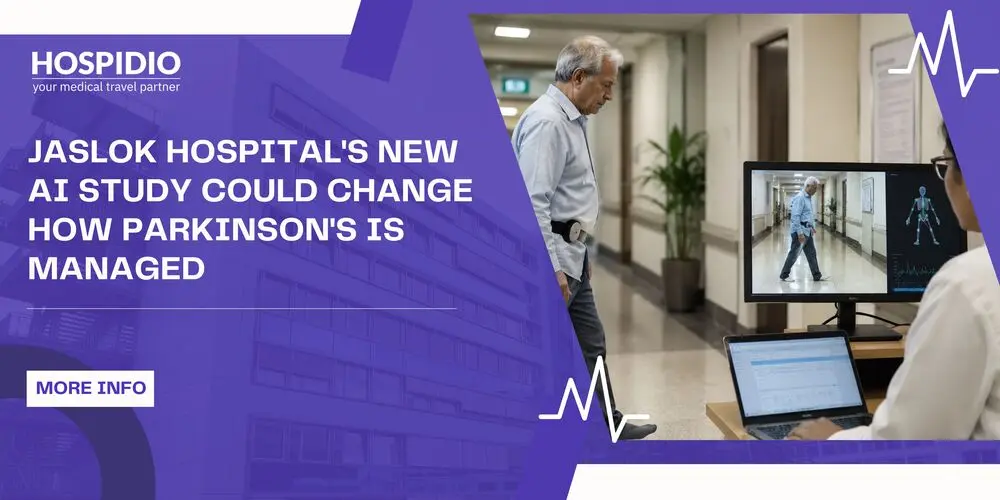
Un estudio clínico pionero, impulsado por el Hospital y Centro de Investigación Jaslok en Mumbai, podría cambiar la forma en que los médicos predicen una de las complicaciones más peligrosas de la enfermedad de Parkinson. El hospital ha presentado una iniciativa basada en inteligencia artificial para predecir episodios de bloqueo de la marcha en pacientes con Parkinson utilizando únicamente videos de sus caminatas cotidianas. Este proyecto, lanzado oficialmente en el Día Mundial del Parkinson, representa un avance significativo hacia una atención neurológica más temprana, eficaz y accesible en toda la India.
¿Qué es la enfermedad de Parkinson y por qué está aumentando en la India?
La enfermedad de Parkinson es el segundo trastorno neurodegenerativo más común del mundo. Se desarrolla cuando las neuronas productoras de dopamina en el cerebro se deterioran, afectando gradualmente el movimiento, el equilibrio y la coordinación. Los síntomas incluyen temblores, rigidez, lentitud de movimientos y, con el tiempo, una discapacidad física significativa.
En India, la carga está aumentando. Los neurólogos han observado un aumento constante de los casos de Parkinson vinculados al envejecimiento de la población y a una mayor concienciación sobre el diagnóstico. Dr. Paresh Doshi, director de neurocirugía del Hospital Jaslok, señaló durante la presentación del estudio: "La enfermedad de Parkinson está aumentando progresivamente en la India, lo que ejerce una mayor presión sobre los sistemas de atención neurológica".
Entre sus complicaciones más incapacitantes se encuentra un síntoma conocido como bloqueo de la marcha.
Comprender el bloqueo de la marcha
El bloqueo de la marcha (FOG, por sus siglas en inglés) es uno de los síntomas más angustiantes de la enfermedad de Parkinson avanzada. Los pacientes describen la sensación repentina de que sus pies se quedan "pegados al suelo" a mitad de la marcha, incluso cuando desean seguir caminando. Estos episodios pueden durar segundos o minutos y aparecer sin previo aviso, al cruzar la calle, girar en una esquina o pasar por una puerta.
El bloqueo de la marcha (FOG, por sus siglas en inglés) afecta hasta al 80 % de los pacientes con enfermedad de Parkinson avanzada y es una de las principales causas de caídas, fracturas, hospitalizaciones y pérdida de independencia. A pesar de su prevalencia, predecir cuándo un paciente desarrollará FOG sigue siendo uno de los mayores desafíos en el tratamiento del Parkinson. Precisamente este nuevo estudio de IA pretende solucionar esta dificultad.
Cómo funciona el sistema de IA
El Hospital Jaslok ha diseñado un estudio clínico de dos fases que utiliza visión artificial y aprendizaje automático para analizar vídeos de personas caminando y detectar signos tempranos de vulnerabilidad a los bloqueos de la marcha, antes de que aparezcan los síntomas visibles.
El sistema no requiere sensores portátiles, equipos costosos ni pruebas de laboratorio. Analiza vídeos de caminatas rutinarias para detectar cambios sutiles en la marcha que son invisibles para el ojo humano, pero reconocibles por un modelo de IA entrenado.
- Fase 1 (Formación retrospectiva): La IA se entrena con datos históricos y vídeos de más de 150 pacientes que desarrollaron previamente episodios de congelación de la marcha (FOG, por sus siglas en inglés), aprendiendo las primeras señales de riesgo de FOG en la marcha.
- Fase 2 (Validación prospectiva): Posteriormente, el modelo se valida con 337 pacientes a los que se les realiza un seguimiento durante un máximo de tres años, poniendo a prueba su capacidad para predecir el riesgo de congelación de la marcha en pacientes que aún no han experimentado un episodio.
Todo el sistema se sustenta en un conjunto de datos excepcional. El Hospital Jaslok ha acumulado 25 años de datos longitudinales de más de 750 pacientes sometidos a estimulación cerebral profunda (ECP), uno de los archivos más completos del mundo. Esta gran cantidad de datos clínicos reales proporciona a la IA una base que muy pocas instituciones a nivel mundial podrían ofrecer.
Una colaboración entre India y Francia
El estudio está dirigido conjuntamente por Dr. Paresh Doshi y Dr. Carine Karachi, experta en FOG reconocida mundialmente del Instituto Cerebral de París en Francia. Dr. Karachi ha descrito Dr. El conjunto de datos de Doshi, que abarca 30 años, es único en el mundo, y la colaboración cuenta con el apoyo de la financiación de CEFIPRA (actualmente en revisión).
El director ejecutivo del Hospital Jaslok, Jitendra Haryan, dejó clara la ambición general del hospital: el objetivo es una IA práctica y desplegable que simplifique la detección neurológica y mejore los resultados de los pacientes en el diverso panorama sanitario de la India, y no la tecnología por la tecnología misma.
Por qué esto importa más allá de Mumbai
La decisión de diseño más importante en este proyecto radica en lo que el sistema no necesita. Al ser totalmente gratuito y basarse en vídeo, resulta idóneo para entornos que van mucho más allá de los hospitales urbanos con recursos suficientes.
Solo se necesita una cámara de smartphone y conexión a internet. Esto abre la puerta a aplicaciones de telemedicina, monitorización remota de pacientes y su adopción en clínicas distritales y programas de salud comunitarios donde el equipo especializado es escaso. El objetivo a largo plazo es una aplicación de acceso abierto que cualquier profesional sanitario pueda utilizar para identificar precozmente a los pacientes en riesgo, predecir la duración de los episodios de congelación de la marcha e iniciar la atención preventiva antes de que se produzca la discapacidad.
Lo que la predicción temprana hace posible
La predicción temprana de los episodios de congelación de la marcha no es solo un hito diagnóstico, sino una oportunidad clínica. Cuando se identifica a un paciente con alto riesgo meses antes de su primer episodio, los médicos pueden intervenir mediante entrenamiento motor específico, rehabilitación de la marcha, ajustes en la programación de la estimulación cerebral profunda (DBS) y optimización de la medicación.
Para los pacientes y sus familias, las consecuencias son profundamente personales. Las caídas provocadas por episodios de bloqueo de la marcha son uno de los sucesos más temidos en el camino del Parkinson. Provocan lesiones, minan la confianza y, a menudo, marcan la transición de la vida independiente a la necesidad de cuidados a tiempo completo. Una herramienta que prediga estos episodios con la suficiente antelación para intervenir representa un cambio real en la atención del Parkinson: de un manejo reactivo de los síntomas a una prevención proactiva.
Puntos Clave
- El Hospital Jaslok de Mumbai ha puesto en marcha un estudio de inteligencia artificial para predecir el bloqueo de la marcha utilizando vídeos de personas caminando habitualmente.
- Los episodios de congelación de la marcha afectan hasta al 80% de los pacientes con Parkinson avanzado y son una de las principales causas de caídas y pérdida de independencia.
- La IA utiliza visión artificial y aprendizaje automático sin necesidad de dispositivos portátiles ni equipos especializados.
- El estudio se basa en más de 25 años de datos longitudinales de más de 750 pacientes con estimulación cerebral profunda (DBS) en Jaslok.
- La colaboración entre Dr. Paresh Doshi y Dr. Carine Karachi (Instituto Cerebral de París) recibe financiación a través de CEFIPRA.
- El objetivo a largo plazo es una aplicación de acceso abierto para profesionales clínicos que trabajan en telemedicina y en entornos con recursos limitados.
Conclusión
El estudio sobre el bloqueo de la marcha (FOG, por sus siglas en inglés) del Hospital Jaslok, impulsado por IA, es un ejemplo convincente de lo que se puede lograr cuando se combinan una profunda experiencia clínica, un conjunto de datos longitudinales excepcionales y la colaboración internacional. A medida que la enfermedad de Parkinson sigue aumentando en la India y en todo el mundo, herramientas accesibles y escalables como esta serán fundamentales para pasar de la respuesta a crisis a la prevención temprana.
¿Está considerando la atención neurológica en la India?
Si usted o un ser querido padece la enfermedad de Parkinson y está buscando atención neurológica especializada, incluyendo la estimulación cerebral profunda o tratamientos avanzados para trastornos del movimiento, los principales hospitales de la India ofrecen experiencia de primer nivel a costos significativamente más bajos que en los países occidentales.
En Hospidio, ayudamos a pacientes internacionales a conectar con los mejores neurólogos y neurocirujanos, guiándolos en cada paso del proceso con claridad y atención.
Obtenga un plan de tratamiento gratuito
Sin compromiso. Nuestros asesores de pacientes suelen responder en 15 minutos.
Referencias
IndiaMedToday. (13 de abril de 2026). El Hospital Jaslok lanza un estudio de IA para predecir el bloqueo de la marcha en la enfermedad de Parkinson mediante vídeos sencillos de caminata. https://indiamedtoday.com/jaslok-hospital-launches-ai-study-to-predict-parkinsons-freezing-of-gait-using-simple-walking-videos/
Acerca de Hospidio: Esta entrada de blog tiene como objetivo brindar información objetiva y basada en evidencia para mantener a nuestra comunidad informada sobre los avances en salud global y las innovaciones médicas. Consulte siempre con un profesional de la salud calificado para obtener asesoramiento médico, diagnóstico o tomar decisiones sobre el tratamiento.
Blogs



Shruti Verma se licenció en Biotecnología y cuenta con experiencia en redacción médica y desarrollo de contenido científico. Se especializa en traducir información biomédica y sanitaria compleja en contenido claro, preciso y accesible para diversos públicos. Cuando no está diseñando contenido, probablemente se dedica al diseño gráfico.
Guneet Bhatia es la fundadora de HOSPIDIO y una experta revisora de contenido con amplia experiencia en desarrollo de contenido médico, diseño instruccional y blogs. Apasionada por la creación de contenido impactante, se destaca por garantizar la precisión y claridad de cada pieza. Guneet disfruta entablando conversaciones significativas con personas de diversos orígenes étnicos y culturales, lo que enriquece su perspectiva. En su tiempo libre, disfruta del tiempo de calidad con su familia, disfruta de la buena música y le encanta generar ideas innovadoras con su equipo.