
It often starts with something that does not seem connected to the brain at all. Bumping into door frames because side vision has narrowed. Periods that stopped for no reason. Rings and shoes that no longer fit. Then an MRI shows a growth at the base of the brain, and the report uses the words “pituitary macroadenoma.”
The word “brain tumor” lands hard. But pituitary tumors are different from most brain tumors in two important ways: almost all are benign, and most can be removed without opening the skull.
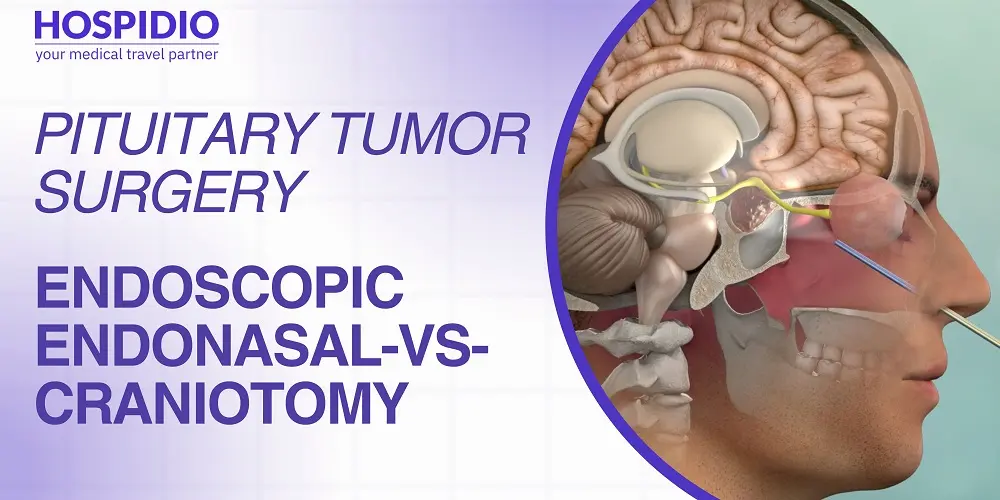
Most pituitary tumors that need surgery are removed through the nose using an endoscope, a technique called endoscopic endonasal transsphenoidal surgery. It leaves no visible scar, usually needs only 3 to 5 days in hospital, and improves vision in most patients whose sight was affected. Open surgery through the skull (craniotomy) is reserved for a small group of very large or unusually shaped tumors. Some pituitary tumors, especially prolactinomas, are often treated with medicine instead of surgery.
This guide explains how the two operations compare, which tumors suit each, what results and risks look like, why hormone care matters as much as the surgery itself, and how to plan treatment in India from abroad. It is meant to help you ask better questions of your specialists, not to replace their assessment of your scans and blood tests.
Endoscopic Endonasal Surgery vs Craniotomy at a Glance
| Endoscopic endonasal (transsphenoidal) surgery | Craniotomy (transcranial surgery) | |
| Route to the tumor | Through the nostril and the sphenoid sinus at the back of the nose | Through an opening in the skull, lifting the brain gently aside |
| দৃশ্যমান ক্ষতচিহ্ন | না | Scalp incision, usually hidden by hair |
| এটা কাকে মানায় | The large majority of pituitary tumors, including many large ones | Giant tumors spreading widely into the brain, dumbbell-shaped tumors, firm or calcified tumors, tumors wrapped around major arteries |
| Brain retraction | না | Some, which adds risk |
| হাসপাতালে থাকার সাধারণ অবস্থা | 3 থেকে 5 দিন | 5 to 7 days or more |
| স্বাভাবিক কার্যকলাপে ফিরে যান | প্রায় ১ থেকে ২ সপ্তাহ | প্রায় ১ থেকে ২ সপ্তাহ |
| নির্দিষ্ট ঝুঁকি | Spinal fluid leak from the nose, sinus crusting, change in sense of smell | Seizures, brain swelling, longer recovery |
| যৌথ ঝুঁকি | Hormone deficiency, temporary diabetes insipidus, sodium changes, bleeding, infection | একই |
What a Pituitary Tumor Is, and Why the Type Matters
The pituitary is a gland about the size of a pea that sits in a bony pocket (the sella) at the base of the skull, just below the optic nerves. It controls most of the body’s hormones, including those for growth, stress, thyroid function, fertility, and water balance.
Nearly all pituitary tumors are pituitary adenomas, now also called pituitary neuroendocrine tumors. They are benign and very rarely spread. Doctors describe them by size:
- মাইক্রোঅ্যাডেনোমা: smaller than 1 cm
- ম্যাক্রোঅ্যাডেনোমা: 1 cm or larger
- দৈত্য অ্যাডেনোমা: 4 cm or larger
They are also described by whether they produce excess hormone. This decides the first treatment more than size does.
| টিউমার টাইপ | এটা কি কারণ | Usual first treatment |
| Non-functioning adenoma | No excess hormone, symptoms come from size, such as vision loss, headaches, or low hormone levels | Surgery if large or affecting vision, observation if small |
| প্রোল্যাকটিনোমা | Excess prolactin: missed periods, breast milk discharge, infertility, low libido | Usually medicine (cabergoline), surgery for selected patients |
| Growth hormone tumor (acromegaly) | Enlarging hands, feet, and facial features, joint pain, diabetes, heart strain | সার্জারি |
| ACTH tumor (Cushing’s disease) | Weight gain around the body and face, high blood pressure, diabetes, thin skin, muscle weakness | সার্জারি |
| TSH tumor (rare) | Overactive thyroid symptoms | সার্জারি |
Not Every Pituitary Tumor Needs Surgery
Before comparing two operations, it is worth knowing when neither is needed.
Prolactinomas usually respond to tablets. Dopamine agonist medicines, most often cabergoline, lower prolactin and shrink the tumor in most patients, sometimes dramatically, even when vision is affected. The Pituitary Society’s 2023 consensus statement still supports medicine as the usual first step, but now also recommends discussing surgery for selected patients with small or well-contained prolactinomas, where an experienced surgeon can achieve high remission rates and spare years of tablets.
Small tumors found by chance (often called pituitary incidentalomas) are common. Many never grow or cause problems. If hormone tests are normal and the tumor is away from the optic nerves, regular MRI and hormone checks are often all that is needed.
Surgery is usually recommended when a tumor presses on the optic nerves, keeps growing, produces excess growth hormone or ACTH, or causes symptoms that medicine cannot control.
How Endoscopic Endonasal Surgery Is Performed
The endoscope is a thin tube with a high-definition camera and light. It gives the surgeon a wide, close-up view inside the skull base without any incision on the face.
- General anesthesia. You are fully asleep.
- Through the nostril. The surgeon passes the endoscope and slim instruments through one or both nostrils. Pituitary surgery is often performed by a neurosurgeon and an ENT (ear, nose, and throat) surgeon working together.
- Opening the sphenoid sinus. A small opening is made in the thin bone at the back of the nose to reach the sphenoid sinus, an air space that sits directly in front of the pituitary.
- Opening the sella. The thin bone covering the pituitary pocket is removed, and the lining beneath it is opened.
- Removing the tumor. Most pituitary tumors are soft and are removed in pieces with suction and fine instruments. Navigation systems help the surgeon avoid the carotid arteries on each side.
- Repairing the floor. The opening is sealed, sometimes with a flap of the nose’s own lining or a small graft, to prevent spinal fluid from leaking.
- Waking up. There are no stitches on the face. Some patients have soft nasal packing or splints for a few days.
The operation usually takes two to four hours. Some centers still use a microscope rather than an endoscope for the same route. Both work well in experienced hands, the endoscope gives a wider view, which helps with larger tumors.
When Craniotomy Is the Better Choice
A minority of pituitary tumors cannot be safely removed through the nose. A 2023 review of giant pituitary adenomas in the journal Cancers listed situations where an approach through the skull is still preferred or needed:
- The tumor spreads widely upward, sideways, or backward into the brain, well beyond the pituitary pocket
- The tumor has a narrow “waist” at the top of the sella, giving it a dumbbell shape that cannot be pulled down safely from below
- The tumor is firm, fibrous, or calcified rather than soft, the same review notes that up to 15% of giant adenomas fall into this group
- The tumor wraps around major arteries or invades brain tissue
- The anatomy of the nose and sinus makes the route unsafe, for example a sphenoid sinus that never formed air spaces or carotid arteries that lie unusually close together
For very large tumors, the review also notes that complete removal in a single endoscopic operation happens in fewer than half of cases. This is why some patients need a planned second stage, either a second endoscopic operation, a craniotomy, or radiosurgery to what remains.
Unsure whether your tumor can be removed through the nose? We can arrange for an experienced pituitary team in India to review your MRI and hormone reports
সহায়ক: ভারতে সেরা নূরুরঞ্জন
Results: What Surgery Can Achieve
Outcomes depend on the tumor’s size, its hormone type, whether it has grown into the cavernous sinus (the channel of veins and nerves on each side of the pituitary), and the surgeon’s experience.
For non-functioning adenomas, a 2022 single-institution study of 181 patients in Annals of Medicine reported:
| Outcome after transsphenoidal surgery | হার |
| Complete visible removal of the tumor | ৮০% |
| Vision improved (among patients with vision problems before surgery) | ৮০% |
| Temporary diabetes insipidus | ৮০% |
| মেরুদণ্ডের তরল ফুটো | ৮০% |
| Tumor regrowth during follow-up (average about 5 years) | ৮০% |
For hormone-producing tumors, the goal is not just removal but remission, meaning hormone levels return to normal. Remission rates are highest for small tumors that have not grown into the cavernous sinus, and they rise clearly with the surgeon’s experience. This is why it is worth asking any surgeon how many acromegaly or Cushing’s operations they perform each year, and what their own remission rates are.
Risks Compared
Risks of endoscopic endonasal surgery:
- Spinal fluid (CSF) leak: clear, watery fluid dripping from the nose, especially when leaning forward. Most are prevented by careful repair, some need a second short procedure.
- Nasal symptoms: stuffiness, crusting, and nosebleeds for several weeks, a reduced sense of smell in some patients.
- Diabetes insipidus: heavy urination and intense thirst, usually temporary.
- Delayed low sodium: sodium levels can fall about a week after surgery (see below).
- New hormone deficiency: part of the gland may stop working and need hormone replacement.
- Rare but serious: injury to the carotid artery, meningitis, or worsened vision.
Additional risks of craniotomy:
- হৃদরোগের আক্রমণ
- Swelling or bruising of the brain from retraction
- Loss of smell with some approaches
- Longer hospital stay and slower return to normal life
Recovery Timeline After Endoscopic Pituitary Surgery
| সময়ের ফ্রেম | কি আশা করছ |
| অস্ত্রোপচারের দিন | Close monitoring of urine output, thirst, sodium, and vision |
| দিন 1 থেকে 4 | Walking, nasal stuffiness, blood tests for sodium and cortisol, discharge in 3 to 5 days |
| দিন 5 থেকে 10 | Highest risk period for delayed low sodium, a blood test around day 7 is common |
| সপ্তাহ 2 থেকে 4 | Nasal crusting improves, nasal rinses as advised, light work for many people |
| প্রায় 6 সপ্তাহ | Formal hormone testing to see which hormones, if any, need replacing |
| প্রায় 3 মাস | First follow-up MRI |
Rules most surgeons give for the first few weeks:
- নাক ফুঁকবেন না
- Sneeze with your mouth open
- Avoid bending low, straining, and heavy lifting
- Report clear fluid from the nose, severe headache, fever, or neck stiffness immediately
Hormone Care: The Part Patients Often Do Not Expect
Pituitary surgery is not finished when the tumor is out. Because the gland controls so many hormones, the weeks afterward need careful endocrine follow-up.
Delayed low sodium. A 2025 trial in Neuro-Oncology reported that delayed hyponatremia (low blood sodium) affects up to about a third of patients after pituitary surgery, most often around days 7 to 9. It can cause headache, nausea, confusion, and in severe cases seizures. Many teams now advise limiting fluids in the first week and checking sodium around day 7. For travelers, this is a key reason not to fly home in the first week.
Cortisol. Some patients need hydrocortisone tablets after surgery, either temporarily or long term. If you are prescribed it, you will be taught to double the dose when unwell and should carry a steroid emergency card when traveling.
Water balance. If diabetes insipidus continues, a medicine called desmopressin controls it.
Other hormones. Thyroid, sex hormone, and growth hormone levels are checked over the following weeks and replaced if needed.
Look for a center where an অন্তঃস্রাবী is part of your team from before surgery through follow-up, not only the surgeon.
If Part of the Tumor Remains
When a tumor has grown into the cavernous sinus around the carotid artery, removing every last part can risk damage to the artery or eye-movement nerves. Surgeons often leave a small portion behind deliberately. Options for it include:
- Watching it with MRI, since many remnants of non-functioning tumors stay stable for years
- Medicine, for growth hormone, ACTH, and prolactin tumors
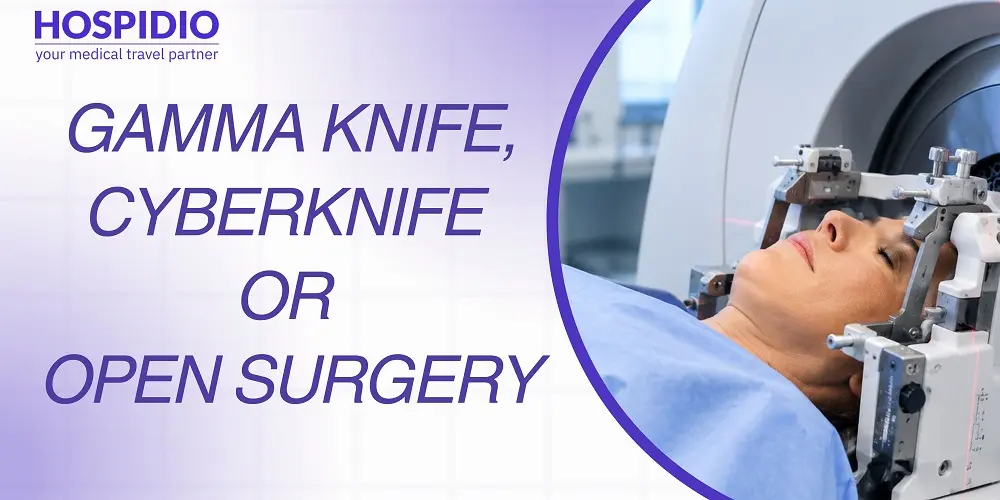
- Radiosurgery, such as Gamma Knife or CyberKnife, which can control remaining or regrowing tumor without another operation. Our guide to Gamma Knife, CyberKnife and open brain tumor surgery explains how radiosurgery works and who qualifies.
- A second operation, if the remnant grows and can be reached
Planning Pituitary Surgery in India From Abroad
Time in India: for endoscopic surgery, plan for about 2 to 3 weeks. This covers evaluation and hormone tests, surgery, 3 to 5 days in hospital, the day 7 sodium check, and a review before flying. For craniotomy, plan for about 3 to 4 weeks.
Flying home: after surgery through the nose, pressure changes during flight are a particular concern because the skull base has been opened and repaired. Advice differs between surgeons, and many advise waiting at least two weeks, longer if a spinal fluid leak was repaired. Ask your surgeon for written clearance and carry your discharge summary and medicines in your hand luggage.
Follow-up at home: you will need hormone tests and MRI scans for years, and possibly lifelong hormone tablets. Before leaving India, ask for a written plan covering which tests are needed, when, and what results should prompt contact with your team.
Pituitary apoplexy is an emergency. Sudden, severe headache with vision loss, double vision, vomiting, or drowsiness can mean bleeding into a pituitary tumor. This needs urgent hospital care wherever you are. Do not delay emergency treatment to arrange travel.
Cost of Pituitary Tumor Surgery in India
Costs vary with the approach, hospital, city, length of stay, and whether extended skull base techniques are needed. As a general guide:
| কার্যপ্রণালী | Approximate cost in India |
| Endoscopic endonasal pituitary surgery | USD 4,500 থেকে 8,500 তে |
| Craniotomy for brain tumor (স্ট্যান্ডার্ড) | USD 5,500 থেকে 6,500 তে |
| Craniotomy with advanced techniques | USD 7,000 থেকে 9,500 তে |
Extended or complex skull base operations can cost more. For international patients, the total trip cost also includes two to four weeks of accommodation and meals for the patient and a companion.
Before comparing quotes, check whether they include:
- Pre-surgery MRI, hormone tests, and visual field testing
- Neurosurgeon, ENT surgeon, and anesthetist fees
- Navigation and endoscopy equipment charges
- আইসিইউ বা উচ্চ-নির্ভরশীল পর্যবেক্ষণ
- Endocrinology consultations and sodium checks after discharge
- Pathology of the removed tumor
- Charges for complications such as a spinal fluid leak repair
What to Look for in a Pituitary Team
Pituitary surgery outcomes are closely linked to experience. Look for:
- A neurosurgeon who performs pituitary operations regularly, ideally with dedicated endoscopic skull base training
- An ENT surgeon working alongside, especially for larger tumors
- An endocrinologist involved before and after surgery
- Neuro-ophthalmology or visual field testing before and after surgery
- Access to radiosurgery and radiation oncology if further treatment is needed
What to Send for a Remote Opinion
- Pituitary MRI with contrast, ideally in DICOM format, plus any earlier scans
- Hormone blood tests: prolactin, IGF-1 and growth hormone, morning cortisol, ACTH, thyroid tests (TSH and free T4), LH, FSH, and testosterone or estradiol
- For suspected Cushing’s disease: urine or late-night saliva cortisol tests and any dexamethasone suppression test results
- Visual field test and eye examination report, if done
- A list of current medicines, especially cabergoline, steroids, or thyroid tablets
- A short symptom summary, including when symptoms began
Questions to Ask Your Pituitary Surgeon
- What type of pituitary tumor do I have, and is surgery the right first treatment?
- Can it be removed through the nose, or is a craniotomy needed? Why?
- Has the tumor grown into the cavernous sinus, and how much can safely be removed?
- How many pituitary operations do you perform each year? What are your remission rates for my tumor type?
- Will an ENT surgeon and an endocrinologist be part of my care?
- What is the chance I will need hormone tablets afterward?
- How long should I stay in India, and when can I fly?
- What follow-up tests and scans will I need at home?
কী Takeaways
- Nearly all pituitary tumors are benign, and most that need surgery are removed through the nose without a visible scar.
- Craniotomy is reserved for a small group of giant, firm, or widely spreading tumors.
- Prolactinomas are usually treated first with medicine, small incidental tumors are often only watched.
- Vision improves after surgery in most patients whose sight was affected.
- Hormone care after surgery, including a sodium check around day 7, is as important as the operation.
- International patients should plan about 2 to 3 weeks in India for endoscopic surgery and get written flight clearance.
- Choose a team with high pituitary volume and an endocrinologist involved throughout.
তথ্যসূত্র:
- Healio (2024)
- pmc.ncbi.nlm.nih.gov সম্পর্কে
- Medifly Healthcare
সাম্প্রতিক ব্লগ
সচরাচর জিজ্ঞাস্য
Almost never. Pituitary adenomas are benign tumors that do not spread to other parts of the body. They cause problems by pressing on nearby structures, such as the optic nerves, or by producing too much hormone. A very small number behave aggressively and grow back repeatedly, and true pituitary cancer is extremely rare.
Your pathology report and follow-up scans will show how your tumor is behaving over time.
Many patients notice clearer or wider vision within days of surgery, sometimes as soon as they wake up. Further improvement often continues over weeks to months as the optic nerves recover from pressure. Vision that had been affected for a long time, or optic nerves that already look pale on eye examination, may recover only partly.
A visual field test a few weeks after surgery gives a clear comparison with your test before surgery.
Not necessarily. Many patients keep normal pituitary function after surgery, and some even regain hormones that were low before, once pressure on the gland is relieved. Others need one or more replacement tablets, such as hydrocortisone or thyroxine, sometimes for life. Formal hormone testing about six weeks after surgery shows what you will need.
Replacement tablets are usually inexpensive and widely available, which matters if you will be managing them back home.
Sometimes. Some patients whose prolactin has been normal for at least two years and whose tumor has shrunk markedly can try reducing and then stopping cabergoline under specialist supervision. The prolactinoma returns in a significant share of patients, so prolactin levels are checked regularly after stopping. Surgery is an alternative for some patients who want to avoid long-term tablets.
Never stop cabergoline suddenly without discussing it with your endocrinologist.
Yes, many women do. If the tumor caused high prolactin, removing it or controlling it with medicine often brings periods and fertility back. If surgery leaves the pituitary unable to make fertility hormones, specialist fertility treatment can usually help. Pregnancy after a pituitary tumor needs planning with your endocrinologist, especially if you take hormone replacement.
Tell your team before surgery if you hope to become pregnant in the future.
Most people’s sense of smell returns to normal, though a temporary reduction for a few weeks is common while the nasal lining heals. A smaller number of patients notice a lasting change, more often after extended operations or when a flap of nasal lining is used to seal the skull base. Saline rinses and careful follow-up help the nose heal.
Ask your surgeon whether your operation is likely to need a nasal flap.
Fatigue is common for several weeks after any major operation, but after pituitary surgery it can also be a sign of low cortisol or low thyroid hormone. Tiredness with dizziness, nausea, low appetite, or feeling faint deserves a blood test, especially if your hydrocortisone dose has recently been reduced.
Contact your endocrinologist rather than waiting it out if fatigue is getting worse.
Contact your surgical team the same day. Clear, watery fluid that drips when you lean forward, or a salty taste at the back of the throat, can be a spinal fluid leak. Leaks need prompt treatment because they carry a risk of meningitis. Severe headache, fever, or a stiff neck alongside it needs emergency care.
Keep your surgeon’s contact details with you while traveling home.
Often not. Small tumors found while scanning for something else are common and frequently never grow. Doctors usually check hormone levels and, if the tumor is close to the optic nerves, test your vision. If both are normal, regular MRI scans and hormone checks are usually all that is needed.
Treatment is considered if the tumor grows, affects vision, or produces excess hormone.
ই-মেইল [ইমেল সুরক্ষিত] or message +91-9870538337 on WhatsApp with your pituitary MRI (DICOM files if available), hormone blood test results, and any eye or visual field reports. HOSPIDIO’s care team will arrange a review by an experienced pituitary neurosurgery and endocrinology team in India and share their opinion on whether surgery, medicine, or monitoring suits your case. The first review is done remotely, so you understand the recommended treatment and estimated costs before making travel plans.
গুনীত ভাটিয়া হসপিডিও-এর প্রতিষ্ঠাতা এবং একজন সফল কন্টেন্ট রিভিউয়ার, যার মেডিকেল কন্টেন্ট ডেভেলপমেন্ট, ইনস্ট্রাকশনাল ডিজাইন এবং ব্লগিং-এ ব্যাপক অভিজ্ঞতা রয়েছে। প্রভাবশালী কন্টেন্ট তৈরিতে আগ্রহী হওয়ায়, তিনি প্রতিটি লেখায় নির্ভুলতা এবং স্পষ্টতা নিশ্চিত করতে পারদর্শী। গুনীত বিভিন্ন জাতি ও সংস্কৃতির মানুষের সাথে অর্থপূর্ণ কথোপকথনে অংশ নিতে ভালোবাসেন, যা তার দৃষ্টিভঙ্গিকে সমৃদ্ধ করে। কাজের বাইরে তিনি পরিবারের সাথে ভালো সময় কাটাতে, ভালো গান শুনতে এবং তার দলের সাথে নতুন নতুন ধারণা নিয়ে আলোচনা করতে পছন্দ করেন।
সস্মিতা বাল হসপিডিও-তে একজন ডিজিটাল মার্কেটিং এবং কন্টেন্ট স্পেশালিস্ট, যিনি এসইও এবং আন্তর্জাতিক স্বাস্থ্যসেবা কন্টেন্টে বিশেষজ্ঞ। তিনি প্রকাশিত বিষয়বস্তু পর্যালোচনা করে নিশ্চিত করেন যে, তা সার্চে দৃশ্যমানতার জন্য অপ্টিমাইজ করা হয়েছে এবং ভারতে চিকিৎসা নিতে আসা আন্তর্জাতিক রোগীদের প্রয়োজনের সাথে প্রাসঙ্গিক। তিনি যে সমস্ত কন্টেন্ট পর্যালোচনা করেন, সেগুলি প্রকাশের পূর্বে হসপিডিও-র প্রতিষ্ঠাতা এবং সংশ্লিষ্ট চিকিৎসা বিশেষজ্ঞদের দ্বারা রচিত ও চিকিৎসাগতভাবে অনুমোদিত হয়।