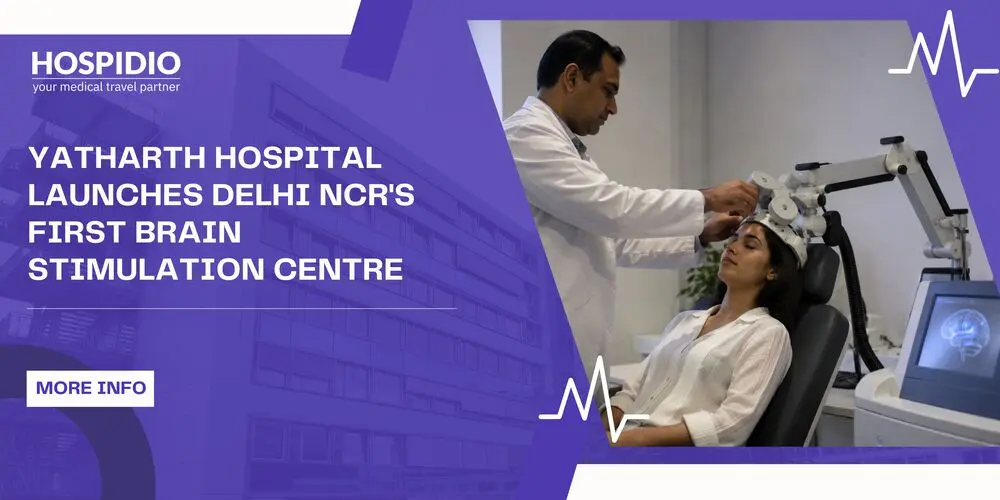
A quiet but significant shift is underway in India's neurological care landscape. Yatharth Super Speciality Hospital in Faridabad has launched what is being called Delhi NCR's first dedicated Advanced Brain Stimulation Centre, a facility equipped with non-invasive neuromodulation technologies that are reshaping how doctors manage some of the most difficult conditions in neurology and psychiatry. For patients who have struggled with treatment-resistant depression, Parkinson's disease, stroke recovery, or chronic pain, this development could mark a turning point in their care journey.
What Has Been Launched, and Where
Yatharth Super Speciality Hospital in Faridabad, part of the Yatharth Group of Hospitals, has inaugurated a dedicated Advanced Brain Stimulation Centre, the first of its kind in the Delhi NCR region. The centre brings together cutting-edge neuromodulation technologies under one roof, making specialized brain therapy accessible to patients not just from Faridabad but from surrounding areas across the NCR.
The facility is designed as an outpatient centre, which means patients can receive therapy sessions and return home the same day, without hospitalization, without surgery, and without general anesthesia. That is a meaningful departure from how many neurological conditions have historically been managed.
What Is Brain Stimulation Therapy? Understanding the Technology
At the heart of this centre is Transcranial Magnetic Stimulation (TMS), a non-invasive procedure that uses magnetic fields to stimulate specific nerve cells in the brain. TMS has earned growing recognition globally as an effective tool for conditions where conventional medications have not delivered adequate results.
The principle behind TMS is straightforward: a coil placed near the scalp generates magnetic pulses that pass painlessly through the skull and reach targeted brain regions. These pulses can either excite or inhibit neural activity, depending on the frequency and protocol used. Over a series of sessions, TMS aims to restore healthier patterns of brain function.
Alongside TMS, the centre incorporates other advanced neuromodulation modalities, a broader class of therapies that work by directly modulating the activity of the nervous system through electrical or magnetic means.
These therapies do not replace the brain's existing circuits. Instead, they work with them, nudging dysfunctional pathways back toward normal activity through repeated, targeted stimulation.
Which Conditions Can Be Treated Here
The range of conditions the Advanced Brain Stimulation Centre is equipped to address is notable. According to the hospital, these therapies are being used for:
- Depression and anxiety disorders: particularly in patients who have not responded adequately to antidepressant medications
- Obsessive Compulsive Disorder (OCD)
- Stroke rehabilitation: supporting recovery of motor and cognitive function in stroke survivors
- Parkinson's disease: helping manage motor symptoms and improving quality of life
- Dementia: with neuromodulation being explored to support cognitive function
- Chronic pain and migraine
This list reflects the broad applicability of brain stimulation therapies. Neurological and psychiatric conditions are among the most under treated globally, partly because pharmacological options carry side effects, lose effectiveness over time, or simply do not work for a significant portion of patients. Brain stimulation therapies offer a different mechanism of action, one that avoids systemic drug exposure and its associated risks.
Why This Matters: The Advantages of Non-Invasive Neuromodulation
For patients and families navigating long term neurological conditions, the appeal of this approach is significant. Dr. Kunal Bahrani, Chairman and Group Director of Neurology at Yatharth Super Speciality Hospital, Faridabad, highlighted that the centre's therapies are non-invasive and do not require anesthesia or surgical intervention. He noted that patients can undergo therapy in an outpatient setting, with minimal side effects and quicker recovery times compared to traditional treatment methods.
This is particularly meaningful for patients who have not responded well to medications or who experience adverse effects from long-term drug use. Chronic neurological care often means decades of medication management, and the side effect burden, cognitive effects, weight changes, dependency, or gastrointestinal issues, can be as challenging as the condition itself. A therapy pathway that sidesteps this burden entirely is a clinically valuable option.
The outpatient model also matters for accessibility. A patient managing Parkinson's or recovering from stroke does not have to face the logistical and financial weight of repeated hospitalizations. Sessions at a dedicated brain stimulation centre can fit into a structured weekly routine.
A Multidisciplinary Approach to Care
One of the distinguishing features of the Yatharth Brain Stimulation Centre is its emphasis on individualized, multidisciplinary assessment before therapy begins. Clinicians conduct comprehensive evaluations to understand each patient's specific clinical profile, the nature and severity of their condition, their response to previous treatments, and their individual neurological characteristics. From this assessment, personalized neuromodulation protocols are designed. Rather than a one size fits all approach, the centre integrates neurology and psychiatry to develop care pathways that are both condition specific and patient specific.
From this assessment, personalized neuromodulation protocols are designed. Rather than a one size fits all approach, the centre integrates neurology and psychiatry to develop care pathways that are both condition specific and patient specific.
This kind of integrated framework is aligned with global best practices in neuromodulation. The field has matured significantly from the early days of TMS research, and the evidence base now supports protocol customization as a key driver of clinical outcomes.
Amit Singh, Group CEO of Yatharth Group of Hospitals, described the launch as a reflection of the group's vision of offering safe, non-invasive, and highly effective treatment options for patients suffering from complex neurological and psychiatric disorders. He noted that the goal is to improve quality of life, reduce dependency on long term medication, and provide personalized care pathways.
The Broader Context: India's Growing Neurological and Mental Health Burden
This launch does not exist in a vacuum. India carries one of the world's highest burdens of neurological and mental health conditions. Conservative estimates suggest that over 30 million people in India live with some form of neurological disorder. Depression and anxiety disorders are significantly under diagnosed and undertreated, particularly in urban populations navigating high stress environments.
Until recently, access to advanced neuromodulation therapies in India has been limited largely confined to a handful of metropolitan hospitals with the resources to invest in specialized equipment and trained clinical staff. The geography of that access has mattered. Patients in Faridabad and surrounding areas of Haryana, who previously may have had to travel to central Delhi or rely solely on pharmacological care, now have a specialized facility closer to home.
The Yatharth Centre's launch is part of a visible trend in Indian healthcare: investment in precision-led, outpatient based neurotherapies that complement rather than replace traditional care. As awareness grows and insurance frameworks evolve, the demand for such centres is expected to increase.
What This Means for Patients Considering Treatment
If you or a family member is managing a condition on the list above, particularly if medications have not provided adequate relief or have caused problematic side effects, a consultation at a brain stimulation centre is worth exploring. Key questions to ask a specialist would include:
- Am I a suitable candidate for TMS or other neuromodulation therapies based on my specific condition and medical history?
- How many sessions are typically needed, and what does a treatment schedule look like?
- What clinical outcomes can be realistically expected for my condition?
- Are these therapies covered by health insurance in India, and what are the out-of-pocket costs?
Non-invasive neuromodulation therapies are not experimental. TMS, in particular, has regulatory approval from bodies including the US FDA for several indications, and a substantial body of peer-reviewed evidence supports its use in treatment-resistant depression, OCD, and other conditions. The technology has been in clinical use globally for over two decades.
Conclusion
The launch of Delhi NCR's first dedicated Advanced Brain Stimulation Centre at Yatharth Super Speciality Hospital, Faridabad, marks a meaningful step forward for neurological care in the region. By bringing TMS and advanced neuromodulation therapies to an outpatient setting, the centre expands access to evidence based, non-invasive treatment options for patients who have historically had limited alternatives to lifelong medication.
For India's healthcare system, this development signals a broader maturation of tertiary neurocare infrastructure, and a recognition that the country's growing neurological and psychiatric burden demands more than pharmacological responses. As more specialized centres like this emerge, the landscape of brain health management in India will continue to evolve.
References
- eHealth Magazine. (April 11, 2026). Yatharth Group of Hospitals Launches Delhi NCR's first dedicated Advanced Brain Stimulation Centre in Faridabad. https://ehealth.eletsonline.com/2026/04/yatharth-group-of-hospitals-launches-delhi-ncrs-first-dedicated-advanced-brain-stimulation-centre-in-faridabad/
- National Institute of Neurological Disorders and Stroke (NINDS). Transcranial Magnetic Stimulation. https://www.ninds.nih.gov
- U.S. Food and Drug Administration (FDA). FDA clearances for TMS devices. https://www.fda.gov
About Hospidio: This blog post is intended to provide factual, evidence based information to help our community make informed decisions about neurological care options. Always consult with a qualified healthcare professional before beginning any new treatment. For assistance finding the right hospital or specialist in India, connect with our team.
Recent Blogs
Frequently Asked Questions
Rapid AI is an artificial intelligence powered imaging platform that automatically analyses brain CT scans to detect large vessel occlusions, haemorrhages, and areas of damaged tissue. It delivers colour coded, standardised results in under three minutes, allowing doctors to make faster, more informed treatment decisions without waiting for a manual specialist review.
Yatharth Super Speciality Hospital, Omega-1, Greater Noida, has integrated Rapid AI into its neurovascular care pathway. The hospital serves a large population across the National Capital Region (NCR) and is now equipped to provide internationally benchmarked stroke diagnosis locally.
Shruti Verma has completed her M.Tech in Biotechnology with experience in medical writing and scientific content development. She specializes in translating complex biomedical and healthcare information into clear, accurate, and reader-friendly content for diverse audiences. When she is not designing content, probably she is designing graphics.
Guneet Bhatia is the Founder of HOSPIDIO and an accomplished content reviewer with extensive experience in medical content development, instructional design, and blogging. Passionate about creating impactful content, she excels in ensuring accuracy and clarity in every piece. Guneet enjoys engaging in meaningful conversations with people from diverse ethnic and cultural backgrounds, enriching her perspective. When she's not working, she cherishes quality time with her family, enjoys good music, and loves brainstorming innovative ideas with her team.