
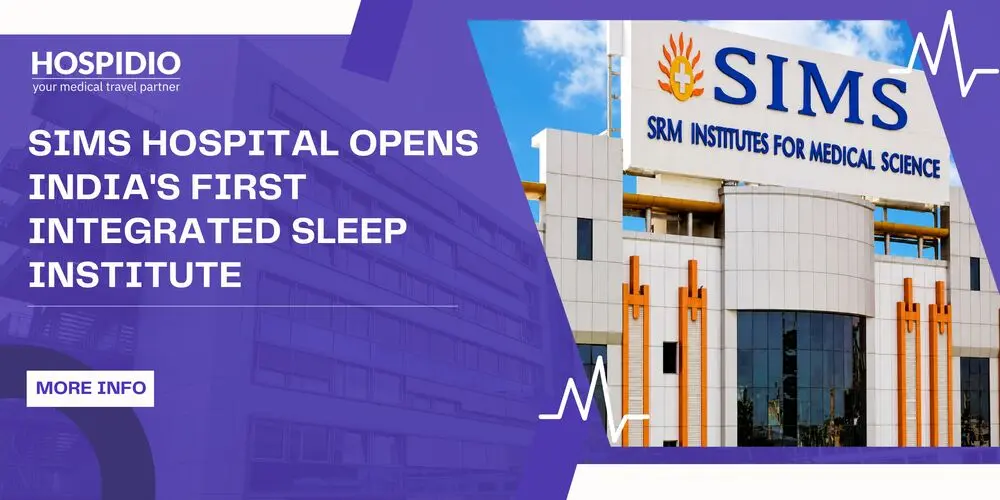
A landmark development in sleep medicine is now a reality in Chennai. SIMS Hospital has inaugurated what it calls India's first integrated sleep institute, a multidisciplinary centre purpose built to diagnose and treat the full spectrum of sleep related disorders under one roof. At a time when sleep disorders are increasingly recognised as a gateway to life threatening cardiovascular and neurological events, this move marks a pivotal shift in how Indian healthcare institutions approach what was once considered a secondary concern.
The institute was inaugurated by Tamil Nadu actress Aishwarya Rajesh in the presence of Ravi Pachamuthu, Chairman of SRM Group, signalling institutional commitment at the highest level.
What's Happening Right Now
Chennai's SIMS Hospital has launched what it describes as the country's first fully integrated sleep institute, consolidating 10 medical specialities under a single structured care framework. The initiative integrates medical, surgical, diagnostic, and supportive services, meaning patients no longer have to navigate multiple departments or hospitals to receive comprehensive sleep care.
The institute is equipped with a dedicated Sleep Board and advanced sleep analysis technologies, offering personalised treatment for neurological, psychological, and respiratory sleep disorders across all age groups. It is also designed to address sleep related conditions linked to cardiac events during sleep and stroke, conditions that, according to the centre's own leadership, claim far more lives than most people realise.
Why This Matters: The Hidden Burden of Sleep Disorders
Sleep disorders are not merely an inconvenience. A growing body of clinical evidence links untreated sleep-disordered breathing conditions like obstructive sleep apnoea to a significantly elevated risk of stroke, heart attack, hypertension, and metabolic dysfunction.
Dr Karthik Madesh Ratnavelu, Director and Senior Consultant in ENT who heads the new institute, was unequivocal: stroke and nighttime heart attacks frequently occur in individuals with underlying sleep disorders, and at least three quarters of patients who experience these life threatening events have an undiagnosed or untreated sleep condition.
The physiological mechanism is straightforward but serious. In conditions like obstructive sleep apnoea, oxygen intake is reduced during sleep while carbon dioxide elimination becomes inadequate, creating systemic strain on the cardiovascular system with every night that passes untreated. As Dr Ratnavelu put it, untreated sleep disorders carry a risk comparable to cigarette smoking but for heart disease and stroke, not cancer.
Globally, it is estimated that over one billion people suffer from obstructive sleep apnoea, yet the vast majority remain undiagnosed. In India, awareness and access to structured sleep medicine services have historically lagged behind the disease burden.
What Makes This Institute Different
The defining characteristic of SIMS Hospital's sleep institute is its truly multidisciplinary architecture. Rather than a single speciality sleep clinic, the centre brings together ENT surgeons, pulmonologists, neurologists, oral and maxillofacial surgeons, and conservative dentists all working collaboratively within the same institutional framework to create genuinely personalised care pathways.
This is significant for several reasons:
- Sleep disorders are rarely simple: A patient with chronic snoring may have underlying anatomical, neurological, and metabolic contributors that no single speciality can address in isolation.
- Treatment decisions improve with collaboration: Where one specialist might default to a CPAP machine, a combined team can evaluate surgical, dental, and behavioural interventions simultaneously.
- Outcomes data follows integrated care: Globally, integrated sleep centres consistently outperform fragmented care models in patient adherence, treatment success, and long-term cardiovascular risk reduction.
The inclusion of a dedicated Sleep Board, a coordinating body overseeing clinical decisions, signals that this is not simply a branding exercise. It reflects the kind of governance infrastructure seen in mature sleep medicine programmes in the United States and Western Europe.
Who Should Seek Care Here
The institute is designed to manage the full range of sleep related disorders across all age groups. This includes:
Respiratory sleep disorders
- Obstructive sleep apnoea (OSA)
- Central sleep apnoea
- Chronic snoring with associated oxygen desaturation
- Overlap syndrome (OSA with COPD)
Neurological sleep disorders
- Insomnia with a neurological basis
- Restless legs syndrome
- Parasomnias (sleepwalking, night terrors, REM sleep behaviour disorder)
- Narcolepsy and hypersomnia
Cardiovascular risk from sleep disorders
- Nocturnal hypertension
- Sleep related arrhythmias
- Conditions linked to nighttime cardiac events or prior stroke
Paediatric sleep disorders
- Sleep disordered breathing in children, which is frequently underdiagnosed and can significantly affect cognitive development and academic performance
If you or a family member snores loudly, wakes unrefreshed, experiences excessive daytime sleepiness, or has been told their breathing pauses during sleep, these are red flag symptoms that warrant formal evaluation, not just lifestyle advice.
Understanding the Diagnostic Process
A key feature of integrated sleep institutes is their access to advanced diagnostic tools that move beyond subjective symptom reporting. Patients at the SIMS institute can expect:
Polysomnography (PSG): The gold standard overnight sleep study, monitoring brain activity, eye movements, heart rhythm, oxygen saturation, breathing patterns, and limb movements simultaneously.
Home Sleep Apnoea Testing (HSAT): For patients where full in lab PSG is not immediately indicated, portable diagnostic devices allow accurate assessment of sleep-disordered breathing in familiar surroundings.
Sleep Board Review: All complex cases are reviewed by the multi speciality panel, ensuring that diagnosis and treatment are not siloed within a single clinical perspective.
Advanced imaging and ENT specific assessments: including evaluation of nasal passages, soft palate, tongue base, and jaw anatomy allow the surgical team to identify structural contributors to airway obstruction that may be resolved with targeted intervention.
Treatment Approaches Available
Depending on diagnosis, the institute offers a continuum of care:
Conservative and medical management: CPAP and BiPAP therapy, oral appliance therapy designed by conservative dentists and maxillofacial surgeons, positional therapy, and weight management support.
Surgical intervention: For patients where anatomy contributes significantly to airway obstruction, procedures such as uvulopalatopharyngoplasty (UPPP), septoplasty, turbinate reduction, and maxillomandibular advancement are available through the integrated surgical team.
Neurological and psychological support: For insomnia, parasomnias, and hypersomnia, the neurologist and psychiatry adjacent services within the framework provide medication management and behavioural interventions including Cognitive Behavioural Therapy for Insomnia (CBT-I), considered the first line treatment for chronic insomnia by international guidelines.
What This Means for Medical Travellers
For international patients already considering medical travel to India for cardiovascular, neurological, or ENT care, this development is meaningful. Chennai is an established hub for medical tourism, and SIMS Hospital's broader infrastructure, including its track record in complex cardiac and neurological surgery, means that sleep disorders presenting alongside other conditions can now be assessed and treated within the same institution.
HOSPIDIO works with leading hospitals across India and can facilitate consultations at SIMS Hospital for patients seeking sleep disorder evaluation or treatment. Patients from the Gulf, Africa, Southeast Asia, and the UK frequently seek care in Chennai for conditions that intersect with sleep medicine, including stroke rehabilitation, cardiac evaluation, and ENT surgery.
Conclusion
The inauguration of SIMS Hospital's integrated sleep institute is more than an institutional milestone, it is a signal that Indian healthcare is taking sleep medicine seriously as a subspecialty with direct implications for stroke prevention, cardiac health, and quality of life. The concentration of ten specialities under a coordinated, board governed structure, backed by advanced diagnostic technology, positions this centre as a genuinely differentiated care destination for patients across the country and internationally.
Sleep disorders are underdiagnosed, undertreated, and broadly misunderstood, but they are not inevitable. If you have been living with disrupted sleep, excessive daytime fatigue, or unexplained cardiovascular symptoms, now is the time to seek evaluation.
References
- Medical Dialogues. (February 21, 2026). SIMS Hospital inaugurates first integrated sleep institute. https://medicaldialogues.in/news/health/hospital-diagnostics/sims-hospital-inaugurates-first-integrated-sleep-institute-165040
- World Health Organization. Global report on neglected tropical diseases 2023. WHO Press.American Academy of Sleep Medicine. (2023). International Classification of Sleep Disorders, 3rd Edition, Text Revision (ICSD-3-TR).
- Benjafield, A.V. et al. (2019). Estimation of the global prevalence and burden of obstructive sleep apnoea. The Lancet Respiratory Medicine, 7(8), 687–698.
About Hospidio: This blog post is intended to provide factual, evidence based information to keep our community informed about global healthcare developments. Always consult with healthcare professionals for medical advice and follow guidance from your local health authorities.
Recent Blogs

Frequently Asked Questions
The SIMS Hospital Integrated Sleep Institute is India's first multidisciplinary sleep centre, launched in Chennai. It brings together 10 specialities, including ENT, pulmonology, neurology, and oral surgery under a single structured framework to diagnose and treat the full range of sleep related disorders across all age groups.
The institute treats a wide spectrum of conditions including obstructive sleep apnoea, chronic snoring, insomnia, restless legs syndrome, narcolepsy, parasomnias, and sleep disorders linked to stroke, nighttime cardiac events, and respiratory conditions like COPD.
Sleep disorders rarely have a single cause. An integrated centre allows ENT surgeons, neurologists, pulmonologists, and dentists to assess and treat a patient collaboratively, leading to more accurate diagnoses, better treatment choices, and stronger long term outcomes compared to single speciality clinics.
Untreated sleep disorders, particularly obstructive sleep apnoea, reduce oxygen intake and impair carbon dioxide elimination during sleep. Over time, this puts significant strain on the cardiovascular system. According to the institute's clinical lead, at least three quarters of patients who experience stroke or nighttime heart attacks have an underlying sleep disorder.
The institute is equipped with advanced sleep analysis technologies including in-lab polysomnography (PSG), home sleep apnoea testing (HSAT), ENT specific airway assessments, and a dedicated Sleep Board that reviews complex cases across specialities.
Anyone who experiences loud snoring, wakes up feeling unrefreshed, has excessive daytime sleepiness, or has been told their breathing pauses during sleep should seek a formal evaluation. The institute also caters to children with sleep disordered breathing and adults with cardiovascular or neurological conditions linked to poor sleep.
Yes. Chennai is a well established medical tourism destination, and SIMS Hospital has a strong track record in complex cardiac, neurological, and ENT care. International patients already travelling to India for related conditions can now receive sleep disorder evaluation and treatment within the same institution.
Treatment options range from CPAP and BiPAP therapy, oral appliance therapy, and Cognitive Behavioural Therapy for Insomnia (CBT-I) to surgical interventions such as septoplasty, UPPP, and maxillomandibular advancement, depending on the patient's diagnosis and the Sleep Board's recommendation.
Shruti Verma has completed her M.Tech in Biotechnology with experience in medical writing and scientific content development. She specializes in translating complex biomedical and healthcare information into clear, accurate, and reader-friendly content for diverse audiences. When she is not designing content, probably she is designing graphics.
Guneet Bhatia is the Founder of HOSPIDIO and an accomplished content reviewer with extensive experience in medical content development, instructional design, and blogging. Passionate about creating impactful content, she excels in ensuring accuracy and clarity in every piece. Guneet enjoys engaging in meaningful conversations with people from diverse ethnic and cultural backgrounds, enriching her perspective. When she's not working, she cherishes quality time with her family, enjoys good music, and loves brainstorming innovative ideas with her team.