
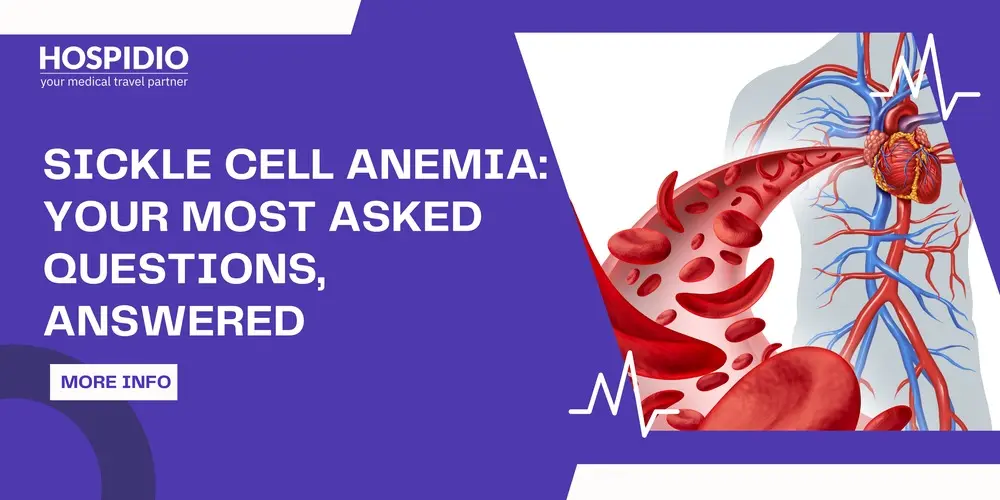
Sickle cell anemia is one of the most common inherited blood disorders in the world, yet it is also one of the most misunderstood. If you or someone you love has just been diagnosed, discovered you carry the trait, or are simply trying to understand the condition, you likely have a lot of questions, about inheritance, life expectancy, treatment, pregnancy, and whether a cure is possible.
Below are direct, evidence-based answers to the questions people most often ask about sickle cell anemia, written in plain language. Where treatment options and costs are relevant, we have included up-to-date information for patients considering care in India.
Medical disclaimer: This article is for general information only and is not a substitute for advice from a qualified doctor. Always consult a hematologist or your treating physician about your specific situation.
Understanding the Genetics
Can a man with AA genotype and a woman with AS genotype have a child with SS (sickle cell) genotype?
No. An AA father and an AS mother cannot have a child with the SS genotype. Each parent passes one hemoglobin gene to the child. The AA father can only pass an “A,” so every child receives at least one normal “A” gene. The possible outcomes are 50% AA (unaffected) and 50% AS (carrier/trait). For a child to have sickle cell anemia (SS), both parents must pass on an “S” gene, which means both parents must carry at least one “S” (for example, AS × AS, AS × SS, or SS × SS).
How can two people with sickle cell anemia, or with the trait, have children who don’t have the disease?
Because sickle cell anemia is inherited in a predictable pattern, healthy outcomes are often a matter of probability. When both parents carry the sickle cell trait (AS × AS), each pregnancy has a 25% chance of an unaffected child (AA), a 50% chance of a carrier (AS), and a 25% chance of a child with sickle cell disease (SS). So three out of four children, on average, will not have the disease. The percentages apply independently to each pregnancy; they are not a guarantee across siblings, which is why one family can have both affected and unaffected children.
Why is the sickle cell trait so common in tropical Africa, and why should couples know their genotypes?
The sickle cell trait is common in tropical Africa because it offers partial protection against malaria. People who carry one sickle gene (AS) are more likely to survive Plasmodium falciparum malaria than people with normal hemoglobin (AA). Over thousands of years, in regions where malaria was widespread, this survival advantage kept the sickle gene common, a phenomenon scientists call the “heterozygote advantage.” The catch is that when two carriers have children together, those children can inherit two sickle genes and develop the disease. Knowing your genotype before marriage or pregnancy lets a couple understand their risk and make informed choices, through genetic counseling, prenatal testing, or assisted reproduction.
Why is sickle cell so prominent among people of African descent? How does biology explain it?
Sickle cell is most common in populations whose ancestors lived where malaria was endemic, which includes much of sub-Saharan Africa. The biology is the same malaria-protection mechanism: the sickle gene survived and spread in malaria-heavy regions because carriers were more likely to survive to reproductive age. Because a large share of the world’s malaria burden has historically been in tropical Africa, the gene became common in people of African ancestry and, through migration, in their descendants worldwide. Importantly, sickle cell is not a “racial” disease in a biological sense; it is a geographic one tied to malaria, which is why it also appears in people of Mediterranean, Middle Eastern, and South Asian descent.
Why is sickle cell anemia more prevalent in the Mediterranean region than in southern African countries like Botswana, Namibia, and Lesotho?
Because the sickle cell gene tracks where malaria was historically common, not where Africa is on a map. Botswana, Namibia, and Lesotho are largely arid, high-altitude, or temperate regions where falciparum malaria was historically scarce, so the sickle gene never became common there. Parts of the Mediterranean (southern Italy, Sicily, Greece, and North Africa) were historically malarial, so the sickle gene (and the related thalassemia genes) persisted in those populations. This is a clear example of why sickle cell distribution follows malaria history rather than continent or skin color.
Can a white person get sickle cell anemia?
Yes. Sickle cell anemia can affect people of any race or ethnicity. While it is most common in people of African ancestry, it also occurs in people of Mediterranean (Greek, Italian, Turkish), Middle Eastern, South Asian (Indian, Pakistani), and Hispanic descent. Anyone who inherits two sickle cell genes (one from each parent) will have the disease, regardless of skin color.
Is sickle cell anemia an autoimmune disease?
No. Sickle cell anemia is not an autoimmune disease; it is a genetic (inherited) blood disorder. In autoimmune diseases, the immune system mistakenly attacks the body’s own tissues. In sickle cell anemia, the problem is a mutation in the gene that makes hemoglobin, the oxygen-carrying protein in red blood cells. This mutation causes red cells to become stiff and curved like a sickle, which blocks blood flow and breaks down faster than normal. You are born with it; it is not triggered by the immune system.
Sickle Cell Trait (AS)
What is the difference between sickle cell trait and sickle cell disease?
Sickle cell trait (AS) means you carry one sickle gene but do not have the disease; sickle cell disease (SS) means you inherited two sickle genes and have the condition. People with the trait are generally healthy and usually have no symptoms. People with the disease have ongoing health effects such as anemia, pain crises, and a risk of organ complications. The trait matters mainly for family planning, because two carriers can have a child with the disease.
What are the symptoms of sickle cell trait?
Most people with sickle cell trait have no symptoms at all and live completely normal lives. The trait is usually only discovered through a blood test. In rare situations (extreme physical exertion, severe dehydration, high altitude, or very low oxygen), some carriers can experience complications such as blood in the urine, exercise-related muscle breakdown (rhabdomyolysis), or, very rarely, spleen-related issues at altitude. These events are uncommon, and the vast majority of carriers never experience any problem. If you have the trait, staying well-hydrated and avoiding extreme overexertion without acclimatization is sensible.
My fiancée and I just found out we both have the sickle cell trait (AS). What should we do?
The most important step is to speak with a genetic counselor, because two AS carriers have a 25% chance of having a child with sickle cell disease in each pregnancy. Being a carrier does not affect your own health or your relationship; it simply means you have reproductive choices to consider. A counselor can walk you through your options, which typically include: prenatal testing during pregnancy; in-vitro fertilization with pre-implantation genetic testing (PGT) to select unaffected embryos; using a donor; adoption; or proceeding naturally with full awareness and early newborn screening. There is no single “right” choice, only the one that is right for the two of you, made with accurate information.
My mom has sickle cell trait. Does this affect how quickly I build muscle?
Sickle cell trait does not meaningfully limit your ability to build muscle or get fit. First, your mother having the trait doesn’t mean you have it; you’d need to inherit the gene, and even then, trait carriers can train, build muscle, and compete at high levels (many elite athletes carry the trait). The only practical caution for trait carriers is during extreme, unaccustomed exertion in heat, dehydration, or high altitude, where there’s a small increased risk of muscle breakdown. Sensible hydration, gradual training progression, and rest cover that risk. If you’re unsure whether you carry the trait, a simple blood test will tell you.
Living With Sickle Cell & Prognosis
How long can a person live with sickle cell anemia?
With modern care, many people with sickle cell anemia now live into their 50s, and increasingly beyond, though life expectancy still falls short of the general population. Recent studies in high-income countries estimate an average life expectancy of around 52 to 54 years, roughly 20 years less than people without the condition. The outlook has improved dramatically over recent decades: in well-resourced settings, about 95% of children with sickle cell disease now survive into adulthood. Early diagnosis, vaccinations, penicillin in childhood, hydroxyurea, regular specialist care, and, for eligible patients, transplant or gene therapy all extend and improve life. Outcomes are unfortunately poorer in regions with limited access to care, which is why access to good treatment is so important.
What is the typical lifespan of a sickle cell patient?
The average lifespan reported in recent research is approximately 52 to 54 years in countries with good healthcare access, and it continues to rise as treatment improves. This is an average, not a ceiling; individual outcomes vary widely depending on the type of sickle cell disease, the severity of complications, and crucially, the quality and consistency of medical care. A patient who receives early screening, takes hydroxyurea, stays up to date on vaccinations, and has access to a specialist team can do significantly better than these averages suggest. Curative options like stem cell transplant and newer gene therapies are now changing the long-term picture for eligible patients.
Has anyone gone through avascular necrosis (AVN) of the hip due to sickle cell? Does it lead to hip replacement?
Avascular necrosis (AVN) of the hip, where bone tissue dies from poor blood supply, is a common complication of sickle cell disease, and many patients do eventually need a hip replacement. Whether you need surgery depends on how advanced the damage is. In early stages, doctors may use pain management, physiotherapy, activity modification, or a joint-preserving procedure called core decompression. In later stages, when the hip joint has collapsed and pain limits daily life, total hip replacement is often the most effective option and can dramatically restore mobility and quality of life. Hip replacement in sickle cell patients requires careful specialist planning (around transfusion, anesthesia, and infection prevention), so it should be done at a center experienced with the condition. India’s orthopedic centers perform high volumes of hip replacements at a fraction of Western costs.
Treatment & Management
What are the strategies for treating a sickle cell crisis (pain crisis)?
Treating a sickle cell crisis centers on prompt pain relief, hydration, oxygen, and treating any underlying trigger such as infection. The core strategies include:
- Rapid, adequate pain control: often starting with non-opioid medication and escalating to opioids for severe pain, given quickly rather than delayed.
- Hydration: oral or intravenous fluids to help unblock circulation.
- Oxygen: if blood oxygen levels are low.
- Identifying and treating triggers: infection, fever, cold exposure, dehydration, or stress.
- Monitoring for serious complications: such as acute chest syndrome, stroke, or splenic problems, which need urgent intervention.
- Blood transfusion: in selected severe cases.
The goal is to relieve pain fast and prevent the crisis from progressing. Patients are believed and treated promptly; under-treated pain is a known and avoidable problem in sickle cell care.
What is hydroxyurea used for in sickle cell patients?
Hydroxyurea is the main long-term medication for sickle cell disease; it reduces painful crises, hospital admissions, and the need for blood transfusions. It works by boosting fetal hemoglobin (HbF), a form of hemoglobin that resists sickling, so red blood cells stay healthier and flow more easily. Studies over more than 25 years have shown it can roughly halve the frequency of pain crises and significantly reduce mortality. It is taken as a daily capsule or liquid, requires regular blood-count monitoring, and is recommended for most patients with significant disease, including young children. It is one of the most cost-effective and widely available sickle cell treatments in the world.
A note on newer drugs: Voxelotor (Oxbryta) was voluntarily withdrawn from markets worldwide in September 2024 after data suggested its risks outweighed its benefits, so it is no longer available. Crizanlizumab (Adakveo) remains available in the United States but was withdrawn from the European market in 2023. Hydroxyurea and L-glutamine remain the mainstay disease-modifying medications. Always confirm current options with your hematologist.
What does a hospital do with sickle cell patients who are frequently re-admitted?
For patients who are admitted often, the focus shifts from crisis-by-crisis treatment to a structured, preventive care plan that reduces future admissions. Good programs typically build an individualized care plan that includes: optimizing disease-modifying therapy (such as ensuring the patient is on and adhering to hydroxyurea); an agreed-upon, consistent pain-management protocol so the patient is treated reliably; screening for and managing complications (kidney, heart, lung, joints); addressing root causes of frequent crises (untreated infections, dehydration, mental-health and social stressors, medication access); and coordinated outpatient follow-up with a dedicated sickle cell team. The aim is continuity, the same plan honored across visits, rather than starting from scratch each admission. Frequent re-admission is often a signal that outpatient support needs strengthening.
What medical help can bring a 7-year-old who had a stroke from sickle cell back to normal?
Recovery for a child after a sickle cell stroke combines urgent specialist treatment to prevent another stroke with rehabilitation to restore lost function, and children often recover remarkably well with the right care. Key elements usually include: a regular blood transfusion program (often monthly) to keep sickle hemoglobin low and prevent further strokes; close monitoring with transcranial Doppler ultrasound and MRI; hydroxyurea or, in some cases, transplant for long-term protection; and an intensive rehabilitation team (physiotherapy, occupational therapy, and speech therapy) to rebuild movement, coordination, and speech. Early, consistent rehabilitation makes a real difference because young brains have strong recovery potential. The child should be managed at a center with pediatric hematology and neuro-rehabilitation experience. HOSPIDIO works with Indian hospitals offering pediatric hematology and dedicated neuro-rehabilitation programs.
I’m trying to get pregnant and I have sickle cell. What should I do?
Start with pre-pregnancy planning under a specialist team, because pregnancy with sickle cell disease is higher-risk but very often successful with the right care. Before conceiving, you should: have your partner’s genotype tested (this determines your baby’s risk); review your medications, since some (including hydroxyurea) are usually stopped before and during pregnancy; ensure vaccinations and organ-function checks are up to date; and treat any anemia or complications. During pregnancy, you’ll need closer-than-usual monitoring by an obstetrician working alongside a hematologist, watching for crises, infections, blood pressure problems, and the baby’s growth. Many women with sickle cell disease have healthy pregnancies; the key is specialist, coordinated care from before conception through delivery.
Can Sickle Cell Be Cured?
Is sickle cell disease impossible to cure?
No. Sickle cell disease is no longer considered incurable. There are now potentially curative treatments, though they aren’t yet available or suitable for everyone. For years, the only cure was a stem cell (bone marrow) transplant from a matched donor. Since late 2023, two gene therapies (Casgevy and Lyfgenia) have been approved (currently in the US, for patients aged 12 and older with severe disease), offering a one-time treatment using the patient’s own modified cells. These are described as “potentially curative” because long-term follow-up is still ongoing. For the majority of patients worldwide who can’t yet access these options, treatments like hydroxyurea, transfusions, and good preventive care manage the disease effectively and extend life.
Why does a bone marrow transplant cure sickle cell anemia completely?
A bone marrow (stem cell) transplant can cure sickle cell anemia because it replaces the patient’s blood-forming cells, the source of the faulty red blood cells, with healthy ones. Sickle cell disease starts in the bone marrow, where stem cells produce red blood cells carrying the abnormal sickle hemoglobin. In a transplant, the patient’s diseased marrow is cleared with chemotherapy and replaced with healthy stem cells from a matched donor (often a sibling). Those new cells then produce normal red blood cells, so the body stops making sickle cells. When it works (success rates are high with a well-matched sibling donor), the disease is effectively gone. The main limitations are that only a minority of patients have a suitable matched donor, and the procedure carries real risks, so it’s reserved for carefully selected patients.
How much does sickle cell treatment cost in India?
Sickle cell treatment in India is substantially more affordable than in Western countries: a curative bone marrow transplant typically ranges from about US $24,000 to US $40,000, compared to several hundred thousand dollars elsewhere. Day-to-day management is far cheaper: hydroxyurea and routine specialist care cost a fraction of what they do in high-income countries, making long-term treatment accessible. The exact transplant cost depends on the type of transplant, donor match, hospital, and any complications. India has become a leading destination for sickle cell transplants, with experienced hematology teams at JCI-accredited hospitals and reported transplant success rates as high as 90% with a well-matched donor. Newer gene therapies remain extremely expensive (over US $2 million in the US) and are not yet widely available in India.
Prevention & Public Health
What can be done to reduce the number of children born with sickle cell disease?
The most effective approach is widespread genotype screening and genetic counseling, so couples know their carrier status and can make informed reproductive choices. Public-health strategies that lower the incidence of sickle cell disease include: routine premarital or pre-pregnancy carrier screening; genetic counseling for at-risk couples; newborn screening (which improves outcomes even when it doesn’t prevent birth); access to prenatal diagnosis; and assisted-reproduction options such as IVF with pre-implantation genetic testing to select unaffected embryos. The aim of these programs is not to stigmatize anyone, but to give families accurate information and real choices. Awareness and early testing are the foundation, since many people don’t know they carry the trait until a child is diagnosed.
A Few More Common Questions
What triggers a sickle cell crisis?
Common triggers include dehydration, infection, cold weather, low oxygen (such as high altitude), physical or emotional stress, and overexertion. Avoiding these triggers (staying hydrated, keeping warm, treating infections early, and not overexerting) helps reduce how often crises occur. Triggers vary from person to person, so it helps to learn your own patterns.
Is sickle cell disease contagious?
No. Sickle cell disease is not contagious and cannot be passed from person to person through contact, blood, air, or any other means. It is a genetic condition that you can only inherit from your parents, by receiving a sickle gene from each of them at conception.
Can sickle cell be detected before or during pregnancy?
Yes. Sickle cell disease and the trait can be detected before pregnancy through a simple blood test, and during pregnancy through prenatal tests. Before conceiving, both partners can have a hemoglobin test to learn their genotype. During pregnancy, tests such as chorionic villus sampling (around 10–13 weeks) or amniocentesis (after 15 weeks) can tell whether the baby has the disease. Couples using IVF can also screen embryos before pregnancy with pre-implantation genetic testing.
What should someone with sickle cell anemia eat or avoid?
There’s no special “sickle cell diet,” but staying well-hydrated and eating a balanced, nutrient-rich diet supports overall health and helps prevent crises. Drinking plenty of fluids is one of the simplest and most important habits, since dehydration is a common crisis trigger. A balanced diet with adequate folate (found in leafy greens and often given as a supplement), fruits, vegetables, and protein supports healthy red-cell production. Limiting alcohol (which dehydrates) is wise. Always follow your own doctor’s or dietitian’s guidance, especially if you have organ involvement.
How HOSPIDIO Helps Sickle Cell Patients Access Care in India
For families seeking advanced or curative sickle cell care, including bone marrow transplants, pediatric hematology, and neuro-rehabilitation after stroke, India offers world-class treatment at up to 70% less than Western costs.
HOSPIDIO connects international patients with India’s top JCI-accredited hospitals, including Fortis and Apollo, and supports you through every step:
- Share your medical reports and receive a free expert second opinion.
- Get quotes from leading hospitals and choose what’s right for you.
- We handle the logistics: medical visa, airport transfer, accommodation, translation, and post-treatment follow-up, so you can focus on healing.
Get a free medical opinion from HOSPIDIO today. Talk to a dedicated coordinator who understands your situation.
Recent Blogs



Dr. Basim Parvez is a licensed physiotherapist and Senior Patient Consultant at HOSPIDIO, holding an MBA in Health Management. With extensive clinical experience and a compassionate approach, he assists patients navigating medical treatments. Dr. Basim also leverages his writing talent to simplify complex healthcare information, empowering patients to make informed decisions and fostering clarity and confidence in their medical journeys.
Dr. Akash Khandelwal is a consultant hematologist with clinical expertise in hematologic malignancies, bone marrow transplantation, and advanced cellular therapies, including CAR T-cell therapy. He is actively involved in the management of complex blood cancers and immune disorders, with a strong focus on evidence-based treatment, patient safety, and long-term outcomes. Dr. Khandelwal works closely with multidisciplinary teams to deliver standardized, guideline-driven care for both domestic and international patients, combining clinical precision with a patient-centered approach.