
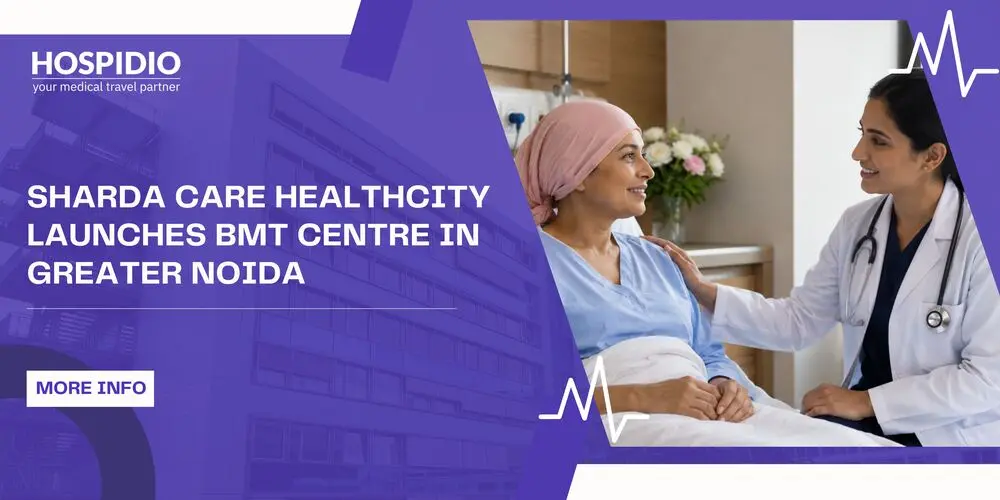
A landmark moment for blood disorder care in North India has arrived. ShardaCare Healthcity, the largest super speciality hospital in Greater Noida, has formally inaugurated what is now North India's largest Institute of Bone Marrow Transplant (BMT), a facility designed to bring curative, world class transplant care within reach of patients who have long had to travel to metro cities for treatment. The centre was inaugurated by Uttar Pradesh Deputy Chief Minister and Health Minister Shri Brajesh Pathak, in the presence of Sharda Group leadership and leading medical experts.
For the thousands of families across Uttar Pradesh and neighbouring states who have been navigating long referral chains, donor shortages, and prohibitive costs, this development marks a turning point.
What Has Been Launched, and Why It Matters
The newly established Institute of Bone Marrow Transplant at ShardaCare Healthcity is not simply a new department within a hospital. It is a fully integrated transplant ecosystem designed to deliver end to end care, from early diagnosis and donor matching to post transplant recovery, all under one roof.
The centre is equipped to treat a comprehensive range of complex blood disorders, including:
- Leukaemia (blood cancer affecting white blood cells)
- Lymphoma (cancer of the lymphatic system)
- Multiple myeloma (plasma cell cancer)
- Aplastic anaemia (bone marrow failure)
- Thalassemia (inherited haemoglobin disorder)
- Sickle cell disease (genetic red blood cell disorder)
- Bone marrow failure syndromes (highrisk and complex cases)
Both paediatric and adult patients are served by the institute. The range of transplant types offered is equally broad: matched sibling donor transplants, matched unrelated donor transplants, haploidentical (half match) transplants, and autologous BMT, including for autoimmune conditions such as multiple sclerosis.
What sets this centre apart further is its access to cutting edge therapies:
- CAR-T cell therapy,
- T-cell depleted haploidentical transplants,
- advanced graft manipulation,
- targeted therapies,
- immunotherapies,
- and high dose induction regimens.
These are not peripheral offerings, they are positioned as central pillars of the institute's clinical model.
The Experts Leading the Institute
The institute is headed by Dr. Pawan Kumar Singh, a highly regarded Haemato-Oncologist and Bone Marrow Transplant Specialist in North India, who joins ShardaCare-Healthcity as Vice Chairman, Department of Haemato-Oncology & BMT. He will drive the clinical and operational vision of the centre, supported by Dr. Isha, Associate Consultant in the same department.
Speaking at the launch, Dr. Singh highlighted the structural challenges that have long limited access to bone marrow transplantation in India:
"Blood disorders in India severely impact quality of life and survival across age groups, affecting not only children but also adults who are often diagnosed late. While bone marrow transplantation offers a potential cure, access remains limited due to challenges such as donor availability, high costs, and delayed referrals. In adults, BMT is advisable at a younger age, as outcomes are significantly better when the procedure is undertaken early. Through this Institute, we aim to build a structured, ethical, and patient centric BMT ecosystem, while strengthening early diagnosis, donor matching, and access to advanced therapies."
Dr. Kousar Shah, Group CEO of Sharda Care Healthcity, underscored that the institute's purpose is to reduce the concentration of transplant services in a handful of metro cities making world class care accessible to patients in their own communities.
India's Silent Blood Disorder Crisis
The launch comes at a time when India is grappling with a substantial and underappreciated burden of inherited blood disorders. Studies indicate that more than one in four children aged 0 to 12 who are suspected of having a blood disorder are ultimately diagnosed with inherited haemoglobin diseases and more than half of those diagnosed are under the age of three.
In adults, the challenge is different but equally serious: late diagnosis, inadequate screening infrastructure, and limited awareness mean many patients reach critical illness before ever being evaluated for a transplant. By that stage, outcomes are measurably worse.
Yet the therapeutic landscape has been shifting rapidly. Advances in bone marrow transplantation, along with the emergence of gene therapies, are transforming what is possible, offering genuine curative potential and reducing lifelong dependence on blood transfusions for both children and adults.
The problem has never been the science. It has been access.
What Makes This Centre Different
Several factors distinguish the Sharda Care Healthcity BMT Institute from existing facilities:
Scale and integration
As the largest hospital in Greater Noida, Shard Care Healthcity now combines its clinical scale with North India's largest dedicated BMT infrastructure. Patients have access to advanced infection controlled units, a multidisciplinary specialist team, and comprehensive support services within a single facility.
Reducing dependence on metro cities
One of the most significant barriers to timely transplantation in India has been geography, patients from Uttar Pradesh, Bihar, and neighbouring states often travel to Delhi, Mumbai, or Chennai for transplant services, adding cost, delay, and logistical strain at a time when patients are at their most vulnerable. This centre directly addresses that gap.
Breadth of transplant types
Many BMT facilities in India offer a limited range of procedures. This institute is structured to handle complex cases, including haploidentical transplants (which broaden donor eligibility significantly) and autologous BMT for autoimmune conditions, expanding the population of patients who can actually benefit.
CAR-T cell therapy
The inclusion of CAR-T therapy signals an intent to operate at the frontier of haemato oncology. This treatment, which involves engineering a patient's own immune cells to target cancer, represents one of the most significant advances in blood cancer treatment in recent years, and remains available only at a small number of centres across the country.
What This Means for Patients and Families
If you or a family member has been diagnosed with leukaemia, thalassemia, aplastic anaemia, lymphoma, or another complex blood disorder, the opening of this centre represents a meaningful new option, particularly for patients in Uttar Pradesh and the surrounding region.
Key considerations for patients exploring bone marrow transplant:
Early evaluation is critical
As Dr. Singh has noted, transplant outcomes in adults are substantially better when the procedure is performed earlier. Seeking a specialist consultation early, rather than waiting for disease progression, can directly affect outcomes.
Donor matching takes time
Whether a matched sibling, matched unrelated donor, or haploidentical transplant is appropriate depends on individual disease and family donor availability. The earlier this process begins, the better.
Ask about the full range of treatments
Not all BMT centres offer CAR-T therapy, autologous BMT for autoimmune diseases, or haploidentical options. Understanding what is available matters.
Financial planning matters
Bone marrow transplants involve complex, multi week hospital stays. Discuss costs, insurance coverage, and support options with the hospital's patient services team before committing to a plan.
Conclusion
The inauguration of North India's largest Bone Marrow Transplant Institute at Sharda Care Healthcity is a clinically and geographically significant development in India's healthcare landscape. For a country facing a rising burden of inherited and acquired blood disorders, with thousands of patients denied timely care due to access constraints, a world class, fully integrated BMT centre in Greater Noida is not just a milestone for one hospital. It is a structural change in who can access curative treatment and when.
The institute's combination of experienced specialists, advanced therapies including CAR-T, and a commitment to building ethical, patient centric care makes it a facility worth knowing about, whether you are a patient, a referring physician, or a family member navigating a blood disorder diagnosis for the first time.
References
- Digital Health News. (2026). Sharda Care Healthcity Launches Institute of Bone Marrow Transplant in Greater Noida. https://www.digitalhealthnews.com/shardacare-healthcity-launches-institute-of-bone-marrow-transplant-in-greater-noida
- APN News. (January 28, 2026). Sharda Care Healthcity Launches North India's Largest Institute of Bone Marrow Transplant. https://www.apnnews.com
- Business News This Week. (March 24, 2026). North India's Largest Bone Marrow Transplant Centre Inaugurated at Sharda Care Healthcity. https://businessnewsthisweek.com
- BioSpectrum India. (March 23, 2026). North India's largest Bone Marrow Transplant Centre opens in Greater Noida. https://www.biospectrumindia.com
About Hospidio: This blog post is intended to provide factual, evidence based information to keep our community informed about healthcare developments in India. HOSPIDIO helps international and domestic patients connect with leading hospitals and specialists for complex treatments including bone marrow transplants. Always consult a qualified haematologist or oncologist for personalised medical advice.
Recent Blogs
Frequently Asked Questions
A Bone Marrow Transplant is a medical procedure that replaces damaged or diseased bone marrow with healthy stem cells. It is used to treat blood cancers like leukaemia and lymphoma, inherited disorders like thalassemia and sickle cell disease, and bone marrow failure conditions like aplastic anaemia. Depending on the source of stem cells, a BMT can be autologous (using the patient's own cells) or allogeneic (using a donor's cells).
The institute treats a wide range of blood disorders including leukaemia, lymphoma, multiple myeloma, aplastic anaemia, thalassemia, sickle cell disease, bone marrow failure syndromes, and certain autoimmune conditions such as multiple sclerosis. Both paediatric and adult patients are eligible for treatment.
The institute offers matched sibling donor transplants, matched unrelated donor transplants, haploidentical (half match) transplants, and autologous BMT. The availability of haploidentical transplants is particularly significant as it broadens donor eligibility for patients who do not have a fully matched sibling or unrelated donor.
CAR-T (Chimeric Antigen Receptor T-cell) therapy is an advanced form of immunotherapy where a patient's own immune cells are genetically engineered to recognise and attack cancer cells. It represents one of the most significant breakthroughs in blood cancer treatment in recent years. Yes, CAR-T cell therapy is available at the Sharda Care Healthcity BMT Institute, making it one of a small number of centres in India to offer this treatment.
The institute is led by Dr. Pawan Kumar Singh, Vice Chairman of the Department of Haemato-Oncology & BMT, supported by Dr. Isha, Associate Consultant. Dr. Singh is a highly experienced Haemato-Oncologist and Bone Marrow Transplant Specialist with a focus on building ethical, patient-centric transplant care in North India.
Eligibility for a BMT depends on several factors including the type and stage of the disease, the patient's overall health, age, and the availability of a suitable donor. A consultation with a haematologist or haemato oncologist is the first step. They will assess your medical history, conduct necessary tests, and advise on the most appropriate treatment pathway.
Shruti Verma has completed her M.Tech in Biotechnology with experience in medical writing and scientific content development. She specializes in translating complex biomedical and healthcare information into clear, accurate, and reader-friendly content for diverse audiences. When she is not designing content, probably she is designing graphics.
Guneet Bhatia is the Founder of HOSPIDIO and an accomplished content reviewer with extensive experience in medical content development, instructional design, and blogging. Passionate about creating impactful content, she excels in ensuring accuracy and clarity in every piece. Guneet enjoys engaging in meaningful conversations with people from diverse ethnic and cultural backgrounds, enriching her perspective. When she's not working, she cherishes quality time with her family, enjoys good music, and loves brainstorming innovative ideas with her team.