
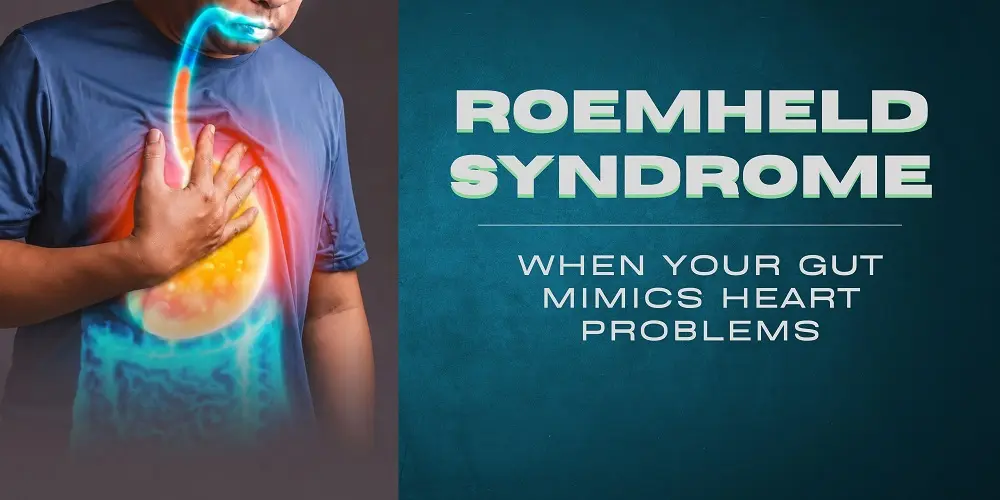
You feel a sudden flutter in your chest. Your heart seems to skip a beat. You're short of breath. For a moment, you're convinced something is seriously wrong with your heart. Then you burp, feel some relief, and realize it was just gas.
That experience has a name: Roemheld Syndrome, also known as Gastrocardiac Syndrome. It's a real medical condition where problems in your gastrointestinal tract trick your body into producing symptoms that feel like heart trouble. The confusion is so convincing that thousands of people end up in emergency rooms each year worried they're having a heart attack, only to discover the culprit is their stomach.
But here's the critical part: Roemheld Syndrome should never be used to automatically dismiss chest pain or palpitations as "just gas." Heart disease, arrhythmias, and other cardiac conditions must be ruled out first. The diagnosis of Roemheld Syndrome only makes sense after proper cardiac workup has been completed.
Ready to understand how your gut and heart are connected? Read on to learn what's really happening, how to spot the difference, and when it's time to call a doctor.
If recurrent palpitations and bloating are affecting your quality of life, India's best gastroenterology specialists can help. Learn more about consultations today.
What Is Roemheld Syndrome? The Gut-Heart Connection Explained
Roemheld Syndrome is a condition where abdominal distension (swelling or bloating) or disturbance in the gastrointestinal tract produces symptoms that mimic cardiac disease. The symptoms are real and your discomfort is valid, but the origin is digestive, not cardiac.
The term comes from Dr. Ludwig Roemheld, a German physician who first described this phenomenon in the early 1900s. For decades, it was primarily recognized in German and European medical literature, but cardiologists and gastroenterologists worldwide now accept it as a legitimate gastrocardiac interaction.
The syndrome sits at the intersection of two medical specialties: gastroenterology (digestive system) and cardiology (heart). This cross-specialty nature is one reason why diagnosis can take time. A patient might see a cardiologist who finds no heart disease, then see a gastroenterologist who identifies the real culprit: their stomach or intestines.
What can trigger Roemheld Syndrome?
Any condition that causes gas, bloating, or distension in the stomach or intestines can potentially trigger it. Common triggers include:
- GERD (acid reflux) and acid regurgitation into the esophagus,
- Hiatal hernia, where part of the stomach pushes through the diaphragm,
- Irritable Bowel Syndrome (IBS) with bloating and gas,
- Lactose intolerance or other food intolerances,
- Swallowing air while eating too quickly or chewing gum,
- Eating large meals, particularly high-fat foods that slow digestion,
- Constipation and gas buildup in the colon, Dysbiosis (imbalanced gut bacteria),
- Eating legumes, cruciferous vegetables (broccoli, cabbage), or foods known to cause gas.
How Does Your Gut Make Your Heart Feel Like It's Misbehaving?
The mechanism behind Roemheld Syndrome involves anatomy, pressure, and nervous system interference. Here's what actually happens in your body:
The Anatomical Setup
Your heart and stomach are neighbors. The heart sits above and slightly to the left, the stomach occupies the upper abdomen, just below the diaphragm. When your stomach distends with gas or swallows air, it expands and pushes upward, pressing against the diaphragm (the breathing muscle) and indirectly affecting the heart's position and function.
The Pressure Effect
A distended stomach isn't just slightly inflated. Gas buildup can create significant pressure in the abdominal cavity. This pressure can:
- Compress the lower esophagus and cause discomfort,
- Push upward on the diaphragm, restricting normal breathing,
- Indirectly alter the position of the heart in the chest,
- Create what physicians call "cardiac drift," where the heart's electrical activity and mechanical function shift slightly.
The Nerve Interference
The vagus nerve is a critical player here. This major nerve runs from your brain, through your chest, and down into your abdomen, controlling both heart rhythm and digestive function. When the stomach is distended, it overstimulates the vagus nerve, sending mixed signals that can trigger:
- Arrhythmia or palpitations (the sensation of the heart racing, fluttering, or skipping beats),
- Increased parasympathetic nervous system activity (your "rest and digest" mode), which can slow the heart rate or cause irregular beats,
- Referred pain or discomfort in the chest area.
This is why Roemheld Syndrome is sometimes called the "stomach-heart reflex." Your digestive system is literally communicating with your heart via the vagus nerve.
The Electrolyte and Carbon Dioxide Story
Gas accumulation in the digestive tract produces carbon dioxide and other gases. Elevated abdominal CO2 levels can alter blood pH and electrolyte balance locally, affecting how the heart muscle contracts and conducts electricity. Additionally, the pressure on the diaphragm can reduce oxygen intake, which the heart is very sensitive to.
All of these factors combined create a cascade of symptoms that feel unmistakably cardiac.
Have you experienced heart-like symptoms that improved after belching or defecating? Connect with gastroenterology specialists in India for proper diagnosis
The Symptoms That Scare You: What Roemheld Syndrome Actually Feels Like
When someone has Roemheld Syndrome, the symptoms are genuine and often frightening. They include:
- Palpitations: Feeling like your heart is racing, pounding, fluttering, or skipping beats,
- Chest pressure or tightness: A sensation of heaviness or squeezing in the chest, sometimes mistaken for angina,
- Shortness of breath: Difficulty catching your breath, especially when the stomach is very distended,
- Dizziness or lightheadedness: Feeling faint or unsteady, sometimes triggered by the arrhythmia itself,
- Anxiety and panic sensations: The fear of cardiac disease can trigger its own cycle of anxiety, which worsens breathing and heart symptoms,
- Burping or belching relief: Symptoms often improve temporarily after belching or passing gas,
- Pain or discomfort in the left arm or jaw: Atypical presentations, sometimes confused with classic heart attack warning signs.
What Makes Roemheld Syndrome Different From a Heart Attack?
Durationand triggers: Roemheld Syndrome symptoms often build gradually over minutes to hours as gas accumulates, whereas a true heart attack typically comes on suddenly and doesn't resolve with a burp.
Relief patterns: If your palpitations or chest pressure ease after belching, passing gas, or having a bowel movement, that's a strong clue pointing to a digestive cause.
Predictability: Roemheld Syndrome often happens after eating specific foods (large meals, fatty foods, gas-producing vegetables) or at predictable times of day.
Absence of sweating or severe weakness: True heart attacks often come with profuse sweating, nausea, and a sense of extreme distress that Roemheld Syndrome alone doesn't typically produce.
But, and this is crucial: These differences are not a reliable way to self-diagnose. Some people with real heart disease feel relief with antacids or after eating. Do not rely on these distinctions to rule out cardiac disease. Proper testing is the only way to be sure.
Why Diagnosis Is Trickier Than It Sounds
If Roemheld Syndrome is real, why isn't it diagnosed more often? Several reasons:
The cardiac workup comes first. When someone presents with chest pain and palpitations, standard medical practice is to perform an EKG, troponin blood test, and possibly an echocardiogram or stress test to rule out acute coronary syndrome, arrhythmia, or structural heart disease. This is correct and necessary. However, once the heart tests come back normal, many doctors stop investigating. The patient is reassured ("your heart is fine") and sent home, but the underlying symptom often persists because the real cause (digestive) was never evaluated.
The symptom overlap confuses everyone. Patients describe "chest pain" or "heart palpitations," so they naturally see a cardiologist. Cardiologists are experts in hearts, not stomachs. If the EKG and troponin are normal, some cardiologists assume the symptoms are anxiety-related and don't refer the patient to gastroenterology.
Roemheld Syndrome isn't well known outside Europe and teaching hospitals. Unlike GERD or IBS, Roemheld Syndrome isn't a household term. Many younger physicians in Asia, the Middle East, and parts of the Americas may not have learned about it in medical school, so they don't think to diagnose it.
The diagnosis is clinical, not a single definitive test. Unlike a blood test for troponin (which indicates a heart attack), there's no single Roemheld Syndrome test. Diagnosis relies on a careful history (do symptoms correlate with eating certain foods or bloating?), normal cardiac testing, and a positive response to gastroenterology-focused treatment.
This is why a thoughtful, cross-specialty approach is essential. Ideally, once cardiac disease is ruled out, a patient with ongoing palpitations and chest pressure should see a gastroenterologist to investigate GERD, hiatal hernia, IBS, or other GI sources.
How Doctors Confirm Roemheld Syndrome (And Rule Out Real Heart Disease)
Step 1: Always Start With Cardiac Testing
No matter how convinced you are that "it's just gas," proper cardiac evaluation is non-negotiable. This includes:
- EKG (electrocardiogram): A 12-lead recording of your heart's electrical activity, performed in seconds,Troponin blood test: Measures a protein released by damaged heart muscle,a normal result is reassuring,
- Echocardiogram: Ultrasound of the heart to check for structural abnormalities or valve problems, Holter monitor or event recorder: If symptoms are intermittent, a portable device worn for 24-48 hours or longer can capture abnormal rhythms.
If these tests are normal, your cardiologist can confidently say, "Your heart is fine." That's a huge relief, but it's not the end of the story.
Step 2: Investigate the Digestive Tract
Once the heart is cleared, ask your primary care doctor for a referral to a gastroenterologist. Relevant tests include:
- Upper endoscopy (EGD): A thin camera down the throat to visualize the esophagus, stomach, and upper small intestine, can diagnose GERD, hiatal hernia, gastritis, or other structural problems,
- Abdominal ultrasound or CT scan: Can show stomach distension, hiatal hernia, or other structural issues,
- H2 breath test: Checks for small intestinal bacterial overgrowth (SIBO), which causes excessive gas production,
- Food sensitivity or intolerance testing: Identifies foods that trigger bloating (lactose, fructose, gluten in some patients).
Step 3: Corroborate the History
A good gastroenterologist will ask detailed questions about the timing and triggers of your symptoms:
Do palpitations happen after eating certain foods? Do they come on when you're stressed or eating too quickly? Do you feel relief after burping or defecating? Is there a pattern to when they occur during the day? Do you have reflux, belching, or bloating?
A consistent pattern of "palpitations after large or fatty meals" is a strong clue toward Roemheld Syndrome, especially if cardiac testing is normal.
The Reassuring Role of Normal Cardiac Tests
If your EKG, troponin, echocardiogram, and Holter monitor are all normal, you can be confident that you're not having a heart attack, don't have coronary artery disease, and don't have significant valve disease. This is genuinely good news and forms the foundation for considering a gastrointestinal cause.
However, normal tests don't prove you have Roemheld Syndrome. They simply create space for that diagnosis to be considered. The actual diagnosis comes from the combination of normal cardiac findings, GI workup results, and clinical improvement with digestive-focused treatment.
Management: How to Feel Better (Without a Pill for Every Symptom)
Roemheld Syndrome is manageable, often without surgery or prescription medications. Here's what works:
Immediate Symptom Relief
- Relax and breathe: The anxiety that comes with palpitations can spiral. Slow, deep breathing activates the parasympathetic nervous system and can calm the arrhythmia. Breathing in for a count of 4, holding for 4, and exhaling for 4 or 6 is a time-tested technique.
- Move and change position: Walking, gentle bending, or changing from sitting to standing can help gas pass through the intestines.
- Belch intentionally: Carbonated drinks (ginger ale, soda) can help you release trapped gas faster.
- Antacids or simethicone: Over-the-counter antacids can reduce stomach acid and bloating. Simethicone (Gas-X) breaks up gas bubbles so they're easier to pass.
- Warm liquids: Tea or warm water can relax the stomach and facilitate digestion.
Dietary Changes (The Real Fix)
Eat smaller, more frequent meals: Large meals distend the stomach dramatically. Five small meals a day can reduce the risk of significant bloating.
Slow down and chew thoroughly: Swallowing food whole or air along with it increases gas production.
Avoid known gas-producing foods: Cruciferous vegetables (cabbage, broccoli, cauliflower), legumes (beans, lentils), onions, and artificial sweeteners produce excess gas in the colon.
Limit high-fat foods: Fat slows gastric emptying, keeping food in your stomach longer and increasing distension. Avoid carbonated drinks: Especially if you're sensitive to bloating.
Test for food intolerances: Lactose intolerance, fructose malabsorption, and SIBO can all cause excessive gas. A food diary or elimination diet can help identify triggers.
Reduce caffeine and alcohol: Both relax the lower esophageal sphincter and can worsen reflux and bloating.
Lifestyle Adjustments
- Sleep position: Sleeping on your left side or elevating the head of your bed can reduce reflux and gastric distension overnight.
- Stress management: Stress increases stomach acid and slows digestion. Meditation, yoga, or counseling can help.
- Exercise: Regular, moderate exercise (walking, swimming, cycling) improves digestive motility and reduces anxiety.
- Avoid straining and constipation: Hard stools and prolonged straining trap gas in the colon. Staying hydrated and eating fiber helps.
Medical Treatments (When Lifestyle Changes Aren't Enough)
- Proton pump inhibitors (PPIs) or H2-blockers: If GERD is present, reducing stomach acid can improve symptoms and reduce bloating.
- Metoclopramide or domperidone: These "prokinetic" medications improve stomach emptying and can reduce distension.
- Rifaxomicin or other antibiotics for SIBO: If small intestinal bacterial overgrowth is diagnosed, targeted antibiotics can reduce gas production.
- Antihistamines or low-dose antidepressants: For patients with visceral hypersensitivity (exaggerated pain perception in the gut), these medications can help.
Surgery (Rare, But Considered in Severe Cases)
If a hiatal hernia is large and causing severe, refractory symptoms, surgical repair (laparoscopic hiatal hernia repair) might be considered. This is not a first-line treatment and is reserved for cases where lifestyle and medical management have failed and symptoms significantly impair quality of life.
Managing Roemheld Syndrome often requires cross-specialty care. Schedule a consultation to discuss your symptoms.
When to Seek Urgent Care (And When It's Okay to Wait)
Seek Emergency Care If:
You have sudden, severe chest pain that feels like pressure, crushing, or squeezing, You have chest pain with shortness of breath, sweating, nausea, or pain radiating to your arm, shoulder, or jaw, You have palpitations with fainting, loss of consciousness, or extreme weakness, You have palpitations that don't resolve within an hour or that worsen, You've never had cardiac workup and are experiencing these symptoms for the first time.
Do not assume these are Roemheld Syndrome symptoms. Get evaluated immediately.
See Your Doctor Promptly (Within Days) If:
You have recurring palpitations or chest discomfort after meals, especially if they're new or changing, You have bloating and belching that correlates with heart symptoms, You have normal cardiac testing but symptoms persist and are affecting your quality of life, You want to discuss gastroenterology referral and diagnostic testing.
When It's Likely Safe to Manage at Home:
You've already had cardiac workup (EKG, troponin, echocardiogram) that was normal, Your palpitations or chest discomfort reliably resolve after belching or defecating, The symptoms follow a clear pattern related to eating certain foods, You're not having new, severe, or worsening symptoms.
Even in these cases, tracking your symptoms in a diary and mentioning them to your doctor at your next visit is smart practice.
Red Flags That It Might Not Be Roemheld Syndrome
Do not self-diagnose Roemheld Syndrome if:
You haven't had cardiac workup yet, Your symptoms came on suddenly and are severe, You have known coronary artery disease, arrhythmia, or valve disease, You have risk factors for heart disease (smoking, high cholesterol, diabetes, high blood pressure) and haven't been evaluated; You have palpitations with fainting or chest pain that doesn't resolve with gas relief; Your symptoms are getting worse or becoming more frequent, even though your diet and bloating haven't changed.
Any of these scenarios warrant urgent or prompt medical evaluation, not digestive home remedies
The Emotional Side: Living With Roemheld Syndrome
Beyond the physical symptoms, Roemheld Syndrome carries a psychological burden. You've felt genuine fear, convinced you were having a heart attack. Emergency room visits, cardiac testing, and reassurance from cardiologists all come with stress and expense.
Many people then develop "cardiac anxiety" or health anxiety, where the fear of the next palpitation becomes almost as troubling as the palpitations themselves. This is understandable, but it's also treatable.
A few practical steps:
- Remind yourself of your cardiac test results: Write them down ("EKG normal. Troponin normal. Echocardiogram normal. I don't have heart disease.") Look at this when anxiety spikes.
- Connect with others who have Roemheld Syndrome: Online communities (Reddit r/ibs, r/GERD, r/health_anxiety) can normalize your experience and reduce isolation.
- Consider therapy: Cognitive-behavioral therapy (CBT) and anxiety-focused counseling are evidence-based and effective for cardiac anxiety related to medically explained symptoms.
- Track improvements: As you adjust your diet and manage bloating, notice when symptoms decrease. Tangible progress builds confidence.
- Pace your worry: Worrying about the next palpitation before it happens uses emotional energy. Focus on the dietary and lifestyle changes you can control today.
HOSPIDIO connects patients with experienced gastroenterologists and cardiologists who understand the gut-heart connection.
References
Cleveland Clinic.
Mayo Clinic.
National Institute of Diabetes and Digestive and Kidney Diseases (NIDDK).
StatPearls. "Irritable Bowel Syndrome." NCBI Bookshelf. Updated 2026.
Barghash, A., et al. "Roemheld Syndrome: A Rare but Significant Diagnosis
Fikri-Benbrahim, N., et al.
Recent Blogs
FAQs
No. Roemheld Syndrome is a diagnosis of a specific symptom pattern caused by a digestive trigger. Having Roemheld Syndrome does not protect you from coronary artery disease, arrhythmia, or other heart conditions. This is why the cardiac workup is always done first. Once your heart is confirmed to be healthy, then yes, you can be reassured that your current symptoms are digestive. But ongoing cardiac health maintenance (healthy diet, exercise, blood pressure checks, cholesterol screening) remains important.
If the underlying trigger is temporary (for example, you ate a meal that caused bloating), yes, symptoms will resolve as the gas passes. If the trigger is something chronic, like GERD or IBS, then Roemheld Syndrome symptoms will recur unless the underlying condition is treated. Many people find that dietary changes and lifestyle adjustments substantially reduce or eliminate episodes.
Normal EKG results mean your heart's electrical activity was normal at the moment of testing. It does not automatically mean Roemheld Syndrome. There are many causes of palpitations: anxiety, thyroid disorders, electrolyte imbalances, caffeine sensitivity, or paroxysmal arrhythmias that don't show on a single EKG. A thorough evaluation by your doctor, including a history and possibly additional testing (Holter monitor, thyroid panel, echocardiogram), is needed before concluding the cause.
The condition affects both sexes, but it may be more frequently diagnosed in women, partly because women are more likely to seek medical attention for palpitations. However, good data on epidemiology is limited because Roemheld Syndrome is underdiagnosed worldwide.
Probiotics may help if dysbiosis (imbalanced gut bacteria) or SIBO (small intestinal bacterial overgrowth) is contributing to excess gas. However, not all probiotics are helpful, and some can worsen bloating initially. Consult a gastroenterologist or registered dietitian before starting probiotics, and consider testing for SIBO first. Quality probiotics backed by research (for example, certain Lactobacillus and Bifidobacterium strains) are more likely to help than generic products.
No. Fiber is important for digestive health and symptom management in the long run. However, increasing fiber too quickly can cause temporary bloating and gas. The key is to increase fiber gradually, drink plenty of water, and choose soluble fiber sources (oats, apples, barley) before jumping to high-insoluble-fiber foods (raw vegetables, whole grains). A registered dietitian can personalize fiber recommendations for you.
Two normal stress tests are reassuring, but they don't rule out every arrhythmia. Some palpitations (like premature atrial contractions, or PACs) are benign and don't show on a stress test unless they occur during exercise. A Holter monitor or event recorder worn for days or weeks can capture these. If the Holter is also normal, then a GI workup for Roemheld Syndrome makes sense. Your cardiologist can advise on whether additional cardiac testing is needed.
If you're experiencing recurrent palpitations, chest discomfort, or bloating that's affecting your quality of life, HOSPIDIO's medical team can review your cardiac workup, assess your symptoms, and coordinate with gastroenterology specialists as needed. We serve patients internationally and can guide you through cardiac and GI evaluation in India, Turkey, or the UAE. To schedule a consultation, please contact us: Email: [email protected] or Phone/WhatsApp: +91-9319955321
Dr. Basim Parvez is a licensed physiotherapist and Senior Patient Consultant at HOSPIDIO, holding an MBA in Health Management. With extensive clinical experience and a compassionate approach, he assists patients navigating medical treatments. Dr. Basim also leverages his writing talent to simplify complex healthcare information, empowering patients to make informed decisions and fostering clarity and confidence in their medical journeys.
Sasmita Bal is a Digital Marketing and Content Specialist at HOSPIDIO with expertise in SEO and international healthcare content. She reviews published material to ensure it is optimized for search visibility and relevant to the needs of international patients seeking treatment in India. All content she reviews is authored and clinically approved by the Founder of HOSPIDIO and relevant medical specialists prior to publication.