
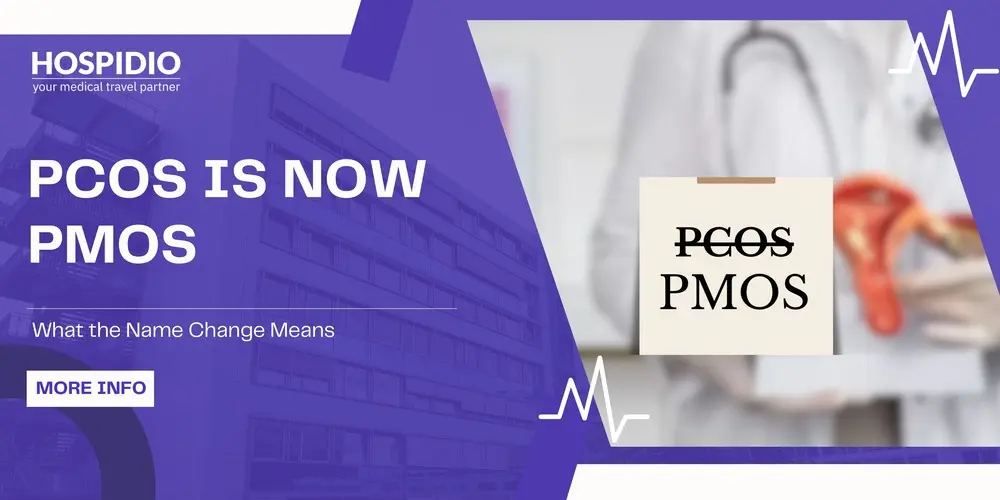
A landmark shift in medical nomenclature is rewriting how the world understands one of the most common hormonal disorders affecting women. Polycystic Ovary Syndrome (PCOS), a condition diagnosed in 1 in 8 women worldwide, more than 170 million people, has officially been renamed Polyendocrine Metabolic Ovarian Syndrome, or PMOS. The announcement, published in The Lancet on May 12, 2026, and presented at the European Congress of Endocrinology in Prague, is the result of an 11 year global consensus process that engaged over 22,000 individuals including patients, clinicians, and researchers from all world regions. Far from a mere cosmetic change, this renaming signals a fundamental rethinking of the disorder: it is not a disease of cysts on the ovaries, but a complex, whole-body condition involving endocrine, metabolic, reproductive, and psychological health.
Why the Old Name Was Always a Misnomer
The term 'polycystic ovary syndrome' was coined decades ago based on the observation of multiple small follicles, often misidentified as cysts, on the ovaries of some affected women. However, this description was misleading from the start. These structures are not pathological cysts; they are immature follicles, a consequence of hormonal dysfunction rather than a cause. Crucially, not all women with the condition even present with these ovarian findings on ultrasound.
The Endocrine Society, one of over 56 leading academic, clinical, and patient organisations that participated in the name change process, stated that the old name reduced a complex, long-term hormonal disorder to a misunderstanding about cysts and a focus on ovaries. This narrowness had tangible real-world consequences.
Women presenting with unexplained weight gain, insulin resistance, skin changes such as acne or excess hair growth, mood disturbances, or cardiovascular risk factors were often not evaluated for PCOS/PMOS because their symptoms did not neatly fit the 'ovarian cyst' narrative. Clinicians looking only for ovarian signs missed the broader picture entirely.
The Science Behind the New Name
The name Polyendocrine Metabolic Ovarian Syndrome was selected through an unprecedented, rigorous, multi-step global consensus process. Using iterative global surveys with responses from 14,360 people with PCOS and multidisciplinary health professionals, modified Delphi methods, and nominal group technique workshops held in November 2025 and February 2026, the research consortium systematically tested endocrine, metabolic, and reproductive terminology combinations before arriving at the final name.
Each word in PMOS carries deliberate weight. 'Polyendocrine' reflects the condition's hormonal complexity, it involves multiple endocrine axes including androgens (male hormones), insulin, and the reproductive hormone system.
'Metabolic' acknowledges the strong metabolic and cardiometabolic component, including insulin resistance, dyslipidaemia, type 2 diabetes risk, non-alcoholic fatty liver disease, and cardiovascular disease risk. 'Ovarian' retains a reference to the reproductive system and the ovarian involvement that remains central to many clinical features. Together, the new name accurately describes a multisystem disorder.
The Real Impact of the Misnaming: Delayed Diagnoses and Fragmented Care
The consequences of the old name were not merely academic. Research and patient advocacy over the past decade have documented that women with PCOS faced delayed diagnoses of up to two years on average, fragmented care spread across multiple specialty visits that failed to connect the dots, and stigma tied to the assumption that it was primarily a fertility or gynaecological issue. Mental health consequences, including elevated rates of depression, anxiety, and body image distress, were routinely under-addressed because they were not linked to the 'ovarian cyst' framework.
Professor Helena Teede, Director of Monash University's Monash Centre for Health Research and Implementation and an endocrinologist at Monash Health, led the name change process after spending decades researching the condition. She described the old name as having curtailed research and policy framing for a condition that affects millions of women globally. The new name is intended to reorient both clinical practice and public perception.
What This Means for Patients Already Diagnosed with PCOS
If you have been diagnosed with PCOS, your diagnosis remains valid. The renaming does not change the underlying biology, the treatment approach, or the clinical guidelines currently in place. The recategorization will, however, prompt updates to clinical guidelines, medical education, and international disease classification systems, including the ICD coding used globally, to ensure consistent adoption of the new terminology. These updates are expected to roll out progressively across healthcare systems worldwide.
For those who have long felt that their condition was misunderstood, minimised, or incompletely treated, the new name validates lived experience. PMOS is a whole body condition that deserves whole-body care encompassing metabolic screening, cardiovascular risk assessment, mental health support, and reproductive health management, all under one roof.
Key Points at a Glance
- PCOS has been officially renamed PMOS (Polyendocrine Metabolic Ovarian Syndrome) as of May 12, 2026.
- The change follows an 11-year, 22,000-person global consensus process involving 56 leading organisations.
- The old name was inaccurate: many women with PMOS do not have ovarian cysts, and the condition extends far beyond the ovaries.
- The new name recognises PMOS as a multisystem disorder involving endocrine, metabolic, reproductive, dermatological, and psychological health.
- Existing diagnoses of PCOS remain valid; clinical guidelines and disease classification systems will be updated progressively.
- The renaming is expected to reduce delays in diagnosis, reduce stigma, and improve access to comprehensive, multidisciplinary care.
- Some researchers have noted ongoing discussion about whether the term 'ovarian' should allow for rare presentations in males, though current consensus retains it.
Conclusion
The renaming of PCOS to PMOS is more than a letter swap, it is a corrective act of medical science, shaped by the voices of over 22,000 patients and professionals, that acknowledges decades of underdiagnosis and inadequate care. For the 170 million women living with this condition, the shift from 'polycystic ovary syndrome' to 'polyendocrine metabolic ovarian syndrome' represents recognition: recognition that their symptoms are real, interconnected, and worthy of comprehensive medical attention.
For clinicians and healthcare systems, the new name is a call to action, to widen the diagnostic lens, integrate metabolic and mental health evaluation into routine care, and align international disease classification frameworks with current scientific understanding. If you suspect you may have PMOS or have been living with an incomplete PCOS diagnosis, speak with your healthcare provider about a comprehensive evaluation that addresses the full scope of this condition.
References
- Endocrine Society. (May 12, 2026). Polyendocrine Metabolic Ovarian Syndrome: New name to improve diagnosis and care of condition affecting 170 million women worldwide. https://www.endocrine.org/news-and-advocacy/news-room/2026/pcos-name-change
- Teede HJ et al. (May 12, 2026). Polyendocrine metabolic ovarian syndrome, the new name for polycystic ovary syndrome: a multistep global consensus process. The Lancet. https://doi.org/10.1016/S0140-6736(26)00717-8
- University of Colorado Anschutz Medical Campus. (May 12, 2026). Global Experts Establish New Name for PCOS to Reflect Multisystem Disease. Retrieved from https://news.cuanschutz.edu/news-stories/pcos-new-name
- STAT News. (May 12, 2026). PCOS's new name is PMOS, a small letter change that required a big scientific process. Retrieved from https://www.statnews.com/2026/05/12/pcos-now-called-pmos-polyendocrine-metabolic-ovarian-syndrome/
- ABP Live Health. (May 13, 2026). PCOS Renamed as PMOS, Here's Why the Name Changed and What It Reveals About the Disorder.
- Newsday. (May 13, 2026). PCOS gets new name: PMOS, What the Endocrine Society change means for women.
About Hospidio: This blog post is intended to provide factual, evidence-based information to keep our community informed about global health developments. Always consult with healthcare professionals for medical advice and follow guidance from your local health authorities.
Recent Blogs




Frequently Asked Questions
PMOS stands for Polyendocrine Metabolic Ovarian Syndrome. It is the new official name for the condition previously known as Polycystic Ovary Syndrome (PCOS), adopted following a global consensus process published in The Lancet in May 2026.
The old name was scientifically inaccurate. Many women with the condition do not have ovarian cysts, and the disorder extends far beyond the ovaries. The new name better reflects its hormonal, metabolic, reproductive, and psychological dimensions, and is expected to reduce misdiagnosis and stigma.
No. Your diagnosis remains fully valid. The renaming does not alter your treatment plan or clinical history. Medical guidelines and disease classification systems will be updated progressively to reflect the new terminology.
Yes, it is the exact same condition, only the name has changed. The underlying biology, symptoms, and treatment approaches remain the same.
Professor Helena Teede of Monash University, Australia, led the process alongside over 56 academic, clinical, and patient organisations globally, including the Endocrine Society.
PMOS affects 1 in 8 women worldwide, more than 170 million people, making it one of the most common hormonal disorders globally.
Symptoms span multiple body systems and include irregular periods, excess facial or body hair, acne, unexplained weight gain, insulin resistance, difficulty conceiving, depression, anxiety, and increased long-term risks of type 2 diabetes and cardiovascular disease
Adoption will be gradual. Clinical guidelines, medical education curricula, and international disease classification systems such as the ICD are being updated, but full global transition will take time. Both terms may be used in parallel during the transition period.
Shruti Verma has completed her M.Tech in Biotechnology with experience in medical writing and scientific content development. She specializes in translating complex biomedical and healthcare information into clear, accurate, and reader-friendly content for diverse audiences. When she is not designing content, probably she is designing graphics.
Guneet Bhatia is the Founder of HOSPIDIO and an accomplished content reviewer with extensive experience in medical content development, instructional design, and blogging. Passionate about creating impactful content, she excels in ensuring accuracy and clarity in every piece. Guneet enjoys engaging in meaningful conversations with people from diverse ethnic and cultural backgrounds, enriching her perspective. When she's not working, she cherishes quality time with her family, enjoys good music, and loves brainstorming innovative ideas with her team.