
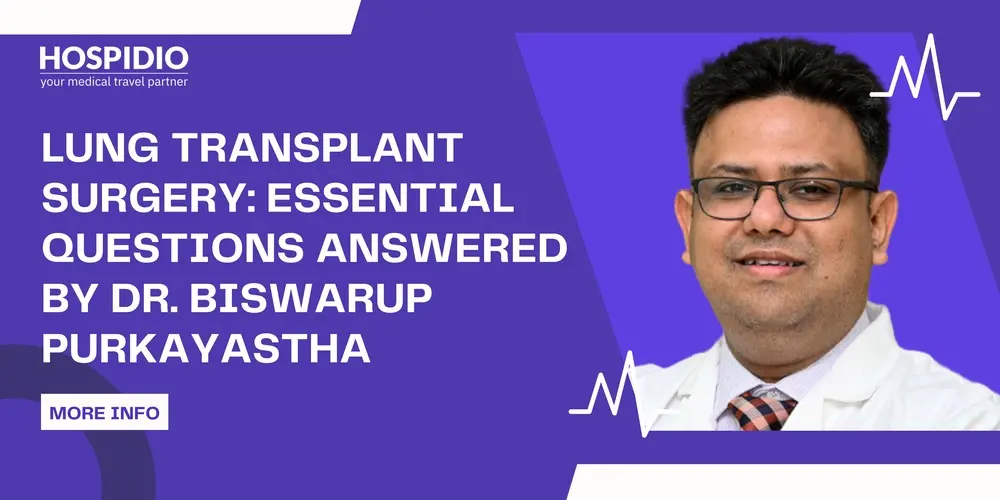
A lung transplant is one of the most complex, life-altering surgical interventions in modernmedicine. For patients living with end-stage lung disease, it frequently represents the last and most meaningful hope for a longer, healthier life. Yet despite its growing prevalence across India and worldwide, the procedure remains surrounded by uncertainty, fear, and unanswered questions for most patients and their families.
Whether you have just received a referral for transplant evaluation, are already waiting for adonor organ, or are simply trying to understand what this journey entails, clear and reliable answers are not a luxury, they are a necessity. In this guide, I have compiled the most pressing questions that patients and caregivers bring to our clinic and provided thorough, evidence-based answers to each one.
Across seven areas, from eligibility and evaluation to the surgery itself, recovery, daily life after transplant, caregiver responsibilities, and the financial realities specific to India, this guide is designed to give you the full picture. Knowledge reduces fear, and fear is often thegreatest obstacle between a patient and the help they need.
Part 1: Eligibility for a Lung Transplant
1. What medical conditions make a person a suitable candidate for a lung transplant?
Lung transplantation is considered when a patient has reached the end stage of a chronic lung disease that no longer responds meaningfully to medical treatment. The most frequently encountered conditions leading to transplant evaluation in India include Interstitial Lung Disease (ILD) - Idiopathic Pulmonary fibrosis (IPF) , Chronic Obstructive Pulmonary Disease (COPD), bronchiectasis, pulmonary arterial hypertension, and cystic fibrosis. In general, a patient is referred for evaluation when their life expectancy without the procedure is estimated at two years or less, their quality of life has deteriorated severely despite maximum medical therapy, and they retain enough overall physical health to tolerate major surgery and the demanding post-operative recovery.
It is essential to understand from the outset that transplantation is not a cure. It is a treatment that replaces a failing organ with a healthier one, in exchange for a lifelong commitment to medical management - which includes Immunosuppression and the ills and wells of living with it , daily medications, and regular clinical monitoring.
2. Does age automatically disqualify a patient from being considered
Age alone does not rule a patient out. While transplant centres have traditionally preferred recipients younger than 65 years, advances in surgical technique and post-operative management have enabled carefully selected patients in their late sixties and early seventies to undergo successful transplantation. What matters far more than chronological age is physiological age, how well the body's other organ systems are functioning, whether the heart, kidneys, and liver can withstand the demands of surgery, and whether the patient has the physical and psychological resilience to handle an intensive recovery.
At our centre, every individual is assessed on their own merits rather than through a blanket age policy. A 68-year-old in excellent overall health may be a far better candidate than a 55-year-old with multiple co-existing organ problems.
3. Can a patient who has been diagnosed with cancer still be considered for a lung transplant?
A cancer diagnosis does not automatically eliminate the possibility of a lung transplant, but it does require very careful evaluation. For most solid organ cancers, transplant teams require a minimum cancer-free interval,typically five years, before listing, because immunosuppressive medications taken after transplant can accelerate the growth of any residual cancer cells.
There are exceptions to this general rule. Certain early-stage lung cancers, particularly some forms of adenocarcinoma presenting as bilateral ground-glass opacities, have been treated with transplantation at highly specialised centres with acceptable outcomes. Each case must be reviewed individually, taking into account the type and stage of malignancy, treatment history, and time in remission. Complete transparency with your transplant team about any cancer history is absolutely non-negotiable.
4. Is excess body weight a barrier to a lung transplant, and what can be done about it before surgery?
Excess body weight does increase the surgical and post-operative risks associated with lung transplantation, including a greater likelihood of wound complications, prolonged ventilator dependence, and inferior long-term outcomes. Most transplant centres in India set a body mass index (BMI) threshold, generally below 35 kg/m² as a listing criterion.
However, this does not mean overweight patients are simply turned away. A structured pre-transplant optimisation programme, including supervised weight loss, pulmonary rehabilitation, dietary counselling by a transplant dietitian, and in selected cases bariatric intervention, can bring a patient's BMI within an acceptable range while simultaneously improving overall fitness. The objective is to ensure that when a donor organ becomes available, the patient's body is in the best possible position to benefit from it.
5. What is the typical age range of lung transplant recipients in India?
In India, the majority of lung transplant recipients fall between 45 and 65 years of age, reflecting the predominance of IPF and COPD among referral diagnoses in this demographic. Leading centres in Chennai, Pune, and New Delhi have also transplanted younger patients, including adolescents and young adults with cystic fibrosis, and have expanded their programmes to include older recipients with pulmonary fibrosis who are otherwise physiologically fit. The shift toward older recipients mirrors a global trend driven by the rising prevalence of fibrosing lung diseases in adults over 60. Programme-specific age policies differ across centres, so it is always worth a direct inquiry.
6. How does a patient or their physician know when the right moment has arrived to pursue a transplant evaluation?
The decision to pursue transplant evaluation rarely arrives suddenly. It typically emerges after months or years of progressive lung disease that is no longer adequately controlled by standard treatments, inhalers, supplemental oxygen, antifibrotic agents, or pulmonary vasodilators. Clear clinical signals that suggest the time has come include a forced vital capacity (FVC) below 50% of predicted, a declining six-minute walk distance despite rehabilitation, increasing oxygen requirements at rest or with minimal exertion, two or more hospital admissions in a year for lung-related deterioration, or a pulmonologist's assessment that life expectancy without transplant is under two years.
My consistent advice to patients and families in India is this: do not wait for a crisis before initiating the referral. The earlier the evaluation, the greater the opportunity to optimise the patient's health before surgery, and the better the eventual outcome.
Part 2: The Evaluation and Waiting List
7. What is the actual purpose of the transplant evaluation, and what does it involve?
The transplant evaluation serves two equally critical functions. First, it confirms the severity and trajectory of the lung disease and verifies that no alternative treatment has been overlooked. Second, it determines whether the patient is physically and psychologically prepared to withstand major surgery and to maintain the lifelong post-transplant regimen.
The evaluation typically spans several days to two weeks and encompasses pulmonary function tests, a six-minute walk test, echocardiography, high-resolution CT imaging of the chest and abdomen, comprehensive blood tests assessing kidney and liver function, tissue typing and blood grouping for donor matching, dental review, nutritional assessment, and consultations with a psychiatrist and medical social worker. At most transplant centres in India, this can be completed across two to four structured outpatient visits.
8. Is the evaluation process physically taxing or distressing for most patients?
The physical demands of the evaluation are manageable for most patients, though the volume of tests across multiple days can be tiring. The majority of investigations are non-invasive, breathing assessments, blood draws, imaging studies, and walking tests. Occasionally, a brief hospital admission or a bronchoscopy may be required for a specific investigation.
What patients often find more challenging is the emotional weight of the process, the anxiety of awaiting a verdict on their candidacy, and the vulnerability of having every aspect of one's health scrutinised. I strongly encourage every patient to bring a trusted family member or caregiver to each evaluation visit, both for practical support and to ensure that all information communicated by the medical team is properly understood and retained.
9. What factors determine how long a patient must wait once listed for a lung transplant?
In India, organ allocation for lung transplantation is coordinated through the National Organ and Tissue Transplant Organisation (NOTTO) and the respective state transplant coordination bodies. Waiting duration is influenced by the patient's blood group, body dimensions (to match with the donor's lung size), clinical urgency, the volume and activity of the transplant centre, and geographic proximity to available donors.
Lungs are among the most time-sensitive transplantable organs, they must be implanted within four to six hours of retrieval. Geography and logistics therefore play a significant practical role. In my experience in India, waiting periods can range from as little as a few weeks at high-volume, well-networked centres to over a year at others. Patients are reviewed at regular intervals during the wait to ensure they remain clinically suitable and to adjust their listing status if their condition changes.
10. Is there a formal scoring system that determines priority on the lung transplant waiting list?
Internationally, the Lung Allocation Score (LAS) , developed in the United States, assigns each listed patient a numerical score from 0 to 100 based on disease urgency and projected post-transplant survival. This system was designed to move organ allocation away from simple waiting time toward medical need and likely benefit.
In India, while a uniform national LAS-equivalent is not yet mandated across all centres, leading transplant programmes apply similar prioritisation principles, factoring in disease severity, oxygen dependence, exercise capacity, and rate of clinical decline. NOTTO provides a regulatory framework for allocation, and there are active efforts within the Indian transplant community to standardise a national scoring system as the programme continues to mature.
11. Once on the waiting list, how and when will a patient be told that a donor lung is available?
After being placed on the active waiting list, the patient and their primary caregiver are provided with dedicated contact details and instructed to keep a phone accessible at all times, day, night, and weekends without exception. The transplant coordinator team operates around the clock, and the call notifying a patient that a suitable donor organ has been identified can arrive at any hour.
Upon receiving the call, patients must reach the hospital within two to four hours and should not eat or drink anything from that moment forward, as surgery will begin with minimal delay. This is why living within a practical distance of the transplant centre, or arranging temporary accommodation nearby, is essential during the waiting period. Patients should also always have a packed hospital bag and a reliable travel plan ready.
Part 3: The Surgery Itself
12. What actually happens inside the operating theatre during a lung transplant procedure?
A lung transplant is performed under general anaesthesia and typically lasts between four and twelve hours, depending on whether one or both lungs are being replaced and on the anatomical complexity of the individual case. The surgical team makes an incision in the chest, and the diseased lung is carefully removed. In many cases, the patient is supported by a cardiopulmonary bypass machine or extracorporeal membrane oxygenation (ECMO) during this phase, which takes over the mechanical work of the heart and lungs.
The donor lung is then implanted in a precise sequence, reconnecting the bronchus (the main airway), the pulmonary artery, and the pulmonary veins. Once the new lung is secured and all connections verified, the patient is gradually weaned off bypass support. The team monitors the immediate function of the transplanted lung, which is the most critical variable in the early hours following surgery.
13. When is a single lung transplant preferred over a bilateral (double) lung transplant?
The choice between single and bilateral transplantation depends fundamentally on the patient's underlying diagnosis. Bilateral lung transplantation is the standard of care for cystic fibrosis, bronchiectasis, and pulmonary arterial hypertension, in these conditions, leaving a diseased native lung in place would risk ongoing infection or haemodynamic imbalance damaging the transplanted organ. For COPD and pulmonary fibrosis, a single lung transplant can deliver substantial functional improvement, though bilateral transplantation is increasingly preferred in younger recipients because of superior long-term survival data.
In India, bilateral sequential lung transplantation has become the more commonly performed procedure at high-volume centres, consistent with evolving global practice. The transplant surgeon will discuss the most appropriate approach for each individual patient during the evaluation.
14. What are the most serious risks associated with lung transplant surgery, both immediately and over time?
Lung transplantation carries meaningful risks, and patients deserve an honest account of them. In the immediate post-operative period, the most serious complications include primary graft dysfunction, a form of severe lung injury occurring in the first 72 hours after implantation, airway complications at the surgical connections, bleeding, and infection. These are managed most effectively at experienced centres with robust critical care infrastructure.
In the medium to long term, the two dominant threats are acute rejection (where the immune system mounts an attack against the new lung) and chronic lung allograft dysfunction (CLAD), a progressive condition involving airway scarring and declining lung function that develops in a proportion of recipients over years. Kidney impairment from long-term immunosuppression is another recognised concern. Despite these risks, outcomes at India's leading transplant programmes have improved substantially, with one-year survival rates exceeding 80% at the best centres.
Part 4: Recovery After Surgery
15. How long does a patient typically remain hospitalised after a lung transplant?
The average hospital stay following a lung transplant in India is two to four weeks, though this can vary considerably based on the surgical complexity, early post-operative course, and the patient's individual rate of recovery. The first several days are spent in the intensive care unit, where the patient is progressively weaned off the ventilator and intensively monitored for any early signs of rejection, infection, or graft dysfunction. Once clinically stable, the patient transfers to a specialist ward where structured physiotherapy and early mobilisation begin. Discharge is planned only when the transplant team is fully satisfied that recovery can safely continue at home or in a rehabilitation facility.
16. How significant is the pain after a lung transplant, and how is it managed?
Pain following a lung transplant is real but very manageable with a structured approach. Most patients describe discomfort around the chest incision, particularly during deep breathing, coughing, and physiotherapy, rather than severe, constant pain. In the early post-operative days, pain is typically controlled through epidural analgesia, patient-controlled intravenous analgesia, and oral medications in combination. As healing progresses over the first two weeks, pain levels usually reduce significantly.
It is important that patients communicate openly with their nursing and medical team about their pain experience so that medications can be adjusted appropriately. Pain should never serve as a deterrent to performing breathing exercises or physiotherapy, as these are among the most important drivers of the new lung's recovery and long-term function.
17. What is the realistic timeline for full recovery, and when can a patient expect to feel truly well again?
Recovery from a lung transplant is progressive rather than sudden. Most patients begin to feel meaningfully better within six to eight weeks of surgery. By three to six months, many recipients are capable of performing all routine daily activities independently, walking comfortably, managing personal care, cooking, and light household tasks. A return to desk-based professional work is typically possible at around three months; more physically demanding roles may require six months or more.
In India, structured pulmonary rehabilitation, which begins in the hospital and continues as an outpatient programme for several months, is central to optimising and sustaining recovery. The psychological adjustment to life after transplant, including recalibrating one's sense of identity and capacity, is equally important and deserves the same attention as the physical recovery.
18. What specific steps can a patient take before surgery to maximise their chances of a successful outcome?
Pre-transplant conditioning, increasingly referred to as "prehabilitation," is one of the most impactful investments a patient can make. This encompasses enrolment in a supervised pulmonary rehabilitation programme to build muscle strength and cardiorespiratory endurance, maintaining a healthy body weight through the guidance of a transplant dietitian, complete cessation of tobacco and alcohol, strict adherence to all prescribed medications, optimal management of co-existing conditions such as diabetes or hypertension, staying current with all recommended vaccinations including influenza and pneumococcal vaccines, and maintaining psychological health through counselling or peer support groups.
The principle is straightforward: the stronger and healthier a patient enters surgery, the better equipped their body will be to withstand the procedure and recover from it effectively.
19. Are there geographic or travel restrictions during the early months following a lung transplant?
Yes, and these are important practical realities that patients and families in India need to plan around. During the first three months post-transplant, most teams recommend that the patient and their primary caregiver remain within one to two hours of the transplant centre. Follow-up visits during this period are frequent, sometimes two to three times per week, and any sudden complication demands rapid access to specialist care. Long-distance travel and air travel are generally restricted for the initial three months. After this phase, travel can be cautiously resumed with the transplant team's guidance, and international travel may be considered from six to twelve months post-transplant with appropriate preparation and medical clearance.
Part 5: Life After a Lung Transplant
20. How dramatically does a successful lung transplant change a patient's quality of life?
For most recipients, the transformation in quality of life is profound and deeply personal. Patients who were previously housebound and reliant on supplemental oxygen around the clock often find themselves able to walk freely outdoors, climb stairs without breathlessness, attend family occasions, and participate in activities they had long abandoned. In India, I have witnessed transplant recipients attend their children's weddings, return to professional practice, and take up yoga and swimming as regular activities, things that were entirely unimaginable in their pre-transplant state.
That said, life after transplant is not without its demands. Immunosuppressive medications must be taken every single day without exception. Follow-up appointments must be kept consistently. Any new symptom, however minor it may seem, must be reported promptly. The new lung is a precious second chance; protecting it requires the same commitment with which one sought it.
21. When is it safe for a transplant recipient to drive again and resume work?
Driving may generally be resumed four to six weeks after surgery, once the chest incision has healed and the patient is no longer taking strong opioid-based pain medications that could impair alertness and reaction time. This should always be confirmed with the transplant team before the patient gets behind the wheel.
Return to professional work depends on the nature of the role. For desk-based or intellectually focused work, a return at two to three months is often feasible provided that energy and concentration have adequately recovered. For manual or physically strenuous occupations, a period of four to six months or longer may be required. In India, the geographic reality of patients having relocated temporarily to a transplant centre city also means that logistics of returning home and resuming employment need to be planned in advance with the social work team.
22. What medications will a lung transplant recipient need to take indefinitely after surgery?
Lifelong immunosuppression is the non-negotiable foundation of post-transplant care. The standard regimen involves three agents used in combination: a calcineurin inhibitor such as tacrolimus or cyclosporine, an anti-proliferative agent such as mycophenolate mofetil, and a corticosteroid such as prednisolone. These three drugs work in concert to prevent the immune system from rejecting the transplanted lung.
In addition to these core agents, patients also take prophylactic medications to guard against opportunistic infections, antifungal, antiviral, and antibacterial agents, particularly during the first year when immunosuppression is at its most intensive. Regular blood tests to monitor drug levels and organ function are essential throughout life. In India, the cost and uninterrupted availability of these medications must be planned for carefully. Patients should never alter their medication doses or skip doses without explicit instruction from their transplant physician.
23. What level of physical activity and independence can a lung transplant recipient realistically expect?
The majority of lung transplant recipients achieve a meaningful and sustained improvement in physical independence. Within three to four months, most are fully managing their own daily activities, bathing, cooking, dressing, and light household tasks, without assistance. Regular low-to-moderate-intensity exercise, including walking, yoga, swimming, and stationary cycling, is not only permitted but actively recommended, as it strengthens the musculoskeletal system, supports cardiovascular health, and promotes the function of the transplanted lung.
High-impact or contact sports should be discussed individually with the transplant team. My message to every recipient is consistent: the transplanted lung is a gift that carries responsibilities. Live fully within it, but protect it with discipline, vigilance, and gratitude.
Part 6: Caregiver and Family Support
24. Can family members be present with the patient during the transplant and early recovery period?
Family involvement is not merely permitted, it is actively encouraged as an integral part of the recovery process. During the surgery itself, family members wait in a designated hospital area, as presence in the operating theatre is not possible. Once the patient is stabilised in the ICU, structured visiting arrangements are made, with some restrictions in the earliest days to minimise infection risk. As the patient progresses to the transplant ward, family presence increases and plays a vital role, providing emotional grounding, assisting with physiotherapy compliance, and maintaining communication with the care team.
Families travelling from other cities in India should plan for a minimum four to six-week stay near the transplant centre, which requires practical arrangements around accommodation, work, and home responsibilities to be made well in advance.
25. How should a caregiver in India practically prepare to support a lung transplant patient after discharge?
The caregiver's role following a lung transplant is substantial, and preparation should begin weeks before the anticipated discharge date. Before the patient leaves hospital, the transplant team will provide dedicated education sessions covering medication administration and schedules, infection prevention measures within the home environment, how to measure and record the patient's daily spirometry readings, temperature, weight, blood pressure, and oxygen saturation, and the specific warning signs that require immediate medical contact.
26. Are there support groups or mental health resources available for transplant patients and families in India?
Yes, and I consider participation in peer support networks to be a clinically important, not merely optional, component of the transplant journey. Several leading transplant centres in India, including programmes in Chennai and Pune, operate formal support groups that connect recipients at various stages of their post-transplant journey. These forums allow patients to share practical experiences, emotional struggles, and coping strategies in ways that professional counselling alone cannot replicate.
Online communities and patient advocacy networks extend this support across geographic boundaries, connecting patients in smaller cities with the broader transplant community. The Transplant Society of India and NOTTO can direct patients to appropriate resources. Psychological support, for both the patient and caregiver, is especially important during the stressful waiting period and during the adjustment phase after transplant, when the reality of a permanently altered life must be emotionally integrated.
Part 7: Insurance, Finances, and the Donor Organ
27. Does health insurance in India cover lung transplantation, and what financial assistance is available for those who need it?
Lung transplantation in India represents a significant financial undertaking. Total costs , encompassing the surgery, ICU stay, hospital admission, and first-year post-transplant medications and monitoring, typically range from approximately ₹45 to ₹50 lakhs or more (USD 55,000 to $60,000), varying by centre and case complexity.
Health insurance coverage for organ transplantation in India has historically been inconsistent, but the Insurance Regulatory and Development Authority of India (IRDAI) now mandates that standardised health insurance policies cover transplant surgery up to the sum insured. Patients are strongly advised to review their policy documents carefully and engage the hospital's financial counselling team early in the evaluation process to understand what is and is not covered.
For those without adequate insurance, a range of supplementary options exist. Several state governments in India offer financial assistance through schemes such as the Chief Minister's Relief Fund and specific transplant support programmes. Charitable trusts and non-governmental organisations provide targeted assistance in individual cases. No patient should allow financial uncertainty alone to delay a transplant evaluation, the financial team at the transplant centre exists precisely to help navigate these challenges.
28. What is the precise sequence of events from the moment a donor lung is identified to the start of surgery?
When the transplant coordination team identifies a donor lung that is potentially suitable for a patient on the waiting list, the process shifts into an urgent, precisely timed sequence. The patient receives an immediate call, frequently at night, with instructions to come to the hospital without delay and to refrain from eating or drinking from that moment.
Simultaneously, the surgical team is assembled, the operating theatre is prepared, and a specialist retrieval team travels to the donor hospital to evaluate and procure the lung in person. The donor organ is assessed for suitability at retrieval, and the transplant team at the recipient's centre remains in close contact. Once retrieved, the lung must be transplanted within four to six hours, making precision coordination essential.
On arrival at hospital, the recipient undergoes rapid final pre-operative assessment, blood tests, chest X-ray, and anaesthetic review. Surgery begins as soon as the organ is confirmed suitable. It is important for patients to understand that in a small proportion of cases, surgery may be cancelled even after the patient has arrived at hospital, if the retrieved lung does not meet the required quality standards upon detailed assessment. This is disappointing, but it is always the right decision, an unsuitable organ causes harm, not benefit.
At home, the environment should be prepared to minimise infection risk, thorough cleaning, elimination of mould sources, removal of indoor plants, and restriction of pet access to the patient's living space. Essential monitoring equipment, including a pulse oximeter, thermometer, and weighing scale, should be readily available. In India, where multigenerational households are common, distributing caregiving responsibilities among two or three family members is strongly advisable to prevent caregiver exhaustion and ensure continuity.
Conclusion
A lung transplant is far more than a surgical procedure. It is the beginning of an entirely new chapter of life, one that demands courage from the patient, dedication from the caregiver, and a sustained partnership between the recipient and their medical team. In India, the field of lung transplantation has grown remarkably over the past decade, with leading centres achieving outcomes that stand comparison with the world's finest programmes. The path to transplant is rarely easy, and the road after it demands consistent effort.
But for those who commit to it fully, who take their medications without fail, attend every follow-up, and approach rehabilitation with determination, the rewards are extraordinary. Patients who once could not walk across a room are running in parks. People who had accepted the end of their working lives are back at their desks, productive and purposeful. If you or someone you love is considering a lung transplant evaluation, my strongest advice is this: do not wait. Early referral changes outcomes. Reach out to a recognised transplant centre in India, ask every question you have, and let the process begin. You deserve clear answers, skilled care, and every opportunity at a fuller life.
About Dr. Biswarup Purkayastha
Dr. Biswarup Purkayastha is an accomplished Cardiothoracic Surgeon offering the complete spectrum of Adult Cardiothoracic Surgery, with a special focus on Mechanical Circulatory Support and heart-lung transplants, backed by extensive training and expertise in India and abroad.
Current Position
He currently serves as Consultant for Heart and Lung Transplant and Cardiovascular Surgery at Artemis Hospitals, Gurgaon, Haryana.
Career Background
Prior to Artemis, he has held positions at KIMS Hospitals, Reliance Foundation, Te Whatu Ora Health New Zealand, Medizinische Universität Wien (Vienna), CK Birla Hospital, Medanta, and Narayana Hrudayalaya, reflecting a broad international and domestic career.
Education & Research
He completed his MBBS from Assam (Central) University. He has also been associated as a Post Doctoral Researcher at Greenlane Clinical Centre, Auckland, New Zealand, and as Associate Faculty at Calcutta Medical Research Institute, CK Birla Hospitals, Kolkata. He has six research publications to his credit, including work on surgical repair of obstructed total anomalous pulmonary venous connection and outcomes for bioprosthetic valve procedures.
Specializations
- Heart and lung transplantation
- Mechanical circulatory support
- Adult cardiac surgery
- Cardiovascular and vascular surgery
He is regarded highly by patients for both his clinical skill and empathetic approach to care.
Read Dr. Purkayastha's complete profile here: https://hospidio.com/doctor/dr-biswarup-purkayastha-cardiovascular-surgeon
Know more about Artemis Hospital, Gurugram: https://hospidio.com/hospital/artemis-hospital-gurgaon
Recent Blogs



Guneet Bhatia is the Founder of HOSPIDIO and an accomplished content reviewer with extensive experience in medical content development, instructional design, and blogging. Passionate about creating impactful content, she excels in ensuring accuracy and clarity in every piece. Guneet enjoys engaging in meaningful conversations with people from diverse ethnic and cultural backgrounds, enriching her perspective. When she's not working, she cherishes quality time with her family, enjoys good music, and loves brainstorming innovative ideas with her team.
Dr. Biswarup currently serves as Consultant for Heart and Lung Transplant and Cardiovascular Surgery at Artemis Hospitals, Gurgaon, Haryana. Prior to Artemis, he has held positions at KIMS Hospitals, Reliance Foundation, Te Whatu Ora Health New Zealand, Medizinische Universität Wien (Vienna), CK Birla Hospital, Medanta, and Narayana Hrudayalaya, reflecting a broad international and domestic career. He completed his MBBS from Assam (Central) University. He has also been associated as a Post Doctoral Researcher at Greenlane Clinical Centre, Auckland, New Zealand, and as Associate Faculty at Calcutta Medical Research Institute, CK Birla Hospitals, Kolkata. He has six research publications to his credit, including work on surgical repair of obstructed total anomalous pulmonary venous connection and outcomes for bioprosthetic valve procedures.