
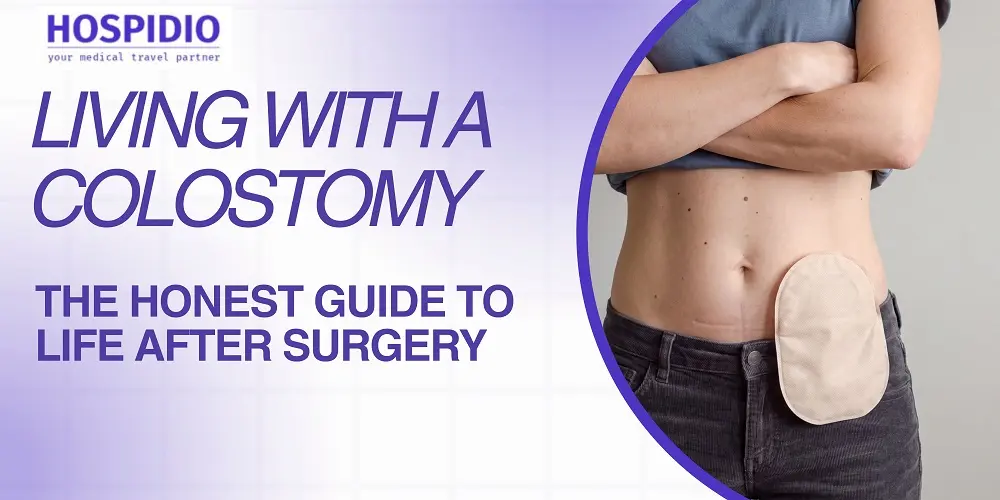
Nobody tells you what you actually want to know. You get discharge instructions on how to empty a pouch and change a flange, but the questions running through your head are different ones. Will people know just by looking at me. Will it smell. Can I still have sex. What happens if it leaks at work, or on a flight, or on a first date. Is this forever. Most guides skip straight past these and go back to the mechanics. This one does not.
Quick answer: Life with a colostomy is very manageable for the vast majority of people within a few months, most return to work, travel, exercise, and intimate relationships, and a well-fitted, well-managed pouch is not detectable through clothing or by smell in daily use. Whether the colostomy is temporary or permanent depends on why it was created, and that answer usually comes from your surgeon, not a general rule.
The First Two Weeks Home
The first days after discharge are about learning a new routine, not mastering it. Your stoma (the part of the bowel brought through the abdominal wall) will look swollen and possibly a little alarming at first, this settles over four to six weeks as internal swelling goes down, so a pouch fitted in the hospital may need resizing once it does. Output in the early weeks is often looser and less predictable than it will eventually be, your bowel is adjusting to its new path, and that is expected, not a sign something is wrong.
Practical priorities in this window- Learning to empty the pouch before it is more than a third full (this prevents the weight from pulling the seal loose), checking the skin around the stoma each time for redness or irritation, and building a small kit you carry everywhere, spare pouch, wipes, disposal bags, so an unexpected change never catches you stranded. Most people find their confidence jumps sharply once they have successfully changed a pouch alone a few times, not because it gets physically easier, but because the fear of doing it wrong fades.
The Questions You're Afraid to Ask Out Loud
This is the part most guides skip. Here is the honest version.
Will it smell?
Modern pouches are odor-proof film, designed specifically so gas and odor stay sealed inside until you empty it. Smell during normal wear is not typical, if you are noticing one, it usually means a seal has loosened or the pouch needs emptying, not that this is simply how life with a colostomy is.
Will people know just by looking?
Almost never. A properly fitted pouch sits flat against the body and is genuinely difficult to spot under regular clothing, including fitted clothing, once you find the style of underwear or high-waisted garment that works for your body. Plenty of people wear one for years without coworkers or even partners noticing unless told.
Can I still have sex?
Yes, for the large majority of people, once your surgeon clears you for normal activity, usually around six to eight weeks post-surgery. Physically, a colostomy does not prevent intimacy. Emptying the pouch beforehand, using a smaller cover or wrap if it helps confidence, and simply talking with a partner about it upfront tend to matter more than anything physical. Some nerve-related changes to sensation or function can occur depending on the type of surgery performed (this is more relevant after certain rectal cancer surgeries than after colostomy alone), which is worth discussing directly with your surgeon rather than assuming either way.
What if it leaks in public?
It happens occasionally, especially in the first months while you are still learning your body's patterns, and it is rarely as visible to others as it feels to you in the moment. Most experienced ostomates describe carrying a small emergency kit and identifying accessible restrooms as second nature within a few months, the same way anyone develops habits around any new routine.
Diet and Digestion, What Actually Changes
Most people with a colostomy can eventually eat close to their normal diet, this is one of the more reassuring facts and one of the least advertised. In the early weeks, doctors typically recommend a low-fiber, easy-to-digest diet while the bowel heals, then a gradual reintroduction of other foods one at a time to see how your body responds. Chewing thoroughly, staying hydrated, and eating at regular times all help keep output predictable.
Some foods tend to affect more people than others: beans, cabbage, broccoli, onions, and carbonated drinks are common gas and odor triggers, while foods like yogurt, buttermilk, and parsley are commonly reported to help with odor control, though the evidence here is more anecdotal than clinical. Nuts, popcorn, and raw fibrous vegetables can occasionally cause a blockage if not chewed thoroughly, worth being cautious with in the first few months especially. Beyond that, this varies enough person to person that keeping a simple food log for a few weeks is more useful than following a generic list.
Getting Back to Normal: Work, Travel, and Exercise
Most people return to desk-based work within four to six weeks and more physical jobs within eight to twelve, depending on the surgery and how recovery is progressing. Air travel is generally safe once your surgeon clears you, airport security staff are familiar with ostomy pouches, and a simple note from your doctor or a discreet ID card can smooth over any questions at a checkpoint, pouches do not need to be removed for security screening, and metal detectors do not affect them.
Swimming and most forms of exercise are also possible once healed, waterproof pouch covers exist for anyone who wants extra confidence in a pool, and light activity is often encouraged during recovery specifically because it helps prevent complications like hernias later on. Contact sports and very heavy resistance training are the main exceptions where most surgeons recommend extra caution or protective gear, simply because a direct hit to the stoma area carries more risk than for other parts of the abdomen.
Should You Tell People, or Not
There is no correct answer here, only what feels right for you. Some people tell close friends and family early because hiding it feels like extra work on top of recovery. Others prefer to keep it private and only disclose to a partner or close circle once they feel more confident living with it. Employers and coworkers generally do not need to know unless you want workplace accommodations during recovery. If children are involved, simple, matter-of-fact language, "the doctors made a new way for my body to get rid of waste while it heals", tends to land better than over-explaining. For dating, there is no single right moment to bring it up, many people find that mentioning it once things feel serious enough to discuss physical intimacy, rather than on a first date or hiding it indefinitely, strikes the most comfortable balance, though this is entirely a personal call.
Is It Permanent? Understanding Reversal, Honestly
This is usually the single biggest question, and the honest answer is: it depends entirely on why the colostomy was created. A colostomy performed to let an area of bowel heal after infection, injury, or emergency surgery is often temporary, with reversal considered once the underlying issue has resolved, typically somewhere between eight weeks and six months later, sometimes longer if additional treatment like chemotherapy needs to happen first. A colostomy performed because the rectum or anal sphincter was removed entirely, common in certain low rectal cancer surgeries, is permanent, because there is no longer a lower bowel to reconnect to.
Reversal itself is a real surgery with its own recovery period, generally shorter than the original operation, but not minor. Not every temporary colostomy ends up being reversed, sometimes ongoing health factors, how well the remaining bowel has healed, overall fitness for another surgery, or whether cancer treatment is still ongoing, make leaving it in place the safer long-term choice. If reversal is on the table for you, it is worth asking your surgeon directly what specifically needs to happen before they will consider it, rather than assuming a fixed timeline applies.
When to Actually Call Your Doctor
Most day-to-day stoma changes are normal and not urgent. A few things are not: no output at all for more than four to six hours combined with cramping, nausea, or a swollen abdomen (possible blockage), a stoma that turns dark red, purple, or black (a possible circulation problem, this needs same-day attention), heavy bleeding rather than minor spotting, a fever, or skin around the stoma that is severely broken down, blistered, or spreading rather than just mildly irritated. A stoma that suddenly bulges out further than usual can also signal a parastomal hernia, common enough to not panic over, but worth having checked rather than ignored. Ordinary skin irritation, mild redness or itchiness right at the pouch edge, is common and usually resolves by adjusting the barrier product or pouch size, it only becomes a call-your-doctor situation if it spreads, blisters, weeps, or does not improve after changing your routine.
Cost and Ongoing Supplies
Beyond the surgery itself, ongoing pouch and skin-care supplies are a real, recurring cost worth planning for, typically a modest monthly expense that adds up over a year. For patients traveling for colostomy surgery or a future reversal, India and Turkey both offer accredited colorectal surgery programs at a fraction of US or UK pricing, with many hospitals also connecting patients to reliable local supply chains for pouches and accessories during recovery. You can see current estimates on our colorectal cancer treatment cost in India page, which covers the surgical pathway that most often leads to a colostomy in the first place.
Lastly,
The clinical parts of living with a colostomy, changing a pouch, checking your skin, knowing the warning signs, are things almost anyone can learn within weeks. The harder part is usually everything nobody tells you upfront: that smell is preventable, that most people around you will never notice, that intimacy and travel and ordinary life stay available to you, and that whether this is permanent is a specific answer for your specific situation, not a life sentence handed out by default. Give yourself the same few months of adjustment you would give any major life change, and ask the direct questions, out loud, to the people whose job it is to answer them.
Recent Blogs

FAQs
A loop colostomy brings a looped section of bowel through the abdomen with two openings side by side, usually temporary and often used after emergency surgery. An end colostomy brings a single cut end of bowel through the skin as one opening, and is more often (though not always) permanent. Your surgeon decides which type based on the underlying condition and how much bowel needs to be diverted or removed.
Yes, many people with a colostomy go on to have healthy pregnancies. A growing abdomen can affect pouch fit and stoma position temporarily, so working with your stoma nurse throughout pregnancy for resizing and placement adjustments is standard practice, not a sign of a problem. Delivery method (vaginal versus cesarean) is a separate decision your obstetrician and colorectal surgeon should make together based on your specific case.
Yes, irrigation is a real technique, unique to colostomies (not an option for ileostomies), where you flush the colon with water on a schedule, roughly every one to two days, to control when output happens, similar to how a person without a stoma has a bowel routine. Some people who irrigate successfully wear only a small cap or stoma cover between sessions instead of a full pouch. It is not right for everyone and needs to be learned with a stoma nurse, but it is worth asking about if pouch dependency feels like the hardest part for you.
In the first six to eight weeks, doctors generally advise against heavy lifting (usually defined as anything over 4.5 to 9 kg, roughly 10 to 20 pounds) to let the abdominal wall heal and reduce hernia risk. Long term, most people return to regular exercise, including moderate weightlifting, once fully healed, though many surgeons recommend continuing to use a support garment or hernia-prevention belt during heavier activity indefinitely as a precaution.
No, not on its own. A colostomy itself does not reduce life expectancy; any impact on long-term survival comes from the underlying condition that required the surgery, such as the stage of a cancer diagnosis, not from living with the stoma. People live full, normal-length lives with a colostomy for decades when it is well managed.
Yes, and it is more common than most people expect, studies on ostomy patients consistently show meaningful rates of anxiety, low mood, and body image distress in the months after surgery, especially early on. This is a real adjustment, not a personal failing. Stoma nurses, ostomy support groups (in person and online communities like those run by ostomy associations), and, when needed, a therapist familiar with chronic illness adjustment can all help; asking for that support early tends to shorten the difficult period rather than prolong it.
Most pouching systems are changed every one to three days depending on the product and your skin's response, while the adhesive flange (the part attached to the skin) is often changed slightly less often than the pouch itself in a two-piece system. Your stoma nurse will help you find the exact rhythm that keeps your skin healthy without wasting supplies, since going too long between changes raises skin irritation risk just as much as changing too often raises cost.
Both happen. Planned colostomies are common with cancer or scheduled bowel surgery, where you and your surgeon discuss it beforehand. Emergency colostomies happen with conditions like a bowel perforation, severe infection, or trauma, where there was no time to prepare beforehand. If yours was created in an emergency, the emotional adjustment is often harder precisely because you did not get that lead time, which is worth naming to your care team rather than assuming everyone processes it the same way.
A practical kit covers a spare pouch and flange, adhesive remover wipes, skin barrier wipes or paste, a small disposal bag, a travel-size scissors if your pouch needs trimming, and a spare change of underwear. Many people also carry a doctor's letter or an ostomy ID card, useful for airport security and occasionally reassuring in unfamiliar settings. Keeping a duplicate mini-kit permanently in a bag, car, or desk drawer means you are never caught without one.
You can reach HOSPIDIO's care team directly at [email protected] or via phone/WhatsApp at +91-9319955321 to share your diagnosis, reports, and location. We will connect you with an accredited colorectal surgeon and hospital, whether you need the original surgery, stoma care support, or are exploring reversal down the line, and walk you through realistic costs and timelines before you travel.
Dr. Basim Parvez is a licensed physiotherapist and Senior Patient Consultant at HOSPIDIO, holding an MBA in Health Management. With extensive clinical experience and a compassionate approach, he assists patients navigating medical treatments. Dr. Basim also leverages his writing talent to simplify complex healthcare information, empowering patients to make informed decisions and fostering clarity and confidence in their medical journeys.
Sasmita Bal is a Digital Marketing and Content Specialist at HOSPIDIO with expertise in SEO and international healthcare content. She reviews published material to ensure it is optimized for search visibility and relevant to the needs of international patients seeking treatment in India. All content she reviews is authored and clinically approved by the Founder of HOSPIDIO and relevant medical specialists prior to publication.