
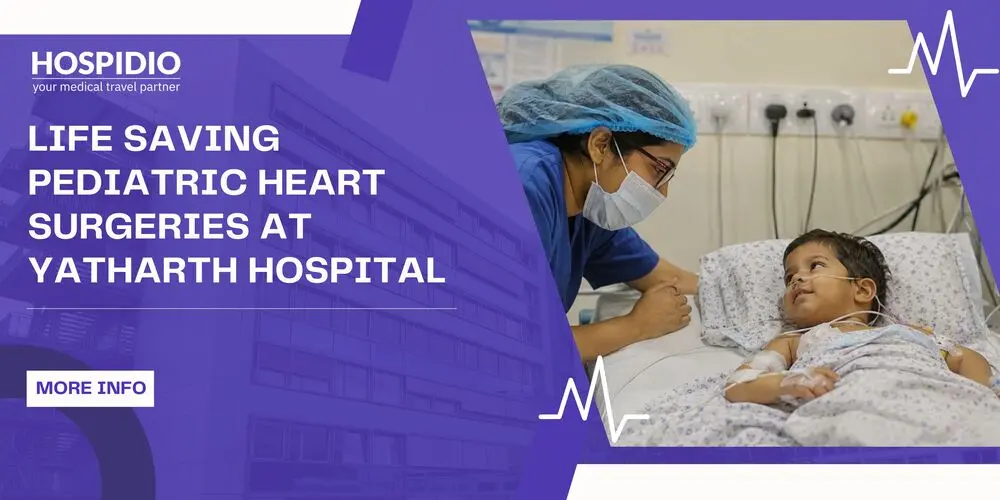
Two children, a 20-day old newborn weighing less than three kilograms and a seven year old living with a complex heart condition, walked out of Yatharth Super Specialty Hospital, Greater Noida, alive. Their recoveries are not just individual victories. They are a signal to families across India and beyond that pediatric cardiac care of the highest order is now available without leaving the National Capital Region. This month, Yatharth Hospital shared the clinical details of both cases at a press conference that brought together senior cardiac surgeons, hospital leadership, and parents whose gratitude was barely containable. What emerged from that briefing is worth every family's attention.
What Happened: The Two Cases at a Glance
Yatharth Super Specialty Hospital in Greater Noida recently presented the outcomes of two high risk pediatric cardiac surgeries that had been performed on its campus. The press conference was addressed by Dr. Viresh Mahajan, Chairman of Pediatric Cardiac Sciences; Dr. Ved Prakash, Director and Head of the Department of Cardiothoracic and Vascular Surgery (CTVS); Dr. Sunil Kumar Baliyan, Senior Consultant, COO and Facility Director; and Mr. Amit Singh, CEO of Yatharth Group.Both cases were far from routine. They were carefully timed, high risk interventions where, as the surgeons themselves noted, every hour mattered.
Case 1: A 20-Day Old Newborn with D-Transposition of the Great Arteries
The Diagnosis
The first patient was a male newborn brought to Yatharth Hospital within days of birth. His family had noticed severe breathing difficulty and a bluish discoloration of the skin, a condition medically known as cyanosis. At under three kilograms in weight, he was diagnosed with D-Transposition of the Great Arteries (D-TGA), a critical congenital heart defect.
In D-TGA, the two main arteries leaving the heart, the aorta and the pulmonary artery, are switched from their normal positions. This means deoxygenated blood is pumped back to the body instead of to the lungs, while oxygenated blood circulates only within the lungs and never reaches the rest of the body. Without urgent intervention, this condition is rapidly fatal.
What is D-Transposition of the Great Arteries?
D-TGA is one of the most serious congenital heart conditions diagnosed at birth. It affects approximately 2 to 5 in every 10,000 live births and accounts for roughly 5 to 7 percent of all congenital heart disease. It is more common in boys than girls. In most cases, it is identified either during a prenatal ultrasound or within the first few hours after birth when the newborn's oxygen levels fail to improve despite supplemental oxygen.
The only definitive treatment is surgical correction, and timing is everything.
The Surgery: Arterial Switch Operation
Dr. Viresh Mahajan's team performed an Arterial Switch Operation (ASO), a procedure in which both great arteries are detached and reconnected to their correct ventricles. This surgery is ideally performed within the first two to three weeks of life, before the left ventricle, which must power the body's circulation after correction, loses its capacity to handle systemic pressure.
The surgery required post operative ventilator support, intensive care monitoring, respiratory therapy, and careful medication management for lung congestion. Despite these challenges, the newborn showed steady clinical improvement. Cardiac function stabilized, oxygen levels normalized, feeding resumed, and he was ultimately discharged in a stable condition on room air.
As Dr. Mahajan said during the press conference: "When a newborn comes in struggling to breathe, turning blue, weighing less than three kilos, you stop thinking in terms of departments or designations. You think in terms of minutes and teamwork."
Case 2: A Seven Year Old with Single Ventricle Congenital Heart Disease
The Diagnosis and Background
The second patient, a seven-year old child, had been living with a known cyanotic congenital heart disease involving single ventricle physiology, a group of complex heart defects in which only one of the heart's two pumping chambers is functional. These conditions are among the most difficult to manage in pediatric cardiac medicine.
The child had already undergone a palliative procedure in the past. However, as he grew, his circulation could no longer compensate. He was now experiencing increasing fatigue and worsening cyanosis, indicating the next phase of surgical management was urgently needed.
Understanding Single Ventricle Heart Disease
In a normal heart, the right ventricle pumps blood to the lungs and the left ventricle pumps oxygenated blood to the body. In single ventricle conditions, which include hypoplastic left heart syndrome, tricuspid atresia, and double inlet left ventricle, among others, one ventricle must do all the work. This is unsustainable without surgical intervention. Management typically follows a staged surgical pathway carried out over the first several years of life.
The Surgery and Recovery
After thorough cardiac evaluation and imaging, the team planned and performed the appropriate next stage cardiac procedure for this patient. The surgery was conducted under general anesthesia and required close post operative monitoring, blood product support, and gradual respiratory recovery.
The child responded well. He was extubated early and oxygen support was withdrawn within a short period. Post surgery evaluation showed stable cardiac function with satisfactory oxygen levels. He was discharged feeding well, active, and maintaining healthy oxygen levels on room air. His parents received detailed counselling on post discharge care and follow up.
Dr. Ved Prakash noted: "Pediatric cardiac surgery is as much about precision as it is about timing. In both these cases, delaying intervention would have changed the outcome completely."
Why These Cases Matter for Families Considering Pediatric Cardiac Care in India
These two cases are medically significant beyond the individuals involved.
First, they demonstrate that complex neonatal cardiac surgery, including an arterial switch operation on a newborn under three kilograms, is being performed successfully at hospitals in the NCR. This level of care was previously associated primarily with a handful of centers in metropolitan cities.
Second, they highlight the multi disciplinary model of care required for such outcomes: surgical expertise, dedicated pediatric ICU support, respiratory therapy, round the clock monitoring, and experienced nursing staff working in coordination.
Third, they speak to the value of early diagnosis. In both cases, intervention would have been either impossible or significantly higher risk if delayed. Families should know that signs like persistent bluish discoloration of the skin in newborns, breathlessness that does not resolve, poor feeding, or failure to thrive warrant immediate cardiac evaluation, not watchful waiting.
As Mr. Amit Singh, CEO of Yatharth Group, stated: "These stories reflect the very purpose of healthcare, saving lives when the odds are toughest. At Yatharth, we remain committed to strengthening advanced pediatric cardiac services so that families do not have to look beyond NCR for critical, life saving care."
Key Warning Signs of Congenital Heart Disease in Children
Recognizing the early signs can make the difference between a successful outcome and a missed window for intervention. Parents and caregivers should watch for:
- In newborns: Bluish discoloration of the lips, tongue, or fingertips (cyanosis); rapid or labored breathing; poor feeding or excessive sweating during feeds; failure to gain weight
- In infants and toddlers: Tiring quickly during play or feeding; breathlessness during mild activity; swollen legs, abdomen, or around the eyes; recurring respiratory infections
- In older children: Fainting or dizziness during exercise; heart palpitations; chest pain during physical activity; unusual fatigue that limits normal activity
Not all congenital heart conditions produce dramatic symptoms at birth. Some are detected only incidentally, which is why routine screening, including pulse oximetry at birth and fetal echocardiography during pregnancy, remains important.
India as a Destination for Pediatric Cardiac Surgery
For international patients and families traveling to India for cardiac care, pediatric heart surgery represents one of the most compelling value propositions. India's top cardiac centers offer outcomes that are comparable to those at leading centers globally, at a fraction of the cost. The country has a well established pool of pediatric cardiac surgeons, perfusionists, and intensive care specialists trained in managing even the most complex congenital conditions.
Procedures such as the arterial switch operation, the Fontan procedure, bidirectional Glenn shunts, ventricular septal defect closures, and tetralogy of Fallot repairs are performed routinely at India's best cardiac hospitals including those in Delhi NCR, Mumbai, Chennai, and Hyderabad. For families in Africa, the Middle East, and South Asia where access to pediatric cardiac surgery is limited, India has become an essential destination.
HOSPIDIO works with some of India's best pediatric cardiac surgeons and hospitals to help families navigate diagnosis, surgical planning, travel, and post operative follow up. If your child has been diagnosed with a congenital heart condition or you are seeking a second opinion, we can help you connect with the right specialist.
Conclusion
The cases at Yatharth Super Specialty Hospital are a reminder that pediatric cardiac surgery, at its most demanding, is being performed with skill, care, and successful outcomes right in India's backyard. A 20-day old who could not breathe and a seven year old whose heart could not keep pace are both home now. Stable. Feeding. Alive.
For parents facing the terrifying uncertainty of a child's heart diagnosis, these stories carry a message worth holding onto: with the right team, the right timing, and access to the right facility, outcomes that once seemed impossible are now within reach.
If you are seeking pediatric cardiac care in India for your child, HOSPIDIO's patient consultants are available to guide you at no cost, with no obligation.
References
- BW Healthcare World. (December 20, 2025). Yatharth Hospital Performs Life-Saving Pediatric Cardiac Surgery Cases. https://www.bwhealthcareworld.com/article/yatharth-hospital-perform-life-saving-pediatric-cardiac-surgery-cases-584305
- American Heart Association. Congenital Heart Defects Overview. https://www.heart.org
- Cincinnati Children's Hospital. D-Transposition of the Great Arteries. https://www.cincinnatichildrens.org
- Cleveland Clinic. Single Ventricle Defects. https://my.clevelandclinic.org
About HOSPIDIO: This blog post is intended to provide factual, evidence based information to keep our community informed about healthcare developments in India. Always consult a qualified pediatric cardiologist for medical advice specific to your child's condition.
Recent Blogs


Frequently Asked Questions
D-TGA is a congenital heart defect present at birth in which the two main arteries leaving the heart, the aorta and the pulmonary artery, are switched from their correct positions. This means the body receives deoxygenated blood instead of oxygenated blood, which is life-threatening without immediate surgical correction.
Key signs to watch for include bluish or grayish discoloration of the lips, tongue, or fingertips (cyanosis); rapid or laboured breathing; difficulty feeding or excessive sweating during feeds; poor weight gain; and extreme tiredness. If any of these are present, seek urgent cardiac evaluation, do not wait.
Single ventricle heart disease refers to a group of complex congenital conditions in which only one of the heart's two pumping chambers is fully functional. It is managed through a series of staged surgical procedures over the first several years of life, with timing determined by the child's specific anatomy, weight, and overall health.
Yes. India is one of the leading destinations globally for pediatric cardiac surgery, offering procedures including arterial switch operations, Fontan surgeries, Glenn shunts, VSD closures, and tetralogy of Fallot repairs. Outcomes at top Indian cardiac centres are comparable to international standards, at significantly lower cost. Delhi NCR, Mumbai, Chennai, and Hyderabad all have specialised pediatric cardiac programmes.
Costs vary by procedure complexity, hospital, and length of ICU stay. In general, complex congenital heart surgeries in India cost 60 to 80 percent less than equivalent procedures in the UK, US, or Gulf countries, without compromising on surgical expertise or post operative care.
Shruti Verma has completed her M.Tech in Biotechnology with experience in medical writing and scientific content development. She specializes in translating complex biomedical and healthcare information into clear, accurate, and reader-friendly content for diverse audiences. When she is not designing content, probably she is designing graphics.
Guneet Bhatia is the Founder of HOSPIDIO and an accomplished content reviewer with extensive experience in medical content development, instructional design, and blogging. Passionate about creating impactful content, she excels in ensuring accuracy and clarity in every piece. Guneet enjoys engaging in meaningful conversations with people from diverse ethnic and cultural backgrounds, enriching her perspective. When she's not working, she cherishes quality time with her family, enjoys good music, and loves brainstorming innovative ideas with her team.