
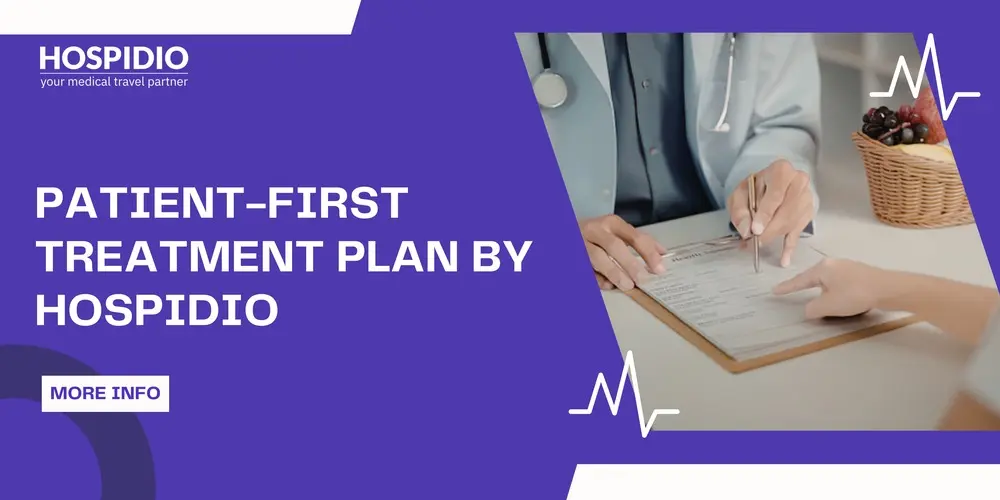
When patients and families first reach out for treatment guidance, they are often carrying more than medical reports. They are carrying uncertainty, urgency, and many unanswered questions. At HOSPIDIO, we understand that the first step is not just reviewing documents, it is helping patients make sense of complex medical information in a way that feels clear, structured, and supportive.
That is why our approach is centered on building patient-first treatment plans. Once you submit your medical reports for review, our goal is to turn technical details into understandable information that helps you and your family know what to expect, what questions to ask, and what possible next steps may look like.
Why clarity matters after a diagnosis
A diagnosis can bring emotional stress as well as practical confusion. Many patients receive reports from different hospitals, labs, or doctors, and those records often contain medical language that is difficult to understand without guidance.
For international patients, this challenge can feel even greater. In addition to understanding the diagnosis itself, they may also be thinking about where to go, which hospital to consider, how long treatment may take, and what kind of support they will need during travel and recovery.
This is where structured communication becomes essential. A patient should not feel lost after sharing reports. They should feel that the next steps are becoming clearer.
What happens after you submit your reports to HOSPIDIO
One of the most common questions patients have is: what happens next?
At HOSPIDIO, the process begins with careful review and organization. Once we receive your medical reports, prescriptions, scans, test results, and treatment history, we begin by understanding the case in a more complete and structured way.
This usually includes:
- Reviewing the documents that have been shared.
- Identifying whether any important reports or recent updates are missing.
- Organizing the case details so the medical situation can be understood more clearly.
- Preparing the information for further treatment evaluation and coordination.
This step is important because meaningful guidance starts with complete and well-organized information. The better the clarity at this stage, the better the support patients can receive in the next stage.
Turning complex reports into structured information
Medical records often contain valuable information, but they are not always easy for patients and families to interpret. Different documents may explain different parts of the condition, and sometimes the overall picture is not immediately clear.
Our role is to help bring structure to that complexity.
Instead of leaving patients with disconnected reports, we work to organize the available information into a more understandable format, such as:
- A simplified summary of the diagnosis.
- An overview of the current medical condition.
- Previous treatment history, if any.
- Important missing information, if further documents are needed.
- Possible treatment directions based on the case details available.
- Practical next steps for coordination and planning.
This kind of structured explanation helps patients move from confusion to understanding. It also helps families feel more confident when discussing treatment decisions together.
What a patient-first treatment plan includes
A patient-first treatment plan is not just about naming a procedure or suggesting a hospital. It is about presenting useful, relevant information in a way that supports informed decision-making.
At HOSPIDIO, a patient-first approach means helping patients understand important aspects of their treatment journey, including:
- The diagnosis in simpler, clearer language.
- The likely treatment direction based on the available reports.
- The expected sequence of care, where possible.The estimated treatment timeline.
- Likely hospital stay and recovery considerations, including rehabilitation.
- Travel-related planning for international patients.
- Cost guidance or budgeting direction where available.
- The questions a patient may want to ask before making a final decision.
This matters because patients do not just want information. They want understandable information. They want to know what the journey may involve, how to prepare, and what decisions may come next.
Why this matters for international patients
For international patients, treatment planning goes beyond the clinical side. A patient may also need to think about visa preparation, travel timing, accommodation, companion support, recovery stay, and post-treatment follow-up.
Without a structured explanation, the treatment journey can feel overwhelming before it even begins.
That is why HOSPIDIO focuses on helping patients understand not only the medical side of the case, but also the practical side of planning treatment in India. By connecting medical information with real-world logistics, we help patients and families prepare more confidently and avoid unnecessary confusion.
This is especially valuable for patients who are comparing hospitals, exploring multiple options, or trying to understand whether travel for treatment is the right next step.
How we help patients understand options, not just instructions
Trust grows when patients feel informed rather than pressured.
At HOSPIDIO, we believe patients deserve guidance that helps them understand their options clearly. That means our communication should not feel rushed, vague, or overly technical. It should feel organized, patient-friendly, and responsive to the real questions families are asking.
Patients often want to know:
- What treatment options may be available?
- How urgent is the next step?
- What additional reports are needed?
- How long might treatment or hospitalization take?
- What should be planned before travel?
- How can they compare next-step options more clearly?
A patient-first treatment plan helps answer these questions in a more practical way. It supports decision-making by giving patients a clearer view of what lies ahead.
Setting Realistic Clinical Expectations
We believe that informed patients make the best healthcare decisions, so our treatment plans explicitly detail expected outcomes and potential recovery timelines. When recommending highly specialized procedure, for example, an autologous stem cell transplant for CIDP, we transparently share that patients typically see a 70 percent overall response rate. Setting these realistic expectations builds deep trust and ensures families are mentally prepared for the comprehensive rehabilitation process ahead.
Transparent Treatment Cost Breakdown
Financial anxiety is a major concern for international patients, which is why we provide a line-by-line breakdown of all expected medical and living expenses. We clearly separate the core surgical package from variable non-clinical costs like local accommodation, daily meals, visa fees, and required post-discharge medicines. To further eliminate financial surprises, we operate on a strict pay as you go model that requires no advance deposit before you travel to India.
Navigating Visas and Legal Documents
Navigating international healthcare requires strict adherence to legal and travel regulations, which we map out entirely within your initial plan. For highly regulated procedures like a kidney transplant, we guide you through acquiring necessary relationship proofs, DNA tests, and official consent documents for your donor. We also manage your medical visa applications and coordinate airport transfers so you can focus entirely on your health upon arriving in New Delhi.
Securing Professional Medical Accountability
Trust is fundamentally built on accountability, so we never send automated or generic responses to our prospective patients. Every single treatment plan is meticulously evaluated, compiled, and formally issued by the Head of Medical Operations. This leadership-level review guarantees that the document you receive is a medically sound, fully actionable roadmap designed specifically for your successful recovery.
What patients can do to receive a better review
A better treatment review often starts with better information.
To help our team understand the case more clearly, patients should try to share complete and recent documents wherever possible. This may include:
- Recent medical reports.
- Blood test results.
- Imaging reports such as CT, MRI, or PET scan findings.
- Pathology or biopsy reports.
- Prescriptions and medication details.
- Discharge summaries.
- Previous treatment records.A
- short note about current symptoms or concerns.
- Passport copy, if treatment travel is already being considered.
When the case file is more complete, it becomes easier to assess the situation, identify what may still be needed, and guide the patient toward more informed next steps.
Our communication approach at HOSPIDIO
A patient-first experience begins with the way information is shared.
At HOSPIDIO, we aim to communicate with:
- Clarity, so patients can understand what their reports are indicating.
- Structure, so the next steps feel organized rather than uncertain.
- Transparency, so expectations are realistic.
- Empathy, so families feel supported during a difficult time.
- Coordination, so practical treatment planning becomes smoother.
We know that patients are not only looking for treatment support. They are also looking for confidence, trust, and a sense that someone is helping them move forward with clarity.
What you can expect from us
When you submit your reports to HOSPIDIO, you can expect a process that is designed to be thoughtful and patient-centered.
That means we aim to help you by:
- Reviewing the case details you share.
- Identifying whether any additional information may be needed.
- Organizing the medical information in a clearer way.
- Helping you understand possible treatment directions.
- Supporting you with the next steps in treatment planning and coordination.
For many patients, this is the moment when uncertainty starts to become more manageable. Clear information creates a stronger foundation for better decisions.
Moving forward with more confidence
Submitting your medical reports should not feel like sending documents into a system and waiting without clarity. It should be the beginning of a more informed and structured treatment journey.
At HOSPIDIO, our focus is to turn complex medical explanations into patient-friendly understanding. By organizing information clearly and guiding patients through what to expect, we aim to make the treatment planning process more transparent, more supportive, and more human.
If you are exploring treatment options and want a clearer understanding of your case, you can submit your medical reports to HOSPIDIO for review and take the next step with more confidence.
Read Similar Blogs



Recent Blogs


Baani Singh is a Trainee Intern specializing in Content and Brand Management at HOSPIDIO. With a keen interest in healthcare communication, she contributes to creating informative and engaging content that bridges the gap between medical services and patients seeking treatment abroad. Her work supports HOSPIDIO's mission to provide accessible and transparent medical travel solutions.
Guneet Bhatia is the Founder of HOSPIDIO and an accomplished content reviewer with extensive experience in medical content development, instructional design, and blogging. Passionate about creating impactful content, she excels in ensuring accuracy and clarity in every piece. Guneet enjoys engaging in meaningful conversations with people from diverse ethnic and cultural backgrounds, enriching her perspective. When she's not working, she cherishes quality time with her family, enjoys good music, and loves brainstorming innovative ideas with her team.