
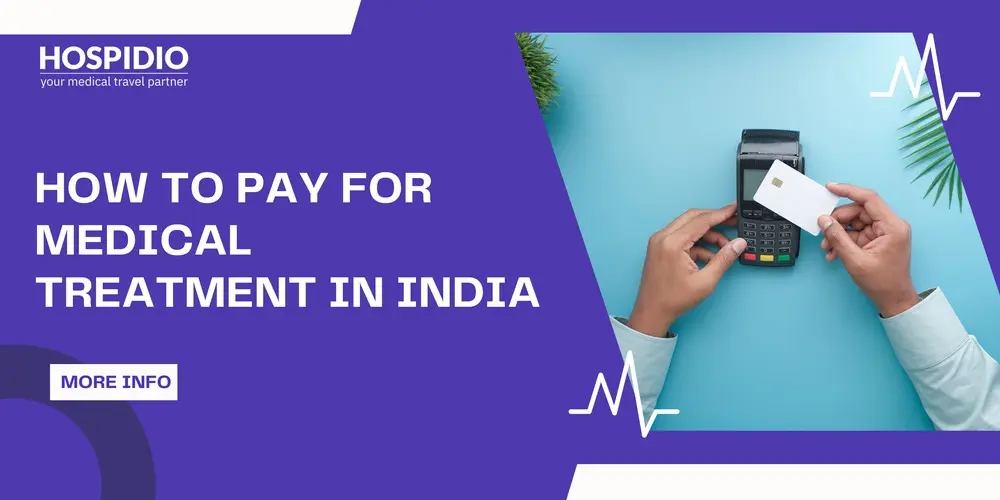
For most families travelling from Africa to India for treatment, the second biggest worry after the diagnosis itself is the money. Not whether they can afford the treatment, but how to physically move the funds: out of their country, into India, and into the hospital's account, on time, without losing a painful percentage along the way.
It is a legitimate worry. Foreign exchange is restricted or scarce in several African countries, remittance services have daily caps, some payment platforms simply do not work in India, and hospital billing follows rules that nobody explains until you are standing at the admission desk. This guide explains all of it before you travel: how Indian hospitals actually bill international patients, which payment methods work and which fail, how much cash to carry and how to carry it legally, and how to sequence your payments so that money is never the thing standing between your patient and their treatment.
Who this guide is for: Patients and families travelling to India from anywhere in Africa, whether from Lagos or Nairobi, Accra or Addis Ababa, Dar es Salaam, Lusaka, Harare or Kampala. Banking rules differ country by country, but the Indian side of the journey works the same way for everyone, and that is what we cover here. Your HOSPIDIO Relationship Manager can advise on the specifics of your home country.
How Indian Hospitals Actually Bill International Patients
Understanding the billing structure removes most of the anxiety, so let us start there. There are two different systems, depending on what you are coming for.
Outpatient care: pay as you go
Consultations, scans, blood tests, biopsies and other outpatient services are billed as you use them. You see the doctor, you pay at the counter, you move to the next step. Most large hospitals accept international debit cards, credit cards and Visa cards at these counters, and they accept cash. There is no deposit involved for outpatient care, which makes the evaluation phase of your journey financially simple.
Inpatient treatment and surgery: deposit first, settle before discharge
Admissions work differently, and this is the part that surprises families. For planned surgery or inpatient treatment, hospital policy typically requires 80 to 90% of the estimated surgical fee to be deposited at the time of admission. The hospital then bills against that deposit through your stay, and any difference is reconciled at the end.
Two important nuances:
- It is modifiable: For high-value cases, the deposit structure can sometimes be modified so the family pays in stages through the hospital stay rather than everything upfront. This is negotiated case by case, and it is exactly the kind of arrangement your HOSPIDIO coordinator takes up with the hospital on your behalf before you travel.
- But the end rule is fixed: Whatever payment schedule is agreed, the entire bill must be cleared before the patient is discharged. Plan your funds so the final settlement never delays your journey home.
Plan around the deposit: If your surgical package is US$10,000, be prepared to have US$8,000 to $9,000 available in payable form on admission day. The rest of this guide is about making sure that money is actually payable when you need it to be.
Payment Methods: What Works, What Has Limits, What Fails
| Method | Works for | What you must know |
| International debit / credit / Visa card | Hospital deposits, outpatient bills, larger shops | Confirm international transactions are enabled and check your daily limit before you fly. A card with a low daily cap cannot pay an admission deposit. |
| Bank transfer (SWIFT) | Hospital deposits, especially high-value cases | Takes anywhere from 2 to 10 days to reflect in the hospital's account. Start early. |
| Cash (USD, INR, EUR, GBP, AUD, CAD) | Daily living, accommodation, pharmacies, contingency; hospital deposits within limits | Some hospitals cap cash deposits at INR 25,000 per passport; others accept the full amount in cash. Always confirm through your coordinator first. |
| MoneyGram, Western Union, Ria and similar | Topping up daily expenses | Withdrawal limits of roughly US$500 to $600 per day per passport make them unsuitable for paying a surgical deposit. |
| PayPal | Nothing, for this purpose | Not a viable option for paying hospitals in India. Do not build your plan around it. |
Cards: your most convenient tool, if you prepare them
Confirm international transactions are enabled and check your daily limit before you fly. A card with a low daily cap cannot pay an admission deposit.
Hospitals accept international debit, credit and Visa cards for both deposits and outpatient payments, which makes a properly prepared card the single most convenient instrument you can carry. The preparation is everything:
- Visit your bank before travelling and confirm, in person, that your card is enabled for international transactions. Many African bank cards are domestic-only by default
- Ask what your daily spending limit is, and whether it can be raised or removed for your travel dates. For a high-value procedure, you want a card with no daily limit, or a documented temporary increase
- Carry a second card from a different bank if you can. A declined card on admission day is a solvable problem only if you have an alternative in your pocket
Bank transfers: the right tool for big numbers, started early
For high-value treatment, an international bank transfer to the hospital's account is often the safest route, and hospitals accept it readily. The trap is timing: transfers from African banks can take anywhere from 2 to 10 days (after the receipt of SWIFT transfer copy) to reflect in the hospital's account, depending on your bank, intermediary banks, and compliance checks on both sides.
The rule, then, is simple: if you intend to pay your deposit by transfer, initiate it before you board the plane, not after you land. Your coordinator will share the hospital's account details and the exact estimate in advance so the funds are already sitting with the hospital, or close to arriving, on admission day. Keep your transfer receipt and SWIFT reference with your travel documents; it is your proof while the money is in transit.
Cash: necessary, useful, and governed by rules
You will need cash in India regardless of how you pay the hospital, and we explain why in the next section. For the hospital itself, cash rules vary: some hospitals only allow cash deposits of up to INR 25,000 (roughly US$300) per passport, with the balance payable by transfer or card, while others can accept the entire treatment amount in cash. This is hospital policy, not law, and it differs between institutions. Always check with your HOSPIDIO coordinator before you travel so you know exactly what your hospital allows.
Carrying cash legally: India requires arriving travellers to declare foreign currency if the cash notes exceed US$5,000, or if cash plus other instruments together exceed US$10,000, using the Currency Declaration Form at customs. Declaring is quick and entirely routine for medical travellers; failing to declare can mean the money is seized. If your plan involves significant cash, split it across your travelling party (the limits apply per person), declare what must be declared, and keep the stamped form safe for your departure.
Remittance services: fine for groceries, wrong for surgery
MoneyGram, Western Union, Ria and similar services work in India and are genuinely useful when family back home needs to send you support money during a long stay. But their withdrawal limits, typically around US$500 to $600 per day per passport, make them structurally unsuitable for paying a deposit that runs into thousands of dollars. Treat them as a top-up channel, never as your main payment plan.
Why You Still Need Cash in Hand, Even If the Hospital Is Fully Paid
Here is the part most guides miss. The hospital is the most card-friendly place you will encounter in India. Almost everything else around your stay runs on cash:
- Accommodation: Guesthouses and serviced apartments near hospitals often prefer or require cash
- Groceries and pharmacy: Local grocery stores, vegetable vendors and neighbourhood pharmacies may or may not accept cards
- SIM cards: Buying and topping up a local SIM is a cash transaction at most kiosks
- Transport and daily life: Cab drivers, auto-rickshaws, and small shopkeepers take cash only
A practical pattern that works well for our patients: pay the hospital by card or transfer, and run daily life on cash. Exchange your money at authorised money changers rather than informally; carry crisp, undamaged large-denomination notes, which get better rates; and avoid exchanging large amounts at airport counters, where rates are weakest.
Keep your contingency in cash: Your contingency fund, the 15 to 20% reserve we recommend in our cost guide, should be held in cash, not locked behind a card limit or a pending transfer. If plans change at 8pm on a Sunday, cash is the only instrument that works instantly, everywhere.
Your Payment Timeline: From Estimate to Discharge
Sequence matters as much as method. Here is how a well-planned payment journey runs:
- Weeks before travel: Receive your written, itemised treatment estimate from HOSPIDIO and confirm with your coordinator how your specific hospital handles deposits, cash limits, and staged payment for high-value cases
- 1 to 2 weeks before travel: Visit your bank. Enable international transactions, confirm or raise card limits, collect any forex documentation your country requires for medical travel, and if paying by transfer, initiate it now so the 2-to-10-day window finishes before your admission date
- Travel day: Carry your cards, your transfer receipt and SWIFT reference, your hospital estimate and invitation letter, and your cash, declared at customs if above the thresholds
- Evaluation days: Pay consultations and tests as you go, by card or cash, while doctors finalise your treatment plan
- Admission day: Pay the 80 to 90% deposit by the method you arranged. If a staged schedule was agreed for a high-value case, your coordinator confirms it in writing with the hospital
- Before discharge: Reconcile the final bill, collect your take-home medication estimate, and clear the full balance. Discharge follows a settled bill, so keep your final settlement method ready a day or two early
The Before-You-Fly Money Checklist
- I have confirmed with my coordinator how my hospital handles deposits, cash limits, and whether staged payment is possible for my case
- My bank has confirmed my cards work internationally, and I know my daily limits
- For a high-value procedure, I have a card with no daily limit, or my bank transfer is already initiated
- I know my transfer may take 2 to 10 days, and I have planned my admission date around it
- I am carrying enough cash for daily life and my contingency, split across my travelling party
- I know the customs declaration thresholds and will declare if my cash exceeds them
- I have a backup payment method that does not depend on my primary bank
- I am not relying on PayPal, and not relying on remittance services for anything larger than daily top-ups
Eight ticks, and money stops being a source of fear in your journey. It becomes what it should be: a solved logistics problem.
How HOSPIDIO Helps You Get the Money Side Right
Every payment rule in this guide varies somewhere: by hospital, by bank, by country. That is exactly why a coordinator matters. Before you travel, your HOSPIDIO Relationship Manager confirms your hospital's specific deposit policy and cash rules, shares verified account details for transfers, takes up staged-payment requests for high-value cases with the hospital's international desk, and tells you honestly what will and will not work from your country. During your stay, the same person is your single point of contact for any billing question, at any hour. This service costs you nothing.
Plan Your Treatment, and Your Payments, Before You Fly
Send us your medical reports and your HOSPIDIO Patient Consultant will reply with a personalised treatment plan, hospital options, a written cost estimate, and clear guidance on how to pay from your country. Free, confidential, and with no obligation.
Message us on WhatsApp at +91-9319955321, +91-9870538337 or request your free treatment plan below.
Related reading from the HOSPIDIO Knowledge Centre:
- The True Total Cost of Medical Treatment in India
- Medical visa guides by country
- From WhatsApp to Discharge: How HOSPIDIO Manages Your Entire Medical Journey
Disclaimer: This article provides general guidance as of 2026 and does not constitute financial advice. Hospital payment policies, banking rules, remittance limits, customs thresholds and exchange regulations vary and change; always confirm current rules with your bank, the relevant authorities in your country, and your HOSPIDIO Relationship Manager before travelling. Figures in US dollars and Indian rupees are indicative.
Recent Blogs


Baani Singh is a Trainee Intern specializing in Content and Brand Management at HOSPIDIO. With a keen interest in healthcare communication, she contributes to creating informative and engaging content that bridges the gap between medical services and patients seeking treatment abroad. Her work supports HOSPIDIO's mission to provide accessible and transparent medical travel solutions.
Ashutosh heads the Patient Experience Department at HOSPIDIO, ensuring seamless, compassionate support for international patients seeking treatment in India. With deep expertise in medical travel and hospital coordination, he’s dedicated to making every patient feel safe and cared for. Outside work, he enjoys driving and exploring new cuisines.