
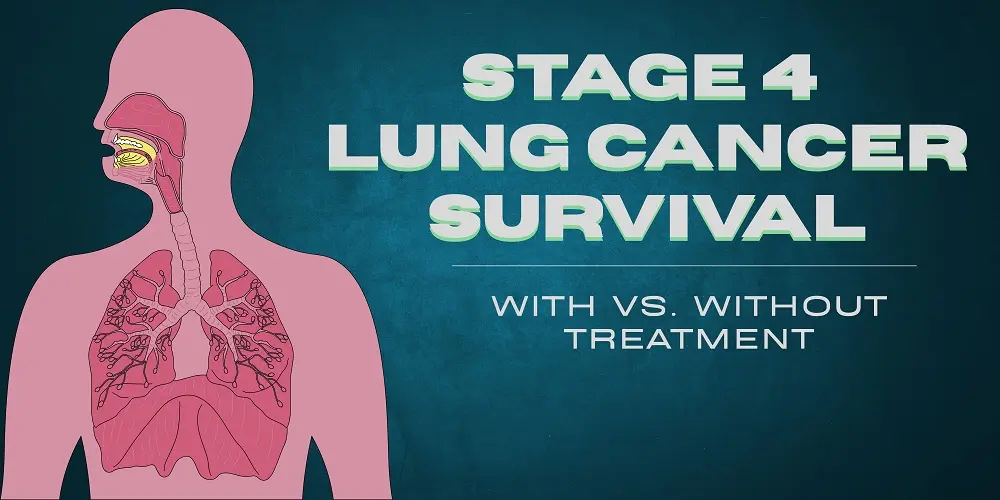
Stage 4 lung cancer is the most advanced form of the disease and is often the most difficult diagnosis for patients and families to process. At this stage, cancer has spread beyond the lungs to distant organs such as the brain, liver, bones, or adrenal glands, making curative treatment extremely challenging. When a diagnosis is referred to as terminal lung cancer or stage 4, the most immediate and difficult question often centers on life expectancy for those who choose not to pursue medical intervention.
For some individuals, treatment may not be pursued due to advanced age, poor overall health, other serious medical conditions, personal choice, or limited access to care. In such cases, understanding life expectancy without treatment becomes essential—not to remove hope, but to allow patients and caregivers to make informed decisions about comfort, quality of life, and supportive care.
We Handle the Planning
You Focus on Recovery
From Medical Visa assistance to airport pick-up and local stay, HOSPIDIO manages your entire medical trip.
Tell Us About Your Need
Free case review. Confidential. No obligation.Medical research shows that survival in stage 4 lung cancer varies widely from person to person. Factors such as cancer type (non-small cell or small cell), how aggressively the disease is progressing, the organs affected, and the patient’s general health all play a role. Without treatment, the disease typically progresses more rapidly, and life expectancy is often measured in months rather than years. However, statistics only provide averages—they cannot predict how long any one individual will live.
Reputable cancer organizations and medical resources emphasize that survival rates are estimates based on large groups of patients. Some people may live longer than expected, especially with good supportive and palliative care focused on symptom relief and comfort.
This article aims to explain what current medical evidence suggests about stage 4 lung cancer life expectancy without treatment, the key factors that influence survival, and what patients and families can realistically expect. The goal is not to alarm, but to provide clear, compassionate, and trustworthy information to help guide difficult conversations and decisions during an incredibly challenging time.
Key Survival Statistics for Stage 4 Lung Cancer
When discussing stage 4 lung cancer, survival statistics help give a general picture of what many patients experience. It’s important to remember that these figures are averages based on large groups usually reported as median survival, not predictions for any one person. Most patients with stage 4 lung cancer who receive no treatment survive between 2 and 8 months on average. Survival varies significantly depending on: Type of lung cancer (NSCLC vs SCLC), Extent of metastasis, Overall patient health, Presence of complications.
What is Median Survival?
Unlike a standard "average," the median represents the middle point. It means that 50% of patients lived longer than that time, and 50% lived less.
Why it matters?
A few "outliers"—patients who respond exceptionally well to care and live for many years—can skew an average higher. The median provides a more realistic "middle-of-the-road" expectation for most patients while acknowledging that individual outcomes vary.
Life Expectancy Without Treatment
Without any medical intervention to slow or manage the disease, stage 4 lung cancer tends to progress quickly because the cancer continues to spread unchecked.
- For non-small cell lung cancer (NSCLC) — the most common type — average survival without treatment is around 7 months after diagnosis.
- For small cell lung cancer (SCLC), which typically grows and spreads faster, survival without treatment is shorter, at about 2 to 4 months.
- Another source notes that the median survival time for stage 4 lung cancer identified as terminal — often referring to people not pursuing aggressive treatment — is roughly 4 months, meaning half of patients may live less than this after diagnosis.
These estimates reflect untreated progression, which usually means the cancer continues to grow and spread. Without treatment, the disease’s impact on vital organs can worsen symptoms and shorten survival.
Survival With Treatment
When patients receive medical care — including chemotherapy, immunotherapy, targeted therapy, radiation, or supportive palliative care — survival outcomes tend to improve compared to no treatment.
Short-Term Survival
- Studies indicate that receiving cancer treatment can help patients survive beyond the early months following diagnosis. Many clinical reports show that some patients live a year or more after beginning treatment — significantly longer than average life expectancy without treatment.
Five-Year Survival Rates
Survival statistics are often expressed as relative 5-year survival rates, meaning how many people are still alive 5 years after diagnosis compared with people without the disease.
- For stage 4 NSCLC, the 5-year relative survival rate is generally under 10% — only a small proportion of patients live 5 years or more with current treatments.
- For stage 4 SCLC, is particularly challenging, as only about 3% of patients reach the five-year survival milestone.
It’s worth noting that these figures combine many different patients, some of whom received treatment and others who did not. In clinical practice, eligible patients who can tolerate modern therapies often have a better prognosis than these averages.
What These Numbers Mean
- Without treatment: Many patients with stage 4 lung cancer live months rather than years, especially if the cancer is aggressive or widespread.
- With modern treatment: Survival can be extended significantly for some patients — sometimes reaching beyond one year and, in rare cases, multiple years — but long-term survival remains relatively uncommon overall.
- These statistics are averages and trends, not individual outcomes. Personal prognosis can differ based on cancer genetics, overall health, response to treatment, supportive care, and other factors.
While many use the term terminal lung cancer to describe any stage 4 diagnosis, doctors often distinguish between the two. 'Stage 4' is a clinical description of how far the cancer has spread. 'Terminal' is typically used when the disease is no longer responding to treatment and the focus has shifted entirely to comfort and end-of-life care. Understanding this distinction can help families navigate conversations about the goals of care.
Factors That Influence Life Expectancy in Stage 4 Lung Cancer
Life expectancy in stage 4 lung cancer varies widely from person to person. While survival statistics give a general picture, individual factors strongly influence prognosis — determining how quickly the disease progresses and how well someone responds to treatment. Understanding these factors helps patients and caregivers make more informed decisions about care and expectations.
1. Type of Lung Cancer
The two main types of lung cancer — non-small cell lung cancer (NSCLC) and small cell lung cancer (SCLC) — behave differently:
- NSCLC is more common and generally grows and spreads more slowly than SCLC. Patients with NSCLC often have a longer life expectancy, especially when treated with targeted therapies or immunotherapy.
- SCLC tends to grow and metastasize more rapidly. Because of this aggressive behavior, survival without treatment is typically shorter compared to NSCLC. This difference in biological behavior significantly impacts overall prognosis.
2. Overall Health and Functional Status
A patient’s general health — including heart and lung function, nutritional state, and presence of other chronic conditions — plays a major role in life expectancy:
- Healthier patients often tolerate treatments like chemotherapy, immunotherapy, or radiation better.
- Better functional status (often measured by performance scores clinicians use) is linked with improved survival because it allows more treatment options.
3. Extent and Location of Metastasis
Stage 4 lung cancer means the disease has spread outside the lungs, but where it spreads matters:
- When cancer metastasizes to vital organs such as the brain, liver, or bones, symptoms can worsen and survival may be shorter.
- The number of metastatic sites and how aggressively cancer is spreading also influence prognosis.
4. Tumor Genetics and Biomarkers
Modern oncology increasingly uses genetic testing to identify mutations (like EGFR, ALK, ROS1) in tumor cells. These biomarkers can be targets for specialized drugs:
- Patients with targetable mutations may respond very well to targeted therapies, sometimes experiencing longer survival and fewer side effects than traditional chemotherapy.
- Absence of actionable biomarkers can limit treatment options and potentially lead to shorter life expectancy.
5. Treatment Choices and Response
Treatment can extend survival and improve quality of life. For many patients, a combination of treatments — such as surgery (rarely in stage 4), chemotherapy, immunotherapy, radiation, or targeted therapy — is used.
- Some treatments not only slow tumor growth but also improve symptoms, enabling patients to maintain better functional status longer.
- The degree to which a cancer responds to treatment (partial response, stable disease, or progression) has a direct impact on overall survival.
Even if curative treatment isn’t possible, palliative care and supportive therapies can help manage symptoms, which may indirectly affect longevity and comfort.
6. Smoking Status and Lung Function
Although smoking is the primary risk factor for lung cancer, its impact continues after diagnosis:
- Continued smoking can worsen lung function, increase complications, and negatively affect treatment response.
- Patients with better preserved lung capacity often tolerate treatments better and may enjoy longer survival.
What Influences Prognosis Most
| Factor | Impact on Life Expectancy |
| Cancer type (NSCLC vs. SCLC) | Significant |
| Overall health & fitness | High |
| Extent/location of spread | High |
| Tumor genetics/biomarkers | Moderate to high |
| Treatment choices & response | Very high |
| Smoking status & lung function | Moderate |
These factors help explain why two patients with seemingly similar diagnoses can experience very different outcomes. Physicians use a combination of these elements to estimate prognosis and tailor treatment planning.
Differences Between NSCLC and SCLC
Stage 4 lung cancer is not a single disease. It is mainly divided into two major types: non-small cell lung cancer (NSCLC) and small cell lung cancer (SCLC). These two forms differ significantly in how they grow, spread, respond to treatment, and affect life expectancy—especially when no treatment is given.
Non-Small Cell Lung Cancer (NSCLC)
NSCLC accounts for about 80–85% of all lung cancer cases, making it the most common type. Key characteristics of NSCLC:
- Grows and spreads more slowly than SCLC
- Often diagnosed at later stages, including stage 4
- Includes subtypes such as adenocarcinoma, squamous cell carcinoma, and large cell carcinoma
Impact on life expectancy:
- Without treatment, survival is usually measured in months, but tends to be longer than SCLC
- With treatment, some patients respond well to targeted therapies or immunotherapy, which can extend survival and improve quality of life
- NSCLC patients with specific genetic mutations may live significantly longer than average statistics suggest
Small Cell Lung Cancer (SCLC)
SCLC is less common, accounting for about 10–15% of lung cancers, but it is much more aggressive. Key characteristics of SCLC:
- Grows and spreads very rapidly
- Often spreads early to the brain, liver, or bones
- Strongly associated with smoking
Impact on life expectancy:
- Without treatment, survival is often very short, sometimes only 2 to 4 months
- Even with treatment, long-term survival is uncommon due to rapid progression
- Symptoms may worsen quickly if the disease is left untreated
Helpful: Lung Transplant Cost in India
What to Expect: Signs of End-Stage Lung Cancer
As the disease reaches its final stages, especially without treatment, certain physical changes become more apparent. Recognizing these signs can help caregivers provide better comfort:
- Respiratory Changes: Breathing may become more labored, shallow, or irregular (sometimes called Cheyne–Stokes breathing).
- Extreme Fatigue: The patient may spend most of the day sleeping and have very little energy for conversation.
- Decreased Appetite: The body naturally slows down, which can lead to less interest in food or water.
- Neurological Changes: If cancer spreads to the brain, the patient may have confusion or agitation.
- Physical Cooling: Hands and feet may feel cool as circulation shifts toward vital organs.
Also Read: Lung Cancer Treatment in India
Treatment Approaches for Stage 4 Lung Cancer
Stage 4 lung cancer has spread beyond the lung, so treatment is usually focused on controlling the cancer, slowing progression, easing symptoms, and improving quality of life. In most cases, doctors rely mainly on systemic (whole-body) treatments, because the disease is no longer confined to one place.
Systemic drug treatments
A. Chemotherapy
Chemotherapy remains a common option in advanced lung cancer—either alone or combined with other therapies—because it treats cancer throughout the body.
B. Immunotherapy
Immunotherapy helps the immune system recognize and attack cancer cells. It’s widely used in advanced (stage 3–4) lung cancer.
C. Targeted therapy
Targeted therapies are used when testing finds “actionable” mutations in the tumor. Examples include treatments for ROS1-positive, KRAS G12C, BRAF V600E, NTRK, MET, and RET fusion–positive cancers.
Radiation therapy
In stage 4, radiation is commonly used to reduce pain, help control brain metastases, or shrink a tumor that’s causing breathing issues or bleeding.
Surgery
Surgery is not commonly used once cancer has spread widely, but may be considered in very limited cases of spread.
Palliative care and supportive treatment
Palliative care focuses on managing breathlessness, pain, fatigue, cough, and emotional well-being to improve day-to-day comfort.
Clinical trials
Major cancer centers often emphasize clinical trials as a way for eligible patients to access newer therapies and drug combinations.
Stage 4 lung cancer is a complex and deeply personal diagnosis. While survival statistics often show limited life expectancy—especially without treatment—these numbers represent averages, not individual outcomes. Factors such as cancer type, biomarker profile, overall health, treatment choices, and supportive care all play a critical role in shaping prognosis.
For some patients, treatment may help extend life and manage symptoms. For others, prioritizing comfort and quality of life through palliative care may be the most appropriate choice. Understanding the realities of stage 4 lung cancer empowers patients and families to make informed decisions and focus on what matters most.
You Might Also Find This Helpful
References
- National Library of Medicine
- Canadian Cancer Society
- Rajiv Gandhi Cancer Institute & Research Centre
- Medical NewsToday
- Lung Cancer Center
Recent Blogs




Sasmita Bal is a Digital Marketing and Content Specialist at HOSPIDIO with expertise in SEO and international healthcare content. She reviews published material to ensure it is optimized for search visibility and relevant to the needs of international patients seeking treatment in India. All content she reviews is authored and clinically approved by the Founder of HOSPIDIO and relevant medical specialists prior to publication.
Guneet Bhatia is the Founder of HOSPIDIO and an accomplished content reviewer with extensive experience in medical content development, instructional design, and blogging. Passionate about creating impactful content, she excels in ensuring accuracy and clarity in every piece. Guneet enjoys engaging in meaningful conversations with people from diverse ethnic and cultural backgrounds, enriching her perspective. When she's not working, she cherishes quality time with her family, enjoys good music, and loves brainstorming innovative ideas with her team.