
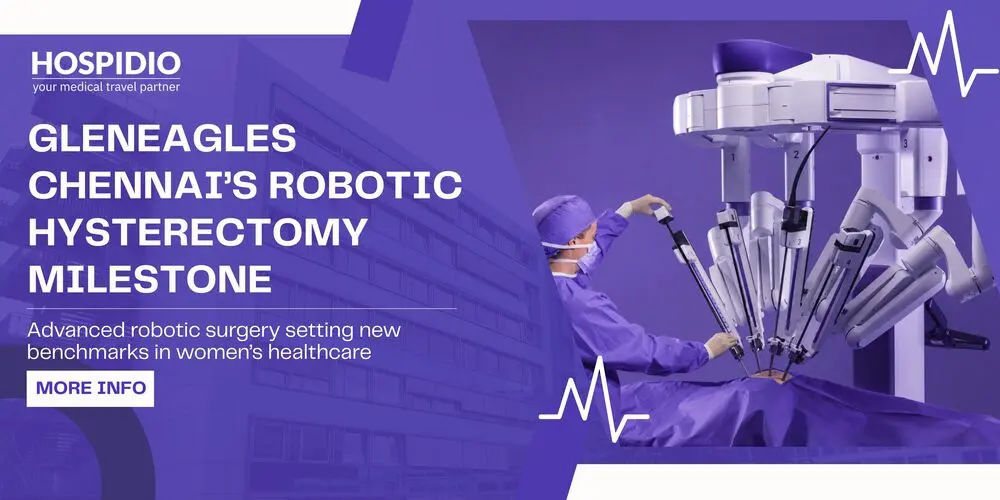
In a historic leap forward for minimally invasive gynecological surgery, Gleneagles Hospitals in Chennai has successfully removed one of the largest fibroid uteri ever documented globally, weighing a staggering 4.95 kilograms, using a robotic-assisted hysterectomy. Performed by Dr. Padmapriya Vivek, Director of Obstetrics and Gynecology and Robotic Surgeon at Gleneagles Hospitals, the procedure used the advanced Da Vinci XI Surgical System and was completed in four hours with minimal blood loss. The patient walked the very next morning and was discharged the day after. This landmark achievement not only redefines what is surgically possible in India but also signals a new era for women worldwide seeking safe, precise, and minimally invasive care for complex gynecological conditions.
What Happened: The Record Breaking Surgery
On a day that is already being discussed across surgical circles globally, the team at Gleneagles Hospitals, Chennai, performed a total robotic assisted hysterectomy to remove a uterus that had grown to the size of a 36 week pregnancy. Multiple massive uterine fibroids, ranging from 12 to 20 centimeters, had caused the uterus to reach a combined weight of 4.95 kilograms, a scale rarely, if ever, encountered in the operating room.
The complexity of the procedure was extraordinary. Due to the uterus being highly vascular and abnormally enlarged, even a conventional open surgery would have carried significant risks of hemorrhage and prolonged recovery. Instead, Dr. Padmapriya and her team chose robotic assisted surgery, a decision that proved pivotal. The operation concluded in four hours with no complications, and the patient was mobilized the very next morning.
"This achievement underscores the unparalleled precision, safety, and efficiency of robotic assisted surgery, even in the most challenging gynecological cases," Dr. Padmapriya Vivek said. "This has set a new gold standard for minimally invasive treatment of large fibroids, enabling faster recovery and superior outcomes."
Meet the Patient: Ramya's Story
Ramya, a 47 year old school teacher from Chennai, had been living with debilitating symptoms for months, severe abdominal bloating, heaviness, and a visibly distended abdomen that had begun to affect her daily life and confidence. When MRI scans revealed the extent of her fibroids, she was understandably frightened.
"When I came to know that I had a 5 kg fibroid, I was frightened and unsure about what would happen next," Ramya shared. "The doctors explained that robotic surgery would be safer and help in fast recovery, and they were right. I was amazed at how smoothly the procedure was performed, and I was able to walk within a day."
Her story is not an isolated one. Millions of women across the world live with uterine fibroids, many of whom delay treatment out of fear, lack of awareness, or limited access to advanced surgical options. Ramya's recovery is a powerful reminder of what modern medical technology, when wielded with expertise, can achieve.
What Are Uterine Fibroids?
Uterine fibroids are non cancerous growths that develop in or around the uterus. They are among the most common gynecological conditions globally, affecting an estimated 20 to 80 percent of women by the age of 50. While many women experience no symptoms, others like Ramya, develop fibroids that grow to a size capable of causing significant physical and emotional distress.
Fibroids are classified by their location:
- Submucosal (inside the uterine cavity)
- Intramural (within the uterine wall)
- Subserosal (on the outer surface of the uterus)
In Ramya's case, multiple large fibroids across the uterus had accumulated to a near record combined weight.
When fibroids grow very large, as in Ramya's case, they can compress surrounding organs and significantly reduce quality of life. Early consultation with a gynecologist is always advisable when these symptoms persist.
The Technology Behind the Achievement
Da Vinci XI Surgical System The Da Vinci XI Surgical System is the world's most advanced robotic surgical platform currently in clinical use. It allows surgeons to operate through tiny incisions using a magnified, high-definition 3D view of the surgical field, with robotic arms that mimic the precise movements of the human hand.
In procedures involving enlarged or highly vascular organs, the Da Vinci XI offers advantages that traditional laparoscopy or open surgery cannot match: greater dexterity in confined spaces, superior visualization of delicate tissue planes, and a dramatically reduced risk of inadvertent blood vessel injury. For a procedure as complex as Ramya's total hysterectomy, these capabilities were not just advantageous, they were essential.
Why Robotic Surgery Is a Game Changer for Gynecological Care
Robotic assisted surgery has been transforming gynecological care for over a decade, but cases like this one illustrate how far the technology has come. What would once have required a large open incision, significant blood transfusions, and a hospital stay of one to two weeks was accomplished through small keyhole incisions with the patient walking the next day.
Key Benefits at a Glance
- Minimal blood loss: Robotic precision reduces intraoperative bleeding even in highly vascular cases.
- Faster recovery: Patients typically resume light activity within days rather than weeks.
- Reduced infection risk: Smaller incisions lower the chance of post surgical infection.
- Less post-operative pain: Smaller wounds mean significantly less discomfort during recovery.
- Shorter hospital stay: Most robotic hysterectomy patients are discharged within 24 to 48 hours.
- Better surgical outcomes: High-definition 3D visualization helps surgeons navigate complex anatomy with unmatched accuracy.
For women carrying fibroids of exceptional size, a scenario once considered a strong indication for open surgery, this case now demonstrates that robotic-assisted hysterectomy is not only feasible but can deliver outstanding results.
What This Means for Medical Travel to India
India has long been a leading destination for international patients seeking high quality, affordable medical care. Procedures performed at hospitals like Gleneagles, Chennai, equipped with cutting edge platforms such as the Da Vinci XI are now with, or exceed, standards at many centers in the West, at a fraction of the cost.
For women in regions where robotic gynecological surgery is either unavailable or prohibitively expensive, India presents a compelling option. A robotic hysterectomy in India typically costs between $2,500 and $5,000 USD compared to $15,000 to $30,000 or more in the United States or United Kingdom, with equivalent or superior clinical outcomes.
Cases like Ramya's are an important proof point: complex gynecological surgeries that push the boundaries of what is medically possible are being performed, successfully, in India today.
Conclusion
The successful removal of a 4.95 kg fibroid uterus at Gleneagles Hospitals, Chennai is more than a surgical record, it is a statement about the state of women's healthcare in India. It reflects the growing capability of Indian hospitals to tackle the most complex clinical scenarios with world-class technology and surgical expertise.
For women worldwide living with large or symptomatic fibroids, this case reinforces a critical message: you do not have to compromise on care. Minimally invasive options exist, recovery can be remarkably swift, and access to that care whether in India or elsewhere is more achievable than ever.
If you or someone you know is experiencing symptoms of uterine fibroids and would like to explore treatment options, our team at HOSPIDIO can connect you with leading gynecological surgeons in India for a free, confidential case review.
Reference
BW Healthcare World. (November 17, 2025). Gleneagles Hospitals, Chennai Performs Landmark Robotic Hysterectomy, Removes 4.95 kg Fibroid Uterus. https://www.bwhealthcareworld.com/article/gleneagles-hospitals-chennai-performs-landmark-robotic-hysterectomy-removes-4-95-kg-fibroid-uterus-580086
About Hospidio: This blog post is intended to provide factual, evidence-based information to keep our community informed about advances in global healthcare. Always consult with healthcare professionals for medical advice and follow guidance from your treating physician.
Recent Blogs



Frequently Asked Questions
The surgery removed a fibroid uterus weighing 4.95 kilograms, comparable in size to a 36-week pregnancy, making it one of the largest fibroid uteri ever removed through a minimally invasive robotic procedure globally. The operation was completed in four hours with minimal blood loss and no complications.
A robotic hysterectomy is the surgical removal of the uterus using a robot-assisted system, in this case, the Da Vinci XI Surgical System. The surgeon controls robotic arms through tiny keyhole incisions, guided by a magnified 3D high-definition view of the surgical field. It offers greater precision than conventional open or laparoscopic surgery.
The patient was mobilized the morning after surgery and discharged the following day. This rapid recovery is one of the key advantages of robotic assisted surgery over traditional open hysterectomy, which typically requires a hospital stay of five to seven days.
Uterine fibroids are non cancerous growths that develop in or around the uterus. They affect an estimated 20 to 80 percent of women by the age of 50. While many women have no symptoms, others experience heavy menstrual bleeding, pelvic pain, abdominal bloating, and pressure on surrounding organs. Women in their 30s and 40s are most commonly affected.
Yes, as demonstrated by this case, robotic assisted hysterectomy using the Da Vinci XI can be safely performed even for exceptionally large fibroids. The robotic system's precision and superior visualization allow surgeons to navigate highly vascular, enlarged tissue with a significantly lower risk of complications compared to open surgery.
A robotic hysterectomy in India typically costs between $2,500 and $5,000 USD, depending on the hospital, surgeon, and complexity of the case. This is significantly more affordable than in the United States or United Kingdom, where the same procedure can cost $15,000 to $30,000 or more, with comparable or superior clinical outcomes.
Shruti Verma has completed her M.Tech in Biotechnology with experience in medical writing and scientific content development. She specializes in translating complex biomedical and healthcare information into clear, accurate, and reader-friendly content for diverse audiences. When she is not designing content, probably she is designing graphics.
Guneet Bhatia is the Founder of HOSPIDIO and an accomplished content reviewer with extensive experience in medical content development, instructional design, and blogging. Passionate about creating impactful content, she excels in ensuring accuracy and clarity in every piece. Guneet enjoys engaging in meaningful conversations with people from diverse ethnic and cultural backgrounds, enriching her perspective. When she's not working, she cherishes quality time with her family, enjoys good music, and loves brainstorming innovative ideas with her team.