
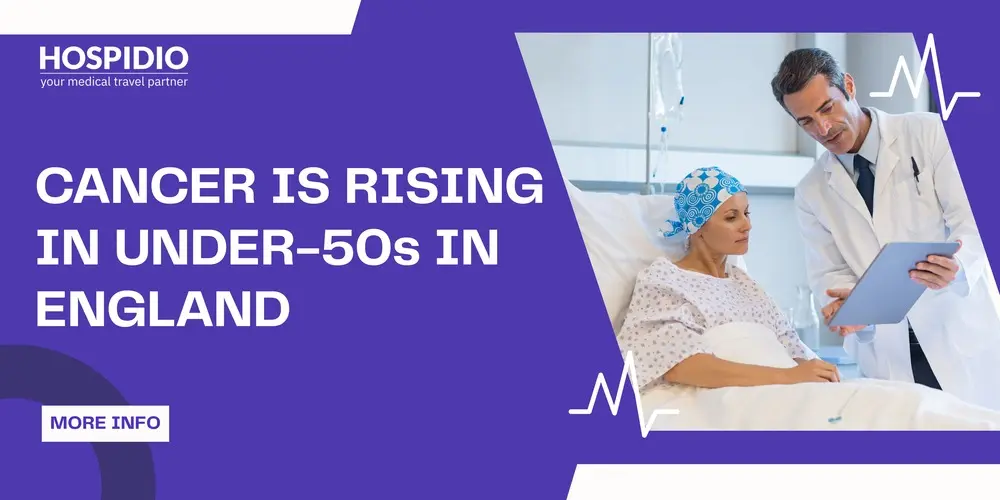
A major new study from The Institute of Cancer Research (ICR) and Imperial College London has confirmed something that doctors and patients have suspected for some time: cancer rates are rising in younger adults in England, and the reasons are not yet fully understood.
The research, published in *BMJ Oncology* in April 2026, analysed national cancer registry data from 2001 to 2019. It identified 11 cancer types that are becoming more common among adults aged 20 to 49. Bowel cancer and ovarian cancer stood out as particularly concerning, because they are rising exclusively in younger age groups, while rates in older adults have remained more stable.
This is not a reason to panic. But it is a reason to pay attention.
Which 11 Cancers Are Rising in Younger Adults?
The research identified the following cancers as increasing in under-50s in England:
- Bowel cancer
- Breast cancer
- Ovarian cancer
- Womb lining (endometrial) cancer
- Thyroid cancer
- Kidney cancer
- Liver cancer
- Gallbladder cancer
- Pancreatic cancer
- Multiple myeloma
- Oral (mouth) cancer
Bowel and breast cancers are the most common among younger adults, with a combined estimated 11,500 cases a year in this age group in England. But the breadth of the list matters. It tells us that this is not one cancer behaving unusually. It is a wider pattern that researchers are still trying to explain.
What Is Driving the Rise?
This is the most important question, and the honest answer is that science does not yet have a complete explanation.
The ICR-Imperial study was designed to look at behavioural risk factors and how they have changed over the same period as cancer rates have risen. The findings were surprising in one key respect: most of the well-known cancer risk factors have been *improving*, not worsening, in younger adults over the past two decades.
Smoking among under-50s has fallen by around two per cent a year. Alcohol consumption has mostly stabilised or declined. Physical inactivity has decreased. Red and processed meat intake has dropped. Fibre consumption has shown gradual improvement, even if it remains lower than recommended.
Excess weight is the one risk factor that has moved in the wrong direction.
Overweight and obesity have increased steadily since 1995, and the rise has been sharpest in younger women, with a 2.6 per cent relative increase per year.
Crucially, though, the study found that rising BMI alone cannot fully account for the scale of the increase in cancer cases. As Professor Montserrat Garcia-Closas, Co-Director of the ICR's Cancer Epidemiology and Prevention Research Unit, put it: excess weight is an important contributor, but multiple factors including early-life exposures may be acting together.
Other suspected contributors include ultra-processed foods, changes in gut microbiome, metabolic dysfunction, antibiotic use, and air pollution. Many of these also showed stable or declining trends in the UK, which means the picture remains genuinely incomplete.
The researchers are clear: we need deeper, longer-term studies to understand what is truly driving cancer risk in today's generations. But they are equally clear that we cannot wait for that understanding before acting on what we already know.
Why Younger Adults Are Being Caught Out
One of the most consistent findings in cancer research on younger adults is that diagnosis tends to come later than it should. This happens for several reasons.
Younger people often assume they are too young for cancer. Symptoms get explained away. A persistent change in bowel habits becomes "probably stress." Unusual bleeding gets attributed to a hormonal issue. A new lump is assumed to be a cyst.
GPs sometimes share that assumption. Cancer in a 30-year-old is statistically less likely than in a 65-year-old, and triage systems reflect that reality. But statistical probability is not the same as individual risk, and persistent symptoms always deserve investigation regardless of age.
Research into diagnostic pathways for young cancer patients in England shows that most were not seen by a cancer specialist within two weeks of visiting their GP. In some studies, teenagers aged 15 to 18 had a median diagnostic pathway of 8.7 weeks. Every week of delay can allow a cancer more time to progress, making treatment more complex and outcomes less predictable.
The NHS Waiting Time Problem for Cancer Patients
For UK patients, the challenge is rarely awareness alone. It is also the time it takes to move from a symptom to a confirmed diagnosis, and from diagnosis to treatment.
NHS England operates formal cancer waiting-time standards. The Faster Diagnosis Standard aims for 75 per cent of patients to be told whether or not they have cancer within 28 days of an urgent referral. The 62-day standard requires 85 per cent of patients to begin first treatment within 62 days of referral.
In practice, these targets are regularly missed. For patients who are living with a worrying symptom, who have already waited weeks to see a GP, and who are then told they face a further wait for tests, results, and specialist appointments, the system can feel genuinely frightening.
For cancer specifically, the concern is not only discomfort. It is that the window during which a cancer is most treatable can narrow during a long diagnostic pathway. A bowel cancer caught at stage one has a five-year survival rate of over 90 per cent in England. At stage four, that figure falls sharply.
Cancer Research UK has also noted that longer waits increase clinical anxiety and depression in teens and young adults, adding a significant psychological burden on top of the physical one.
Symptoms That Deserve Medical Attention
The goal here is not to create fear. Most symptoms have ordinary explanations. But when a symptom persists, returns, or feels out of the ordinary for your body, it is worth seeking advice rather than waiting to see if it resolves.
For the cancers identified in this research, the following are worth taking seriously:
- Bowel cancer: A change in bowel habits lasting more than three weeks. Blood in the stool. Unexplained weight loss. Abdominal pain that keeps returning.
- Breast cancer: A new lump or thickening in the breast or armpit. A change in shape, size, or skin texture. Nipple changes or unexplained discharge.
- Ovarian and womb cancer: Persistent bloating, particularly if it is new and regular. Pelvic pain. Unexplained changes to your menstrual cycle. Feeling full quickly when eating.
- Liver, kidney, and pancreatic cancers: Persistent upper abdominal pain or discomfort. Jaundice. Unexplained fatigue. Dark urine.
- Oral cancer: A mouth ulcer that does not heal within three weeks. A lump or thickening in the mouth or throat. Persistent difficulty swallowing.
If a symptom fits this list and it has been present for several weeks, the right step is to contact your GP and ask for an assessment. You can be direct: you have read about rising cancer rates in younger adults, and you want to have this checked.
What If the NHS Wait Is Too Long?
For patients who receive a suspected cancer diagnosis or who are waiting for investigations that are taking too long, the question of what to do next can feel overwhelming.
Some patients begin to explore treatment options outside the NHS. This is not unusual, and it is not a sign of giving up on the NHS. It reflects the practical reality that, for certain investigations, tests, and treatments, waiting times in the UK can affect outcomes.
India has become one of the most established destinations for UK patients seeking faster access to oncology care. India's leading hospitals, including Apollo, Fortis, Max Healthcare, Medanta, and Artemis, hold JCI or NABH international accreditation, the same standard used to evaluate hospitals in the UK, USA, and Europe. Many of their senior oncologists trained in the UK or the United States.
For cancer specifically, Indian hospitals offer:
- Faster access to diagnostic investigations, including PET-CT, MRI, biopsy, and pathology
- Shorter waits to begin treatment once a diagnosis is confirmed
- Internationally comparable surgical, chemotherapy, and radiotherapy protocols
- Dedicated international patient departments with English-speaking case coordinators
The cost difference compared to UK private oncology care is substantial. Even when flights and accommodation are included, most patients spend 60 to 75 per cent less than they would with a UK private provider.
For a deeper comparison of NHS waiting times, UK private costs, and what treatment in India involves step by step, HOSPIDIO's guide on India vs UK Surgery and NHS Waiting Times covers the full picture.
How HOSPIDIO Supports Cancer Patients from the UK
HOSPIDIO is a medical travel coordination service for international patients seeking treatment in India. For cancer patients from the UK, that means we handle the logistics that would otherwise feel impossible to manage from abroad.
From the moment you contact us, we review your reports, match you with the right oncologist and hospital for your specific cancer type, and arrange a specialist opinion within 48 to 72 hours. Before you commit to travelling, we can arrange a video consultation with your Indian specialist so you can ask questions directly.
We arrange your medical visa invitation letter, coordinate airport transfers, handle hospital admission paperwork, and assign a dedicated case manager who stays in contact throughout your stay. When you leave India, you leave with your full discharge summary, pathology reports, treatment records, and a telemedicine follow-up appointment already scheduled. Everything you need to hand to your GP back in the UK is prepared before you board your flight home.
We do not push patients toward travelling when it is not the right option. If your situation requires urgent local care, we will say so. But if you are facing a long diagnostic wait, or a treatment gap that is causing anxiety, we are here to help you understand your options clearly and make the right decision for your health.
What This Research Means in Practice
The ICR-Imperial findings are a genuine contribution to public health knowledge. They confirm that cancer in younger adults is increasing, that obesity is a meaningful contributor, and that other causes remain under investigation. They also make clear that waiting for a complete scientific explanation before taking public health action is not acceptable.
For individuals, the message is practical: know the symptoms, do not assume you are too young, and do not wait too long before seeking medical advice. For patients already in the NHS system and concerned about diagnostic or treatment delays, the message is that options exist.
Your health should not have to wait for a bureaucratic system to catch up with it.
Ready to explore your options?
Send us your medical reports and we will come back with a specialist opinion, a hospital recommendation, and a clear next step, within 48 hours.
Sources: ICR / Imperial College London, BMJ Oncology (April 2026); NHS England cancer waiting-time data; Cancer Research UK. This post is for general information only and does not constitute medical advice. Always consult your GP or a qualified healthcare professional about your symptoms.
Recent Blogs



Shruti Verma has completed her M.Tech in Biotechnology with experience in medical writing and scientific content development. She specializes in translating complex biomedical and healthcare information into clear, accurate, and reader-friendly content for diverse audiences. When she is not designing content, probably she is designing graphics.
Guneet Bhatia is the Founder of HOSPIDIO and an accomplished content reviewer with extensive experience in medical content development, instructional design, and blogging. Passionate about creating impactful content, she excels in ensuring accuracy and clarity in every piece. Guneet enjoys engaging in meaningful conversations with people from diverse ethnic and cultural backgrounds, enriching her perspective. When she's not working, she cherishes quality time with her family, enjoys good music, and loves brainstorming innovative ideas with her team.