
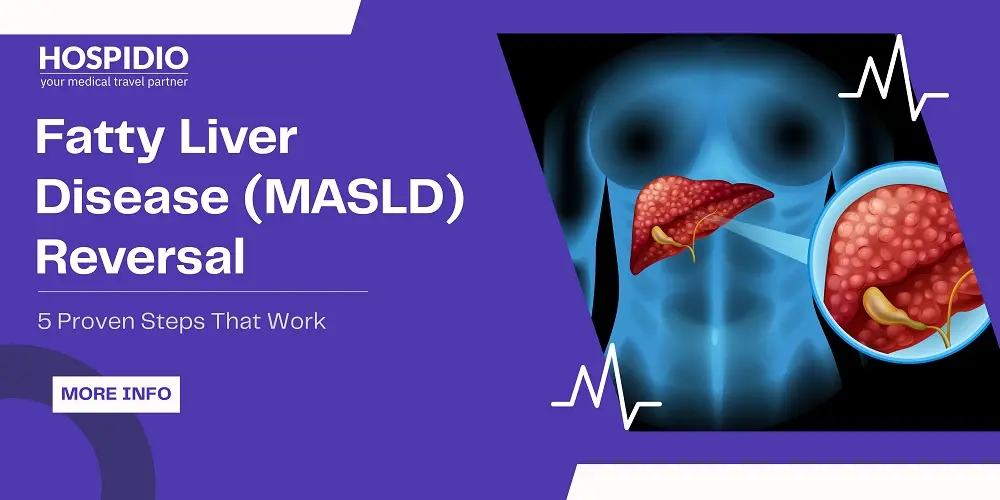
If you’ve recently been diagnosed with Non-Alcoholic Fatty Liver Disease (NAFLD), the first question on your mind is probably a simple but urgent one: “Can I fix this?”
The reassuring answer is yes. For many people, fatty liver disease is not only manageable — it’s reversible when addressed early and correctly. As of 2026, the medical community now often refers to this condition as MASLD (Metabolic Dysfunction–Associated Steatotic Liver Disease), reflecting a clearer understanding of its strong links to metabolism, weight, insulin resistance, and lifestyle factors.
Concerned About Fatty Liver?
If your scan shows fatty liver or elevated liver enzymes, our specialists can review your reports and recommend the best treatment options in India.
- Free medical opinion
- Top liver specialists
- Response within 24 hours
Send Your Medical Reports Now
We Handle the Planning
You Focus on Recovery
From Medical Visa assistance to airport pick-up and local stay, HOSPIDIO manages your entire medical trip.
Tell Us About Your Need
Free case review. Confidential. No obligation.Thanks to advances in research and updated clinical guidelines, doctors now have more effective, evidence-based strategies than ever to help patients stop disease progression, reduce liver fat, and restore liver function — often without medication.
Below are 5 proven steps, backed by the latest 2026 clinical guidance, that can help you take control of your liver health and move toward real, measurable improvement.
1. Aim for the “10% Weight Loss” Milestone
When it comes to reversing Non-Alcoholic Fatty Liver Disease (NAFLD) — now known as MASLD — weight loss isn’t just helpful, it’s foundational. In fact, no medication currently matches the impact that gradual, sustained weight loss has on liver healing.
The encouraging part?
You don’t need extreme dieting or rapid weight loss to see real results. Research consistently shows that how much weight you lose directly determines how much your liver can recover.
What Different Levels of Weight Loss Actually Do
Not all weight loss has the same effect on the liver. Here’s how your liver responds at each stage:
3–5% body weight loss
This modest reduction can significantly lower fat accumulation in the liver, improving liver enzyme levels and insulin sensitivity. For many people, this is where early improvements begin.
7–10% body weight loss
Reaching this range can resolve liver inflammation and, in some cases, start reversing fibrosis (early scarring) — a key factor in preventing progression to MASH or cirrhosis.
10% or more
This is considered the therapeutic sweet spot. Sustained weight loss at this level offers the highest chance of disease regression, improved liver structure, and long-term protection against complications.
Helpful: Liver Transplant Cost in India
Why Weight Loss Is the Most Powerful Liver Treatment
Fatty liver disease is closely tied to metabolic dysfunction, especially insulin resistance and excess visceral (abdominal) fat. Losing weight helps by:
Reducing fat delivery to the liver
Improving insulin sensitivity
Lowering liver inflammation
Decreasing oxidative stress inside liver cells
In simple terms, less metabolic stress = more time for your liver to heal itself.
A Key Reminder
This isn’t about chasing a number on the scale overnight. Slow, steady, and sustainable weight loss is far more effective — and safer — than crash dieting, which can actually worsen liver inflammation.
Think of the 10% goal as a long-term milestone, not a deadline. Every small percentage you lose along the way is already helping your liver function better.
2. Adopt a Mediterranean Eating Pattern
If weight loss is the foundation of fatty liver reversal, what you eat every day is the framework that supports it. In 2026, clinical guidelines consistently point to the Mediterranean diet as the most effective eating pattern for improving MASLD (formerly NAFLD) — not because it’s trendy, but because it directly targets the root cause of liver fat buildup: insulin resistance.
Unlike restrictive diets, the Mediterranean approach focuses on food quality over calorie obsession, making it easier to follow long term — which is exactly what liver healing requires.
Why the Mediterranean Diet Is So Liver-Friendly
This eating pattern is naturally rich in:
Dietary fiber, which improves blood sugar control
Healthy fats, which reduce liver inflammation
Antioxidants, which protect liver cells from damage
Together, these benefits help lower fat delivery to the liver, improve insulin sensitivity, and reduce oxidative stress — three critical steps in reversing fatty liver disease.
What to Eat More Of (Your Liver Will Thank You)
Do this consistently:
Use extra-virgin olive oil as your main fat source
Replacing butter or refined oils with olive oil has been shown to reduce liver fat and inflammation, even without major weight loss.
Eat fatty fish 2–3 times per week
Fish like salmon, sardines, and mackerel are rich in omega-3 fatty acids, which help lower triglycerides and reduce fat accumulation in the liver.
Fill at least half your plate with non-starchy vegetables
Leafy greens, broccoli, cauliflower, zucchini, peppers, and tomatoes provide fiber and antioxidants without spiking blood sugar.
Choose whole foods over packaged options
Beans, lentils, nuts, seeds, and whole grains support gut health and help stabilize insulin levels.
Helpful: Best Gastroenterology Hospitals in India
Foods That Actively Worsen Liver Fat (Limit or Avoid)
Some foods don’t just slow liver healing — they actively promote fat storage in the liver:
Liquid fructose
Sodas, sweetened beverages, energy drinks, and even fruit juices deliver fructose directly to the liver, where it’s rapidly converted into fat.
Ultra-processed “white” carbohydrates
White bread, pastries, refined cereals, and baked goods cause sharp insulin spikes, driving more fat into liver cells.
Why This Pattern Works Long Term
The Mediterranean diet isn’t a short-term fix — it’s a metabolic reset. By lowering insulin resistance and chronic inflammation, it creates an internal environment where weight loss becomes easier and liver repair becomes possible.
Even people who struggle to lose weight immediately often see improvements in liver enzymes and liver fat levels simply by changing how they eat.
3. Incorporate “Vigorous” Movement
One of the most motivating facts about reversing fatty liver disease (MASLD/NAFLD) is this:
Exercise improves liver health even if the scale doesn’t move.
Physical activity changes how your body handles sugar and fat at a cellular level. When your muscles become more efficient at using glucose for energy, less sugar gets redirected to the liver and converted into fat — which is exactly what you want.
Why Exercise Is a Direct Therapy for Fatty Liver
Fatty liver disease is tightly linked to insulin resistance. Regular movement helps by:
Increasing muscle glucose uptake
Improving insulin sensitivity
Lowering liver fat independent of weight loss
Reducing inflammation and liver enzyme levels
In other words, exercise turns your muscles into a metabolic sink, pulling fuel away from the liver.
The Weekly Target That Actually Works
The goal:
150 minutes of moderate-intensity activity per week
This doesn’t require gym marathons. It can be broken down into manageable sessions such as:
30 minutes of brisk walking, 5 days a week
Cycling, swimming, or rowing
Fast-paced household or outdoor activities that raise your heart rate
Consistency matters far more than intensity at the start.
Helpful: Consult Top Gastroenterologist in India
The 2026 Advantage: Don’t Skip Resistance Training
Newer clinical guidance highlights a major upgrade to traditional exercise advice:
Resistance training (strength training) plays a powerful role in liver recovery.
Lifting weights or using resistance bands helps by:
Increasing lean muscle mass
Raising resting metabolic rate
Improving insulin sensitivity throughout the day
Reducing liver fat even without major aerobic exercise
You don’t need heavy weights. Two to three strength sessions per week, focusing on large muscle groups (legs, back, chest, arms), can deliver measurable metabolic benefits.
A Sustainable Mindset
You don’t need “perfect” workouts. Even short, consistent bouts of movement send a strong signal to your liver that less fat storage and more fat burning is required.
The key is finding activities you’ll actually do — because the best exercise for fatty liver is the one you can maintain long term.
4. Explore 2026’s New Medical Breakthroughs
For many years, doctors had one primary recommendation for NAFLD/MASLD: lose weight and change your lifestyle. While those strategies remain essential, 2026 marks a turning point in fatty liver treatment.
For the first time, targeted medical therapies are now available for people who don’t see enough improvement with lifestyle changes alone — especially those with advanced inflammation or fibrosis.
Why This Matters So Much
Fatty liver disease doesn’t progress the same way for everyone. Some patients follow all the right steps and still struggle due to:
Severe insulin resistance
Genetic risk factors
Advanced liver scarring (fibrosis)
New medications finally allow doctors to treat the disease process itself, not just the risk factors.
A Major Milestone: The First Liver-Targeted Medication
Resmetirom (brand name: Rezdiffra) represents a historic shift in treatment.
It is the first FDA-approved oral medication designed specifically to reduce liver fat and fibrosis
It works by improving how the liver processes fats at a molecular level
Clinical trials showed meaningful improvements in liver inflammation and scarring in patients with MASH (the more advanced form of MASLD)
This medication is not for everyone, but for eligible patients, it provides a non-surgical, disease-specific option that simply didn’t exist before.
Helpful: Best Hepatology Hospitals in India
GLP-1 Therapies: A Powerful Dual Benefit
Another major advance involves GLP-1 receptor agonists, a class of medications originally developed for diabetes and weight management.
Medications such as semaglutide (Wegovy/Ozempic) have now gained official recognition for their role in treating advanced fatty liver inflammation in select patients.
They help by:
Promoting significant, sustained weight loss
Improving insulin sensitivity
Reducing liver fat and inflammatory activity
For many patients, these medications address both the metabolic root cause and the liver damage itself, making them a powerful option when used under medical supervision.
An Important Reality Check
These therapies are not shortcuts or replacements for healthy habits. They work best when combined with:
Sustainable weight loss
Liver-friendly nutrition
Regular physical activity
Think of them as tools — not cures — used when lifestyle measures alone aren’t enough.
5. Protect Your Liver from “Second Hits”
Reversing fatty liver disease (MASLD/NAFLD) isn’t just about reducing existing liver fat — it’s also about preventing new damage. Even as your liver begins to heal, certain exposures can act as “second hits,” reigniting inflammation and accelerating scarring.
Think of liver recovery like healing a wound: progress stalls if irritation keeps returning.
Zero Alcohol Means Zero Confusion
For a liver already under stress, there is no truly safe amount of alcohol.
Even small or “occasional” drinking can worsen inflammation
Alcohol and liver fat together amplify oxidative stress
Mixing alcohol with fatty liver increases fibrosis risk
For people serious about reversing fatty liver disease, complete alcohol avoidance offers the clearest path to recovery — especially during the healing phase.
Helpful: Best Hepatologist in India
Coffee: An Unexpected Liver Protector
One of the most consistent findings in liver research is the protective effect of coffee.
Clinical data show that:
2–3 cups of black coffee per day are associated with
Lower liver enzyme levels
Reduced progression of fibrosis
Decreased risk of cirrhosis and liver cancer
The benefit appears to come from coffee’s antioxidant and anti-fibrotic compounds — not caffeine alone. To get the effect, keep it black or lightly sweetened, avoiding sugary syrups or creamers.
Helpful: Best Hepatology Doctors in India
Diabetes Control Is Non-Negotiable
Poor blood sugar control continuously feeds fat into the liver. Without addressing this, liver healing becomes extremely difficult.
Effective diabetes or prediabetes management helps by:
Reducing insulin resistance
Lowering fat delivery to liver cells
Decreasing chronic inflammation
This includes:
Regular glucose monitoring
Medication adherence when prescribed
Coordinated nutrition and activity habits
Simply put, you cannot fully reverse fatty liver disease without stabilizing blood sugar levels.
Why This Step Makes Everything Else Work
Lifestyle changes and medications create improvement — but protective habits preserve it. Eliminating second hits allows the liver’s natural regenerative ability to finally take over.
When these protections are in place, the liver is no longer fighting constant injury — and real recovery becomes possible.
Conclusion
Reversing Non-Alcoholic Fatty Liver Disease (NAFLD) — now recognized as MASLD — is no longer a guessing game or a waiting game. With clearer clinical guidance and better treatment options available in 2026, patients finally have a defined, evidence-based roadmap to recovery.
By consistently working toward the 10% weight loss milestone, adopting a liver-supportive eating pattern, staying physically active, and protecting the liver from ongoing damage, many people can significantly reduce liver fat and inflammation. For those who need additional support, modern medical therapies such as GLP-1 receptor agonists and Resmetirom (Rezdiffra) now offer targeted options that simply weren’t available in the past.
When lifestyle strategies and medical care are used together, meaningful improvement is often seen within 6 to 12 months — sometimes even sooner. Most importantly, early action can prevent progression to advanced liver disease and restore long-term liver health.
The takeaway is clear: fatty liver disease is reversible for many people — but only if it’s addressed proactively. With the right plan and consistent follow-through, your liver has an impressive ability to heal.
If you’re unsure where you fall on this spectrum, a personalized assessment can help.
Related Topics
Referrences
Taylor & Francis Online
VCU Health
Recent Blogs
Sasmita Bal is a Digital Marketing and Content Specialist at HOSPIDIO with expertise in SEO and international healthcare content. She reviews published material to ensure it is optimized for search visibility and relevant to the needs of international patients seeking treatment in India. All content she reviews is authored and clinically approved by the Founder of HOSPIDIO and relevant medical specialists prior to publication.
Guneet Bhatia is the Founder of HOSPIDIO and an accomplished content reviewer with extensive experience in medical content development, instructional design, and blogging. Passionate about creating impactful content, she excels in ensuring accuracy and clarity in every piece. Guneet enjoys engaging in meaningful conversations with people from diverse ethnic and cultural backgrounds, enriching her perspective. When she's not working, she cherishes quality time with her family, enjoys good music, and loves brainstorming innovative ideas with her team.