
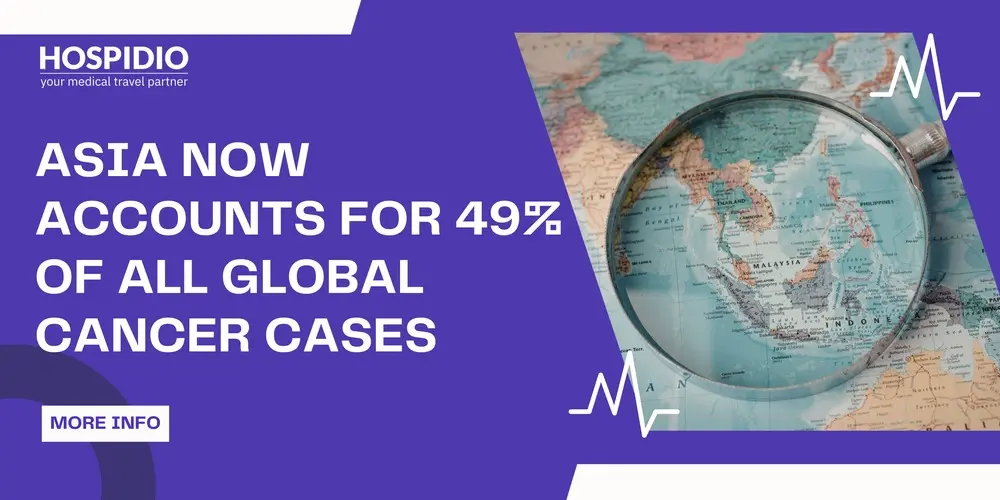
A new global cancer report has confirmed what oncologists across Asia have feared for years: the continent now carries nearly half of the world's entire cancer burden. According to the Cancer Atlas (GLOBOCAN 2024 data), Southern, Eastern, and Southeast Asia collectively account for 49% of all new cancer cases worldwide, that's 9.2 million new diagnoses every single year. The region also accounts for 53% of global cancer deaths, or 5.1 million lives lost annually. These are not just statistics. Behind every number is a patient, a family, and in many cases, a preventable outcome.
What the Data Actually Says
The numbers are stark. Southern, Eastern, and Southeast Asia contribute 49% of all new cancer cases (9.2 million) and 53% of cancer deaths (5.1 million) worldwide each year, with China and India alone accounting for two-thirds of these cases and deaths.
To put that in perspective: the entire continent of Europe accounts for roughly 23% of global cancer cases. Asia, home to 55% of the world's population, is now the undisputed epicentre of the global cancer crisis.
Lung cancer leads with 1,496,400 new cases annually, followed by colorectal cancer (915,800 cases) and female breast cancer (910,200 cases). Lung cancer is also the leading cause of cancer death in the region, followed by liver and stomach cancer.
What makes this especially concerning is the rate of change. Asia accounted for 1 million new breast cancer cases in 2022, representing 42.9% of global totals, and by 2050, new breast cancer cases in Asia are projected to rise to approximately 1.4 million.
Why Is Asia Bearing Such a Heavy Cancer Burden?
The reasons are complex and interconnected, and no single factor tells the full story.
Population size and density plays an obvious role. With over 4.3 billion people, Asia simply has more people to diagnose. But population alone doesn't explain the death toll. The real concern is late-stage diagnosis.
Across much of Asia, particularly in lower- and middle-income countrie, cancer is often diagnosed at Stage III or Stage IV, when treatment options are fewer and outcomes are harder to improve. This is driven by limited awareness of early symptoms, lack of routine screening programmes, and in many regions, financial and geographic barriers to accessing care.
Lifestyle and environmental factors are also accelerating incidence. Rapid urbanisation across South and Southeast Asia has brought with it rising rates of obesity, sedentary lifestyles, processed food consumption, and increased alcohol use, all established risk factors for multiple cancers. Air pollution in densely populated Asian cities remains one of the leading contributors to lung cancer incidence in the region.
Infectious disease burden adds another layer. A significant proportion of Asia's cancers are linked to preventable infections, Hepatitis B and C (liver cancer), H. pylori (stomach cancer), and HPV (cervical cancer), many of which remain under-vaccinated and under-screened in lower-income settings across the region.
The Cancers Hitting Asia Hardest
Breast cancer is the most commonly diagnosed cancer in 10 of 25 countries across the region, and lung cancer leads in cancer-specific mortality in 14 countries.
Here's a quick breakdown of the highest-burden cancers in Asia:
- Lung Cancer: It is the leading cause of cancer deaths across the region, strongly linked to tobacco use and air pollution.
- Breast Cancer: It is the most common cancer among women in virtually every Asian country; highest incidence rates recorded in Singapore (72.61 per 100,000) and the Philippines (60.34 per 100,000).
- Colorectal Cancer: It rising sharply due to dietary shifts and reduced physical activity.
- Liver Cancer: It is disproportionately high in Asia due to chronic Hepatitis B and C prevalence.
- Stomach Cancer: It is particularly prevalent in East Asia, driven by H. pylori infection and dietary risk factors.
- Cervical Cancer: It remains a leading killer of women in lower-income Asian nations with limited HPV vaccination coverage.
What This Means for Patients in Asia
For patients across Asia, this data delivers an urgent message: early detection saves lives.
The difference between a Stage I and Stage IV cancer diagnosis is not just medical, it is the difference between a straightforward surgery and years of aggressive treatment, with outcomes that are significantly less predictable.
If you or someone in your family has noticed unexplained symptoms, a lump, persistent cough, unexpected weight loss, changes in bowel habits, or unusual bleeding, do not wait. The statistics are clear: the earlier cancer is found, the better the outcome.
Not sure where to start?
HOSPIDIO offers a free medical case review. Share your symptoms or reports with us, and our patient consultants will connect you with a specialist within 15 minutes.
Why International Patients Are Choosing India for Cancer Treatment
For patients across Southeast Asia, East Africa, the Middle East, and the Pacific Islands, India has emerged as the most trusted destination for comprehensive cancer care, combining world-class expertise with costs that are 60 to 80% lower than the UK, USA, or Australia.
India's leading cancer centres, including Max Healthcare, Fortis, Medanta, and Apollo, offer the same surgical and oncological technologies available in Western hospitals, staffed by surgeons with necessary training and international fellowships from Europe and the USA. Minimally invasive surgery, robotic oncology, targeted therapy, immunotherapy, and complex procedures like HIPEC are all routinely performed at these institutions.
Crucially for Asian patients, wait times are short, most international patients are able to access a specialist consultation within days, and surgery dates are scheduled within a week of arrival. HOSPIDIO coordinates every step: from identifying the right oncologist and hospital, to medical visa support, accommodation, and in-country care coordination.
Asia now stands at the centre of one of the world's most pressing public health crises. Accounting for nearly half of all global cancer cases, and more than half of all cancer deaths, the region urgently needs better screening, earlier detection, and faster access to specialist care.
For patients across Asia who have received a diagnosis or are concerned about symptoms, know this: advanced, expert-led cancer treatment is accessible, affordable, and closer than you think. HOSPIDIO exists to bridge that gap, connecting you with India's finest oncologists, so that a cancer diagnosis is the beginning of a plan, not the end of hope.
{cta-custom-green Already diagnosed and looking for a second opinion? Send your reports.}
Related Blogs:
- Declared Cancer-Free: Jenny's Stage 4 Breast Cancer Journey from Vanuatu to India
- Breast Cancer Risks, Symptoms, Diagnosis and Treatment Options
- Is Your Cooking Oil Raising Breast Cancer Risk? What New Research Reveals
- Breast Cancer Treatment Cost in India
- HIPEC Surgery Cost in India
References
1. Cancer Atlas. Cancer in Southern, Eastern, and Southeast Asia. GLOBOCAN 2024. Retrieved from https://canceratlas.cancer.org/burden-of-cancer/cancer-in-southern-eastern-and-southeast-asia/
2. Fu M, et al. Current and future burden of breast cancer in Asia: A GLOBOCAN data analysis for 2022 and 2050. The Breast. February 2025. https://doi.org/10.1016/j.breast.2024.103835
3. The Lancet Oncology. Cancer incidence and mortality estimates in 2022 in Southeast Asia. February 27, 2025. https://www.thelancet.com/journals/lanonc/article/PIIS1470-2045(25)00017-8/abstract
4. Healthcare Asia Magazine. Asia now accounts for 49% of all global cancer cases. https://healthcareasiamagazine.com/healthcare/in-focus/asia-now-accounts-49-all-global-cancer-cases
Recent Blogs



Shruti Verma has completed her M.Tech in Biotechnology with experience in medical writing and scientific content development. She specializes in translating complex biomedical and healthcare information into clear, accurate, and reader-friendly content for diverse audiences. When she is not designing content, probably she is designing graphics.
Guneet Bhatia is the Founder of HOSPIDIO and an accomplished content reviewer with extensive experience in medical content development, instructional design, and blogging. Passionate about creating impactful content, she excels in ensuring accuracy and clarity in every piece. Guneet enjoys engaging in meaningful conversations with people from diverse ethnic and cultural backgrounds, enriching her perspective. When she's not working, she cherishes quality time with her family, enjoys good music, and loves brainstorming innovative ideas with her team.