
Introduction: Understanding the Curve
A diagnosis of scoliosis often brings immediate anxiety, especially for parents who hear that their child has a “spine problem.” Adults diagnosed later in life may worry about pain, progression, or the possibility of surgery. These concerns are completely understandable. As a spine surgeon, one of the most important parts of my role is to replace fear with clarity and facts.
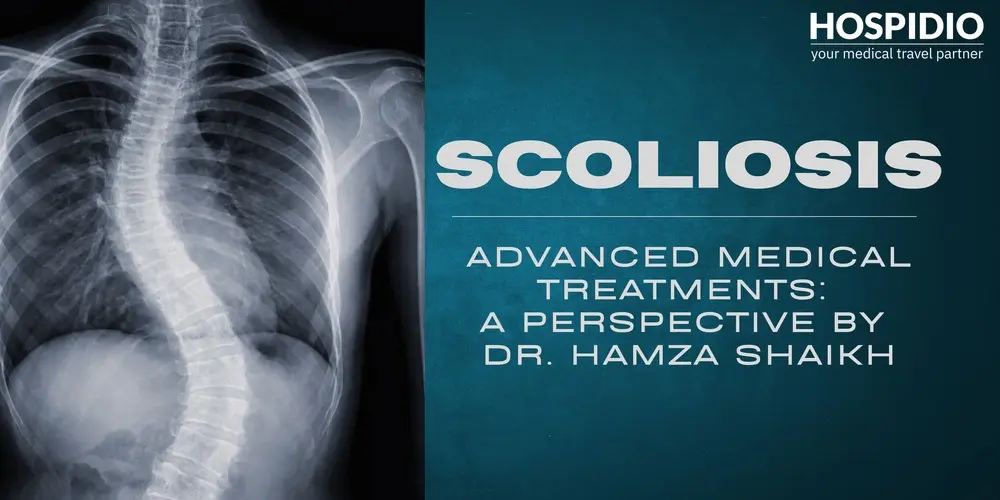
Scoliosis is a condition in which the spine develops an abnormal sideways curvature. Instead of appearing straight when viewed from the back, the spine may form an “S” or “C” shape. We measure the severity of this curve using something called the Cobb angle, calculated on an X-ray. A curve greater than 10 degrees is considered scoliosis, and the angle helps us determine the appropriate course of management.
It is important to understand that not every curve is dangerous, and not every patient with scoliosis requires surgery. In fact, most cases can be managed without an operation. My philosophy has always been clear: surgery is not the first answer; it is the final solution for specific cases.
The key lies in accurate assessment, regular monitoring, and timely intervention when needed. With the right approach, most individuals with scoliosis can lead active, healthy, and pain-free lives.
We Handle the Planning
You Focus on Recovery
From Medical Visa assistance to airport pick-up and local stay, HOSPIDIO manages your entire medical trip.
Tell Us About Your Need
Free case review. Confidential. No obligation.Nonsurgical Methods for Scoliosis: The First Line of Defence
In the majority of scoliosis cases, especially in children and adolescents, treatment begins without surgery. The goal at this stage is simple: prevent progression of the curve while maintaining function, balance, and quality of life.
Observation: The “Wait and See” Approach
For mild curves, typically those under 20 degrees (Cobb angle), active intervention is often not immediately necessary. Instead, we adopt a structured observation protocol.This does not mean ignoring the condition. It means carefully monitoring it. Regular clinical evaluations and periodic X-rays allow us to track whether the curve is stable or progressing. Monitoring becomes particularly important during growth spurts, when curves are more likely to worsen.
Many mild curves remain stable and never require bracing or surgery. The key is vigilance and timely follow-up.
Corrective Bracing
When curves fall in the moderate range generally between 20 and 40 degrees in a growing child, bracing becomes an important tool.
It is important to clarify that a brace does not “straighten” the spine permanently. Instead, it guides spinal growth and prevents further progression while the child is still growing. The objective is curve control, not cosmetic perfection.
Commonly used braces include:
- Boston brace – a low-profile thoracolumbosacral orthosis
- Milwaukee brace – used for certain high thoracic curves
- Rigo-Chêneau brace – a more customized, 3D-corrective design
The success of bracing depends heavily on compliance. I often discuss what I call the “16-hour rule”, which means wearing the brace for at least 16 hours per day significantly improves the likelihood of preventing curve progression and avoiding surgery. Consistency matters far more than occasional perfect days.
Physical Therapy & The Schroth Method
Scoliosis-specific exercises (SSE) play an increasingly important role in modern management. Among these, the Schroth Method is widely recognized for its targeted, three-dimensional corrective approach.
These exercises focus on:
- Strengthening core and paraspinal muscles
- Improving postural alignment
- Enhancing muscular symmetry
- Promoting better breathing mechanics
Because scoliosis can alter rib positioning and lung expansion in more significant curves, specialized breathing techniques are particularly beneficial. They help improve lung capacity, posture awareness, and overall endurance.
While physical therapy alone may not stop curve progression in all cases, it is highly valuable for improving function, reducing discomfort, and supporting overall spinal health.
In most patients, a thoughtful combination of observation, bracing, and targeted therapy allows us to manage scoliosis effectively, without the need for surgery.
When is Surgery Necessary for Scoliosis? (Surgical Indicators)
One of the most common questions I am asked is: “Will I need surgery?”
The honest answer is, only in specific, clearly defined situations. Surgery is considered when the risk of progression or long-term complications outweighs the benefits of continued conservative care.
Read More: Spinal Scoliosis Surgery Cost in India
The 40–50° Threshold
In growing adolescents, curves approaching 40–50 degrees (Cobb angle) raise concern. At this stage, the likelihood of progression becomes significantly higher.
More importantly, once a curve crosses approximately 50 degrees, it may continue to worsen even after skeletal maturity. In such cases, surgery is considered not merely for cosmetic reasons, but to prevent long-term structural imbalance and potential functional compromise.
Rapid Progression
If serial X-rays show documented progression despite appropriate bracing and compliance, surgical intervention may become necessary.
A curve that continues to worsen during growth, even with proper conservative management, signals that the spine is not responding to nonoperative measures. In these situations, delaying surgery may allow the deformity to become more severe and technically complex to correct.
Clinical Symptoms
Scoliosis is not always painful, particularly in adolescents.
However, certain symptoms indicate a more serious condition:
- Persistent, severe back pain
- Significant rib hump or visible trunk imbalance
- Neurological symptoms (in rare cases)
- Compromised lung or, in very severe curves, cardiac function
When the deformity begins to affect overall health, posture, breathing capacity, or daily quality of life, surgery becomes a medically justified and carefully planned solution.
The decision for surgery is never based on a single X-ray. It is based on curve magnitude, progression pattern, skeletal maturity, symptoms, and overall health. Each case is individualized, and the objective is always the same, long-term spinal balance, safety, and function.
Advanced Surgical Solutions for Scoliosis
When surgery is indicated, the objective is clear: correct the deformity safely, stabilize the spine, and preserve long term function. Modern spine surgery has evolved significantly, offering precise correction with improved safety and recovery profiles.
Spinal Fusion: The Gold Standard for Scoliosis
Spinal fusion remains the most time tested and reliable surgical treatment for moderate to severe scoliosis. In this procedure, the curved segment of the spine is carefully realigned and stabilized using titanium screws, rods and occasionally hooks. Once the spine is corrected into a balanced position, bone graft material is placed to allow the involved vertebrae to fuse into a single solid structure over time. The purpose of fusion is not simply to straighten the spine, but to:
- Prevent further progression
- Restore spinal balance
- Improve overall posture
- Protect lung and organ functions in several curves
With modern instrumentations and surgical planning, outcomes today are predictable, safe and durable.
Minimal Invasive Spine Surgery (MISS) For Scoliosis
Advancements in technology have allowed us to perform selected spinal procedures using minimal invasive techniques.
In my practice, I emphasize precision-based minimal invasive spine surgery (MISS) wherever appropriate. These techniques utilize smaller incisions, specialized retractors and advanced imaging guidance to reduce tissue disruption.
The benefits may include:
- Smaller surgical scars
- Less blood loss
- Reduced postoperative pain
- Shorter hospital stay
- Faster functional recovery
Not every scoliosis case is suitable for a fully minimal invasive correction, but integrating minimally invasive principles significantly enhances patent recovery and safety.
Growth Modulation: Options for Younger Children
In younger patients with progressive scoliosis, the challenge is correcting the curve while allowing continued spinal growth.
Growing Rods/ Magnetically Controlled Growing Rods (MCGR):
Traditional growing rods require periodic surgeries to lengthen the rods as the child grows. Magnetically Controlled Growing Rods (MCGR) represent a major advancement, they can be lengthened externally using a magnetic device in the outpatient setting, reducing the need for repeated surgeries. This approach helps control the curve while preserving spinal and thoracic growth.
Vertebral Body Tethering (VBT):
Vertebral Body Tethering is a newer, fusion-less alternative for selected patients who are still growing. Instead of rigidly fusing the spine, a flexible cord is placed along the convex side of the curve. This allows gradual correction as the child continues to grow, while maintaining spinal mobility. VBT is not suitable for every patient, but in carefully selected cases, it offers the advantage of preserving flexibility and motion.
Surgical decision-making in scoliosis is highly individualized. The choice of procedure depends on age, curve type, severity, skeletal maturity, and overall health. The goal is always to achieve the safest correction with the best long term functional outcome.
Success Rates and Expectations
One of the most reassuring conversations I have with the patients and guardians is about outcomes. With modern techniques, careful planning and appropriate patient selection, scoliosis treatment, both nonsurgical and surgical, offers highly predictable and positive results.
Functional Success
For patients who require surgery, the primary goal is to stop curve progression and restore spinal balance. Current data and clinical experience show that spinal fusion procedures achieve approximately 70% to 80% correction of the deformity, along with reliable prevention of further progression. It is important to understand that success is not defined by achieving a perfectly “straight” spine.
Success means:
- Halting progression
- Achieving durable correction
- Maintaining spinal balance
- Preserving neurological safety
Cosmetic Improvement
Beyond structural correction, many families are concerned about visible asymmetry, uneven shoulders, rib prominence or waistline imbalance.
Surgical correction improves shoulder and hip symmetry in most patients. Rib hump deformity is often reduced substantially. While minor residual asymmetry may remain in some cases, the overall aesthetic and postural improvement is usually dramatic and deeply reassuring for adolescents and young adults.
Long term Outlook
The long-term outlook after scoliosis surgery is overwhelmingly positive. With structured rehabilitation and guided recovery:
- Most patients return to school within a few weeks
- Light physical activity begins gradually
- Sports and full physical participation are typically resumed within 6 to 12 months, depending on the procedure and individual healing
The “Golden Age” for Scoliosis Surgery
Timing plays a crucial role in scoliosis management. While surgery is never rushed, there is an optimal window in certain patients where correction is safer, more effective and biomechanically favorable.
Adolescents: The Ideal Window
For adolescent idiopathic scoliosis, the most favorable period for surgical correction is typically:
- Girls: 11–13 years
- Boys: 13–15 years
This phase represents a balance between flexibility and maturity. The spine remains flexible enough to allow meaningful correction, yet sufficiently developed to safely support spinal instrumentation such as screws and rods.
Operating too early may interfere with growth. Waiting too long may result in a stiffer curve that is more difficult to correct. The key is individualized timing based on skeletal maturity, growth potential, and documented progression, not simply chronological age.
Early- Onset Scoliosis
In rare and more complex cases, scoliosis can present in very young children, sometimes between 3 and 5 years of age.
In such situations, traditional spinal fusion is avoided because it would arrest spinal and thoracic growth. Instead, we utilize growth-friendly systems such as growing rods or magnetically controlled growing rods (MCGR), which allow continued spinal development while controlling the deformity.
These cases require careful long-term planning and close follow-up.
Adult Scoliosis
Scoliosis surgery is not limited to children and adolescents. Adults may develop degenerative scoliosis or may present with untreated childhood curves that have progressed.
In adults, surgery is typically considered when there is:
- Persistent, disabling back or leg pain
- Progressive deformity
- Nerve compression
- Functional limitation affecting daily life
Unlike adolescent surgery, the indication in adults is often pain and quality-of-life driven rather than growth-related. There is no strict upper age limit, what matters is overall health, bone quality, and functional goals.
Ultimately, the “golden age” is not defined solely by numbers. It is defined by timing the intervention to achieve the safest correction with the best long-term outcome for each individual patient.
The Risk of Delay: Complications of Untreated Scoliosis
Not every scoliosis case progresses but when a significant curve is ignored or left untreated despite clear indications, long-term complications can develop. Early evaluation and structured follow-up are critical to preventing avoidable consequences.
Respiratory and Cardiac Compromise
In severe scoliosis, particularly curves exceeding 80 degrees, the deformity can distort the rib cage and reduce thoracic volume.
This may lead to:
- Reduced lung capacity
- Shortness of breath on exertion
- Fatigue
- In extreme and rare cases, strain on cardiac function
Such complications are uncommon but well-documented in very advanced deformities. Timely intervention prevents the curve from reaching this stage.
Chronic Pain and Early Degeneration
In untreated moderate to severe curves, abnormal spinal alignment places uneven stress on discs and facet joints. Over time, this imbalance may accelerate:
- Early-onset arthritis
- Disc degeneration
- Disc herniation
- Chronic mechanical back pain
Adults with longstanding untreated scoliosis often present with progressive stiffness and pain that could have been mitigated with earlier monitoring or intervention.
Psychological Impact
Scoliosis is not purely a structural condition, it also carries emotional and psychological implications, particularly in adolescents.
Visible asymmetry such as uneven shoulders, rib prominence, or trunk shift may contribute to:
- Reduced self-confidence
- Body image concerns
- Social anxiety
- Withdrawal from physical or social activities
Addressing scoliosis is not only about correcting a curve; it is also about restoring confidence and quality of life.
Neurological Risks
Although uncommon, severe or progressive curves can occasionally contribute to nerve compression. This may result in:
- Numbness
- Weakness
- Radiating leg pain
- In very rare cases, bowel or bladder disturbances
These are red-flag symptoms that require urgent evaluation.
The purpose of discussing these risks is not to create fear, but to emphasize the importance of timely consultation and appropriate follow-up. Scoliosis is most effectively managed when monitored proactively rather than treated reactively. Early awareness allows for safer, more predictable outcomes.
Conclusion: A message from Dr. Hamza Shaikh
Scoliosis is a condition that demands understanding, not fear. The single most powerful tool we have in managing spinal deformity is early detection. When identified at the right time, most curves can be monitored, guided, or corrected safely, often without surgery. And when surgery is necessary, modern techniques allow us to achieve predictable, lasting, and function-preserving outcomes.
Every spine is unique. Treatment decisions must be individualized, based on careful clinical evaluation, imaging, growth assessment, and patient goals. There is no one-size-fits-all solution. Only the right solution for the right patient at the right time.
If you or your child has been diagnosed with scoliosis, I strongly encourage seeking a structured evaluation rather than relying on assumptions or delayed observation. A timely consultation can provide clarity, reassurance, and a well-defined treatment roadmap.
At Manipal Hospital, Dwarka, we combine advanced diagnostic protocols, evidence-based treatment strategies, and precision-driven surgical expertise to ensure the highest standard of spine care. It is one of the best hospitals for spine surgery in India.
Through the HOSPIDIO Promise, our commitment remains unwavering. Patient-first decision-making supported by world-class surgical precision, transparency, and long-term follow-up.
With the right guidance and timely care, scoliosis does not have to define a life. It can be treated, managed, and overcome.
About Dr. Hamza Shaikh
Dr. Hamza Shaikh is a dedicated spine surgeon with over 15 years of experience in spine surgery, specializing in the comprehensive management of spinal deformities and complex spinal disorders.
He currently serves as a Consultant Spine Surgeon at Manipal Hospital, Dwarka, where he provides advanced, evidence-based spine care tailored to both pediatric and adult patients.
Areas of Special Expertise
- Complex spinal deformity correction, including adolescent and adult scoliosis
- Growth-friendly surgical systems, such as growing rods for early-onset scoliosis
- Minimally invasive spinal stabilization techniques, focused on precision, reduced tissue disruption, and faster recovery
Dr. Shaikh’s clinical approach integrates detailed preoperative planning, modern surgical technology, and patient-centered decision-making. His focus remains on achieving long-term spinal balance, functional recovery, and improved quality of life with the highest standards of safety. He remains available for a video consultation.
Book a video consultation with Dr. Hamza.
Looking for Scoliosis Correction in India? Contact Us Today for a Customized Quote.
Related Blogs

Recent Blogs


Dr. Hamza Shaikh is a dedicated spine surgeon with over 15 years of experience in spine surgery, specializing in the comprehensive management of spinal deformities such as scoliosis and kyphosis and complex spinal disorders. He currently serves as a Consultant Spine Surgeon at Manipal Hospital, Dwarka, where he provides advanced, evidence-based spine care tailored to both pediatric and adult patients.
Guneet Bhatia is the Founder of HOSPIDIO and an accomplished content reviewer with extensive experience in medical content development, instructional design, and blogging. Passionate about creating impactful content, she excels in ensuring accuracy and clarity in every piece. Guneet enjoys engaging in meaningful conversations with people from diverse ethnic and cultural backgrounds, enriching her perspective. When she's not working, she cherishes quality time with her family, enjoys good music, and loves brainstorming innovative ideas with her team.