
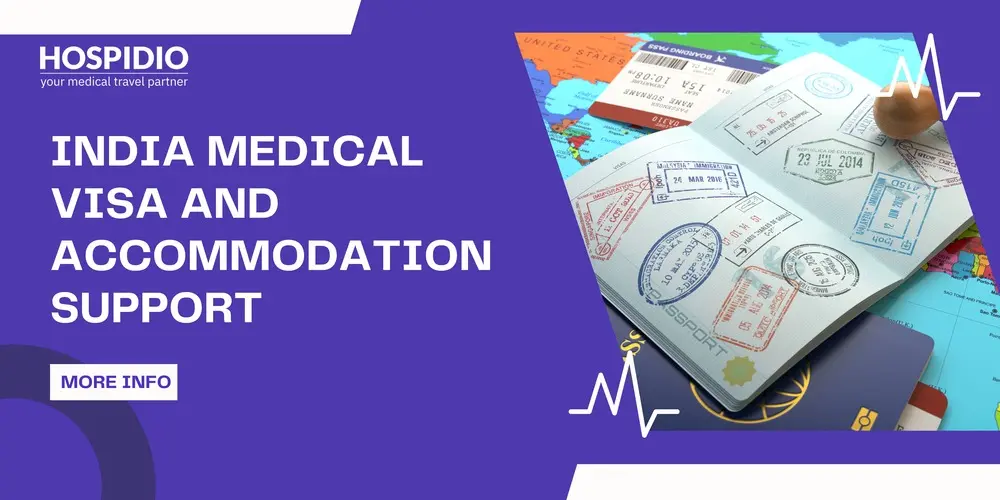
Lorsque vous décidez de vous rendre en Inde pour y recevoir des soins médicaux, les démarches ne se limitent pas à la réservation d'un vol. Avant même de franchir les portes d'un hôpital à Chennai, Delhi, Mumbai ou Bangalore, vous devez obtenir le visa adéquat et trouver un hébergement convenable pour votre convalescence.
La bonne nouvelle est que l'Inde a mis en place une procédure de visa spécifique pour les patients internationaux. Ce système de visa médical est conçu pour simplifier l'entrée sur le territoire, et la plupart des grands hôpitaux ont développé des services d'assistance qui prennent en charge les aspects pratiques afin que les patients et leurs familles puissent se concentrer sur leur santé.
Chez HOSPIDIO, nous coordonnons votre parcours depuis votre premier échange avec nous jusqu'à votre retour à domicile en toute sécurité. L'une de nos premières actions consiste à aider chaque patient à comprendre les démarches liées au visa et à l'hébergement avant toute réservation. Ce guide rassemble toutes ces informations.
Types de visas médicaux disponibles
L'Inde propose trois principales voies d'accès aux visas pour les patients internationaux et les membres de leur famille ou les aidants qui les accompagnent. Le tableau ci-dessous en donne un aperçu avant d'expliquer chacune d'elles en détail.
| Type de visa | Validité | Entrées | ApplicationItinéraire | Idéal pour |
| Visa e-médical | 60 jours à compter de la date d'entrée en Inde | Tripler | Portail en ligne | La plupart des patients, plus de 160 pays éligibles |
| Visa d'agent médical | Identique au patient | Tripler | Portail en ligne | Jusqu'à 2 aidants/membres de la famille |
| Visa médical régulier | 3 à 12 mois et plus | Variable | Ambassade / Consulat | pays de séjour de longue durée ou pays où seules les ambassades sont autorisées |
Le visa médical électronique
| Visa médical électronique en bref | |
| Idéal pour | Patients originaires de plus de 160 pays éligibles nécessitant un traitement à court ou moyen terme |
| Validité | 60 jours à compter de la date de la première entrée en Inde |
| Entrées | Triple entrée autorisée |
| Application | Procédure entièrement en ligne via indianvisaonline.gov.in |
| Appliquer au moins | 4 jours avant l'arrivée ; les demandes peuvent être déposées 120 jours à l'avance. |
| Préposés | Jusqu'à deux membres de la famille ou aidants peuvent demander un visa d'accompagnateur lié. |
Le visa médical électronique est la voie la plus couramment utilisée par les patients internationaux se rendant en Inde. Il est accessible aux citoyens de plus de 160 pays et la procédure de demande se déroule entièrement en ligne, sans qu'il soit nécessaire de se rendre à une ambassade ou un consulat.
Une fois accordé, le visa est valable 60 jours à compter de la date de votre première entrée en Inde et vous permet d'y entrer jusqu'à trois fois. Cette possibilité de triple entrée est utile si votre plan de traitement nécessite un court retour dans votre pays d'origine pendant un programme plus long, suivi d'un retour en Inde.
Jusqu'à deux membres de la famille ou aidants peuvent demander simultanément un visa électronique d'accompagnateur médical. Ce visa a la même durée de validité que celui du patient, c'est-à-dire qu'ils expirent tous deux à la même date.
Important: Vous et vos accompagnateurs devez vous inscrire auprès du Bureau régional d'enregistrement des étrangers (FRRO) dans les 14 jours suivant votre arrivée. Votre coordinateur HOSPIDIO vous accompagnera dans cette démarche si elle vous concerne.
Visa d'assistant médical
| Visa d'assistance médicale en un coup d'œil | |
| Idéal pour | Les membres de la famille ou les aidants accompagnant un titulaire de visa médical |
| Validité | La durée de validité de ce visa médical est la même que celle du patient. |
| Maximum | Deux accompagnateurs autorisés par patient |
| Preuve requise | Lien de parenté avec le patient (certificat de mariage, acte de naissance ou équivalent) |
Ce visa est spécifiquement destiné aux personnes accompagnant un patient. Il ne s'agit pas d'un visa indépendant : il est toujours lié au visa médical du patient, et l'accompagnateur ne peut pas se rendre en Inde seul avec ce visa. Ce visa expire en même temps que celui du patient.
Deux accompagnateurs au maximum sont autorisés par patient. Chacun doit être un véritable aidant ou membre de la famille et devra présenter un document attestant de son lien de parenté avec le patient. Les documents les plus couramment acceptés sont un certificat de mariage, un acte de naissance ou un document d'état civil délivré par une autorité compétente.
Visa médical ordinaire (autocollant papier)
| Aperçu du visa médical régulier | |
| Idéal pour | Les patients nécessitant un traitement de longue durée au-delà de 60 jours, ou ceux originaires de pays non éligibles au visa électronique, ne sont pas concernés. |
| Application | En personne à l'ambassade ou au consulat indien de votre pays |
| En cours | 3 à 7 jours ouvrables (certaines ambassades peuvent prendre de 2 à 4 semaines) |
| Validité | Déterminé au cas par cas, souvent de 3 à 12 mois |
| Biométrie | Requis lors de votre rendez-vous |
Le visa médical classique, souvent appelé visa autocollant papier, est délivré par les ambassades et consulats indiens dans le monde entier. Contrairement au visa médical électronique, il nécessite un rendez-vous en personne auprès de la mission diplomatique ou consulaire compétente dans votre pays, où les documents physiques sont remis et les données biométriques sont collectées.
Cette procédure est appropriée si votre traitement dure plus de 60 jours, si votre pays ne figure pas sur la liste des pays éligibles au visa médical électronique, ou si les autorités d'immigration exigent un dépôt de dossier en personne pour d'autres raisons. Le traitement prend généralement de 3 à 7 jours ouvrables, mais ce délai peut être plus long dans certaines ambassades en période de forte affluence. Nous vous recommandons de ne pas acheter vos billets d'avion tant que votre visa n'est pas confirmé.
Documents requis pour un visa médical indien
La liste des documents requis varie légèrement selon le type de visa demandé. Vous trouverez ci-dessous un récapitulatif détaillé pour chaque catégorie.
Pour le visa médical
Vous devrez préparer et télécharger les éléments suivants :
- Votre passeport, valable au moins six mois après votre date d'arrivée prévue en Inde, et comportant au minimum deux pages vierges pour les tampons.
- Une copie scannée de la page de données biographiques du passeport.
- Photographie couleur récente, 5 cm x 5 cm, fond blanc, prise au cours des trois derniers mois.
- Une lettre d'invitation hospitalière, établie sur papier à en-tête officiel d'un hôpital indien reconnu (accrédité NABH ou JCI), est requise. Cette lettre doit mentionner vos nom et prénom, votre nationalité, votre numéro de passeport, le détail du traitement prévu et la date d'admission provisoire. Nous nous chargeons de l'obtention de cette lettre pour vous une fois votre plan de traitement confirmé.
- Un certificat médical ou une lettre de recommandation de votre médecin traitant dans votre pays d'origine, décrivant clairement votre diagnostic et expliquant pourquoi vous avez besoin d'un traitement en Inde (nécessaire en cas de traitement de visa par l'ambassade).
- Preuve financière telle que des relevés bancaires récents, confirmant que vous pouvez couvrir les frais de traitement, d'hébergement et de voyage de retour (nécessaire en cas de traitement de visa par l'ambassade).
- Un billet de retour ou une preuve de voyage de continuation (nécessaire en cas de traitement de visa par l'ambassade).
Pour le visa d'accompagnateur médical
Un accompagnateur demandant un visa d'accompagnateur médical électronique aura besoin des mêmes documents de base énumérés ci-dessus pour lui-même (passeport, photo et preuve financière), plus les suivants :
- Une copie du visa médical électronique ou de l'autorisation de voyage électronique (ETA) du patient, ou de son visa ordinaire.
- Une copie de la page de données biographiques du passeport du patient.
- Preuve du lien de parenté avec le patient : un certificat de mariage, un certificat de naissance ou un document d’enregistrement familial (nécessaire dans des circonstances particulières).
Tout document non rédigé en anglais doit être traduit et certifié conforme avant d'être soumis. Cela concerne notamment les certificats médicaux, les documents familiaux et les relevés bancaires. L'absence de documents ou leur non-traduction constituent l'une des causes les plus fréquentes de retard ou de rejet. Nous vérifions votre dossier en amont afin d'éviter tout problème lié à des lacunes évitables.
Délais et frais de traitement des visas médicaux
Pour les visas médicaux électroniques, le délai de traitement standard est de 3 à 5 jours ouvrables. Si votre date de voyage est plus proche, des options accélérées sont disponibles : le traitement urgent prend environ 24 heures et le traitement super urgent environ 5 heures ouvrables. Ces deux options plus rapides entraînent des frais de service supplémentaires, en plus des frais gouvernementaux.
Pour les visas médicaux ordinaires délivrés par les ambassades, le délai de traitement est généralement de 3 à 7 jours ouvrables. Toutefois, dans certains pays, ce délai peut atteindre 2 à 4 semaines en période de forte affluence. Veuillez prévoir un délai supplémentaire et ne réservez pas vos vols tant que vous n'avez pas obtenu votre visa.
Les frais gouvernementaux pour un visa médical électronique s'élèvent à environ 80 USD pour la plupart des nationalités, mais ce montant exact varie selon les accords bilatéraux conclus entre l'Inde et votre gouvernement. Des frais bancaires de 2.5 % sont ajoutés au prix indiqué lors du paiement. Tous les frais de traitement de visa sont non remboursables, que la demande soit acceptée ou refusée.
Pour un visa médical classique, les frais sont fixés par chaque ambassade et varient selon la nationalité. Votre coordinateur HOSPIDIO vous indiquera le montant exact applicable dans votre pays.
Nous vous recommandons de déposer votre demande au moins 3 à 4 semaines avant la date de votre voyage. Cela vous laisse suffisamment de temps pour corriger tout problème de documents, répondre aux questions de l'ambassade et éviter des frais d'urgence inutiles.
Procédure de prolongation de visa médical
Si votre traitement nécessite une durée supérieure à celle autorisée par votre visa initial, une prolongation est possible auprès du Bureau régional d'enregistrement des étrangers (FRRO), qui relève du ministère indien de l'Intérieur. Les prolongations de visa électronique médical sont accordées au cas par cas et peuvent porter la durée totale de séjour autorisée à six mois. Ceci est particulièrement important pour les patients suivant des traitements de longue durée tels que les transplantations d'organes ou de moelle osseuse, les chimiothérapies anticancéreuses à cycles multiples ou la réadaptation cardiaque prolongée.
La procédure de prolongation se déroule intégralement via le portail officiel e-FRRO à l'adresse frro.gov.in. Dans la plupart des cas, il n'est pas nécessaire de se déplacer : la demande, le dépôt des documents et la décision sont entièrement gérés en ligne. Les documents à télécharger sont :
- Votre passeport actuel.
- Un certificat hospitalier confirmant votre traitement en cours et votre lieu de séjour actuel en Inde.
- Une lettre détaillée de votre médecin traitant expliquant que le maintien du séjour est médicalement nécessaire et indiquant la durée supplémentaire prévue.
- Preuve financière couvrant la période prolongée.
- Justificatif de domicile pour votre résidence actuelle en Inde.
Vous devez demander une prolongation de visa avant son expiration. Le dépassement de la durée de séjour autorisée constitue une infraction à la législation sur l'immigration et, dans ce cas, votre départ d'Inde nécessite un permis de sortie délivré par le FRRO, ce qui implique des démarches et des délais supplémentaires.
Il est obligatoire de signaler votre arrivée au FRRO dans les 14 jours. Les patients en provenance du Pakistan et du Bangladesh doivent également s'enregistrer auprès du commissariat de police local dans les 24 heures suivant leur arrivée. L'équipe internationale de votre hôpital et votre coordinateur HOSPIDIO vous accompagneront dans les démarches qui vous concernent.
Services de soutien à l'hébergement
Choisir son hébergement lors d'un séjour médical est une décision importante. Vous pourriez être en convalescence après une intervention chirurgicale majeure, souffrir de fatigue liée aux traitements ou accompagner un proche lors d'une longue hospitalisation. La proximité de l'hôpital, des options alimentaires adaptées, le calme et la flexibilité sont des critères bien plus importants que pour un voyage classique. L'Inde propose un large choix d'hébergements pour les patients internationaux, allant des maisons d'hôtes gérées par l'hôpital aux appartements meublés et hôtels, pour tous les budgets. Le choix idéal dépend de la durée du séjour, du nombre de personnes et du budget.
Résidences hospitalières et séjours sur le campus
De nombreux grands groupes hospitaliers indiens gèrent des résidences pour patients, soit au sein même de l'hôpital, soit à proximité immédiate. Conçues spécifiquement pour les patients et leurs accompagnants, ces résidences offrent un confort incomparable à celui d'un hôtel classique.
L'hôpital Medanta de Gurugram, par exemple, propose un hébergement abordable et confortable en maison d'hôtes aux patients internationaux et à leurs accompagnateurs, un service standard qui leur est réservé. Les hôpitaux Fortis, à Delhi, Gurugram, Mumbai et Bangalore, mettent les patients en relation avec des maisons d'hôtes et des appartements meublés à proximité grâce à leur service de conciergerie internationale. Certains établissements offrent même gratuitement les transferts aéroport aller-retour dans le cadre de leur accueil.
Le fait de loger sur le campus ou à proximité permet d'éviter les déplacements habituels pour les changements de pansements, les prélèvements sanguins et les consultations externes. Pour les patients en convalescence après une intervention chirurgicale ou ceux qui ont des rendez-vous de suivi fréquents, cela réduit la fatigue et allège le quotidien.
Appartements avec services pour séjours plus longs
Pour les traitements de plusieurs semaines ou mois, un appartement meublé avec services hôteliers est généralement la solution la plus pratique et économique. Il offre plus d'espace qu'une chambre d'hôtel, une cuisine ou une kitchenette pour préparer des repas adaptés aux besoins alimentaires ou aux préférences culturelles, une buanderie et un cadre de vie plus confortable pour une famille comprenant un soignant et des enfants séjournant ensemble pendant une période prolongée.
Les fournisseurs d'appartements meublés situés à proximité des principaux pôles hospitaliers indiens de Gurugram, Chennai, Delhi et Bangalore ont conçu leurs offres spécifiquement pour les patients internationaux. Nombre d'entre eux ont accueilli des patients originaires de plus d'une centaine de pays et comprennent les besoins alimentaires, culturels et de communication propres à une population médicale internationale.
Hôtels à proximité des centres de traitement
Pour les séjours de courte durée ou pour les accompagnants qui préfèrent une plus grande autonomie, des hôtels allant des options économiques aux établissements cinq étoiles sont disponibles à proximité de chaque grand groupe hospitalier en Inde. La plupart des grands groupes hospitaliers, tels qu'Apollo, Fortis, Max et Medanta, peuvent vous aider à recommander ou à réserver un hôtel adapté à votre budget par l'intermédiaire de leur service d'accueil des patients internationaux.
Nous coordonnons les options d'hébergement pour chaque patient, en tenant compte du programme de traitement, du nombre de personnes voyageant avec lui, des besoins alimentaires et de la distance de l'hôpital. Si l'hôpital a déjà une solution privilégiée, nous nous y conformons. S'il existe une alternative plus avantageuse ou plus économique, nous la trouvons.
Services de soutien pour les patients internationaux
Les principaux groupes hospitaliers indiens ont investi massivement dans leurs infrastructures dédiées aux patients internationaux. Dans des établissements comme Apollo, Fortis, Max, Medanta et Manipal, un gestionnaire de relation ou un coordinateur de soins est généralement attribué à chaque patient international et constitue son interlocuteur unique tout au long de son séjour. L'éventail des services d'assistance proposés dans ces hôpitaux comprend :
- Interprétation linguistique disponible en arabe, français, swahili, russe, bahasa et plusieurs autres langues couramment parlées par les touristes médicaux en Inde.
- Préparation et émission des lettres d'invitation hospitalière au format requis par les ambassades indiennes pour le traitement des visas.
- Assistance pour l'enregistrement FRRO lorsque le séjour déclenche cette exigence.
- Transferts aéroport à l'arrivée et au départ, offerts par plusieurs groupes hospitaliers.
- Instructions concernant l'enregistrement de la carte SIM, afin que les patients puissent communiquer avec leur famille à domicile dès leur arrivée.
- Conseils en matière de change.
- Des formules de repas qui tiennent compte des exigences alimentaires religieuses, culturelles ou médicales.
- Coordination des transferts locaux entre le lieu d'hébergement et l'hôpital pour chaque rendez-vous.
- Faciliter le prélèvement d'échantillons dans le lieu d'hébergement lorsque l'état du patient rend difficile son déplacement à l'hôpital pour des examens de routine.
- Organisation de visites touristiques encadrées pendant les périodes de convalescence, avec l'accord du médecin traitant.
Chez HOSPIDIO, nous collaborons directement avec les services d'accueil des patients internationaux de nos hôpitaux partenaires et veillons à ce que ces services soient activés pour chaque patient que nous orientons. Vous n'aurez pas besoin d'en faire la demande individuellement ; votre coordinateur vous présentera le responsable des relations avec les patients à l'hôpital et confirmera les services disponibles dans le cadre de votre forfait de soins.
Principaux avantages pour les patients internationaux choisissant l'Inde
L'infrastructure indienne de visas médicaux et d'assistance s'est développée à la hauteur de l'ampleur et de la maturité de son secteur du tourisme médical. Plus de deux millions de patients internationaux se rendent chaque année en Inde pour y recevoir des soins, et les systèmes en place ont été façonnés par cette expérience considérable.
- Une catégorie de visa dédiée aux voyageurs médicaux, avec une procédure en ligne simplifiée pour la plupart des nationalités.
- Hôpitaux accrédités NABH et JCI répondant à des normes de qualité nationales et internationales rigoureuses, dotés d'équipes de spécialistes formés à l'international.
- Les coûts de traitement sont de 50 à 80 % inférieurs à ceux des procédures équivalentes aux États-Unis, au Royaume-Uni, au Canada et dans la plupart des pays d'Europe occidentale, sans réduction comparable de la qualité clinique ni des résultats pour les pathologies dans lesquelles les principaux hôpitaux indiens sont spécialisés.
- Délais d'attente courts : dans le réseau hospitalier privé indien, les interventions programmées et urgentes sont généralement disponibles en quelques jours, contrairement aux mois d'attente à domicile que connaissent les patients dans de nombreux pays.
- Des équipes médicales et administratives anglophones sont présentes dans tous les principaux hôpitaux, réduisant ainsi la barrière de la communication, une préoccupation fréquente pour les patients qui voyagent pour la première fois afin de se faire soigner à l'étranger.
- Une assistance complète couvrant les lettres d'invitation pour les visas, l'hébergement, la logistique aéroportuaire, le soutien linguistique et le suivi télémédical post-traitement, le tout coordonné par un interlocuteur unique.
Comment débuter avec HOSPIDIO
Lorsqu'un patient nous contacte, la première étape consiste toujours en un entretien sans engagement avec l'un de nos coordinateurs de soins. Nous vous interrogeons sur votre état de santé, les rapports médicaux et les examens d'imagerie dont vous disposez, ainsi que sur votre calendrier de voyage approximatif.
Nous transmettons ensuite vos documents au spécialiste compétent dans l'un de nos hôpitaux partenaires afin d'obtenir un plan de traitement et un devis. Une fois le plan validé, nous demandons la lettre d'invitation de l'hôpital, document indispensable au lancement de la demande de visa.
Nous vous accompagnons, vous et votre famille, dans vos démarches de demande de visa, vous conseillons sur chaque document requis et vérifions que votre dossier est complet avant soumission. Pour les patients suivant la procédure habituelle auprès de l'ambassade, nous les conseillons sur la prise de rendez-vous et le dépôt des documents dans leur pays.
Une fois votre visa confirmé, nous organisons votre transfert depuis l'aéroport, vous présentons votre référent à l'hôpital et confirmons votre hébergement. Votre coordinateur HOSPIDIO reste joignable par WhatsApp, téléphone ou e-mail pendant toute la durée de votre traitement et de votre convalescence.
Lorsque vous serez prêt à rentrer chez vous, nous veillerons à ce que les documents de sortie et les résumés médicaux soient prêts, et nous organiserons les consultations de télémédecine de suivi recommandées par votre spécialiste afin que vos soins se poursuivent après votre départ d'Inde.
Nous avons coordonné les parcours de soins de patients originaires du Canada, du Nigéria, du Kenya, des Pays-Bas, des Fidji, des Caraïbes et de dizaines d'autres pays. Nous savons quelles questions poser et quels détails prendre en compte pour gagner du temps et réduire le stress à chaque étape du processus.
Prêt à commencer ? Contactez-nous sur hospidio.com et l’un de nos coordinateurs vous répondra dans les 24 heures avec une première évaluation et les prochaines étapes.
Blogs récents

Questions fréquemment posées
Non. La lettre d'invitation de l'hôpital est un document obligatoire pour toutes les catégories de visa médical indien. Cette lettre doit être émise par un hôpital indien reconnu et enregistré, sur son papier à en-tête officiel, et doit mentionner vos nom, numéro de passeport, nationalité, ainsi que les détails du traitement prévu et la date d'admission provisoire. Sans cette lettre, votre demande ne pourra pas être traitée. Nous nous chargeons de l'obtenir pour vous une fois le plan de traitement validé.
Le visa d'accompagnateur médical autorise un maximum de deux accompagnateurs par patient. Chacun doit faire une demande de visa individuelle et justifier de son lien de parenté avec vous, par exemple avec un certificat de mariage ou un acte de naissance.
Vous pouvez demander une prolongation de visa via le portail e-FRRO avant son expiration. Les prolongations sont accordées pour raisons médicales, au cas par cas, et peuvent prolonger la durée totale de séjour autorisée jusqu'à six mois. Vous aurez besoin d'une lettre de votre médecin traitant confirmant la nécessité médicale du traitement en cours et une estimation de la durée supplémentaire requise. Nous pouvons vous accompagner dans ces démarches.
Oui. Le visa médical électronique permet à ses titulaires de combiner soins médicaux et activités touristiques limitées en Inde pendant leur séjour. Cependant, le but principal du visa doit rester le traitement médical. Si votre médecin traitant confirme que votre état de santé vous permet d'effectuer de courtes excursions pendant votre convalescence, votre coordinateur HOSPIDIO et l'hôpital peuvent organiser des visites locales encadrées.
L'inscription auprès du FRRO est obligatoire uniquement si votre séjour en Inde dépasse 180 jours. Si votre traitement est terminé avant la fin de cette période, aucune inscription supplémentaire n'est requise. Si une inscription est nécessaire, l'équipe internationale de votre hôpital et votre coordinateur HOSPIDIO vous accompagneront dans vos démarches. Les patients en provenance du Pakistan et du Bangladesh doivent également s'inscrire auprès du commissariat de police local dans les 24 heures suivant leur arrivée, quelle que soit la durée de leur séjour.
Non. Les frais de traitement des visas par le gouvernement indien ne sont pas remboursables, quelle que soit l'issue de la demande ou toute modification ultérieure de vos plans de voyage. Ceci s'applique aussi bien aux visas électroniques qu'aux visas médicaux classiques délivrés par l'ambassade. Nous encourageons les patients à confirmer leur plan de traitement et leur lettre d'invitation de l'hôpital avant de payer les frais de visa, afin d'éviter les frais perdus en cas d'annulation.
Il est fortement déconseillé d'utiliser un visa touristique comme motif principal de soins médicaux. Cette pratique constitue un abus de ce type de visa et peut engendrer des complications à l'immigration indienne, voire un refus d'entrée. Le visa médical indien a été spécifiquement conçu à cet effet et constitue le fondement juridique approprié pour votre séjour. Ce visa vous donne également accès à une lettre d'invitation de l'hôpital, à l'assistance du Bureau régional d'accueil des patients étrangers (FRRO) et à l'ensemble des services hospitaliers destinés aux patients internationaux, autant d'avantages non offerts aux titulaires d'un visa touristique.
Shruti Verma est titulaire d'un master en biotechnologie et possède une expérience en rédaction médicale et en création de contenu scientifique. Elle est spécialisée dans la vulgarisation d'informations biomédicales et de santé complexes afin de les rendre claires, précises et accessibles à un large public. Lorsqu'elle ne rédige pas de contenu, elle crée probablement des graphismes.
Dr. Basim Parvez est physiothérapeute agréé et consultant principal auprès des patients chez HOSPIDIO. Titulaire d'un MBA en gestion de la santé, il possède une vaste expérience clinique et une approche empreinte de compassion, et accompagne les patients tout au long de leurs traitements médicaux. Dr. Basim met également à profit son talent d'écriture pour simplifier des informations complexes en matière de santé, permettant ainsi aux patients de prendre des décisions éclairées et favorisant la clarté et la confiance dans leur parcours médical.